Bird of Paradise Plant Care: The Complete Guide
Bird of paradise plant care indoors: light, watering, why leaves split, how to get it to bloom, and what to do in those tricky first weeks.
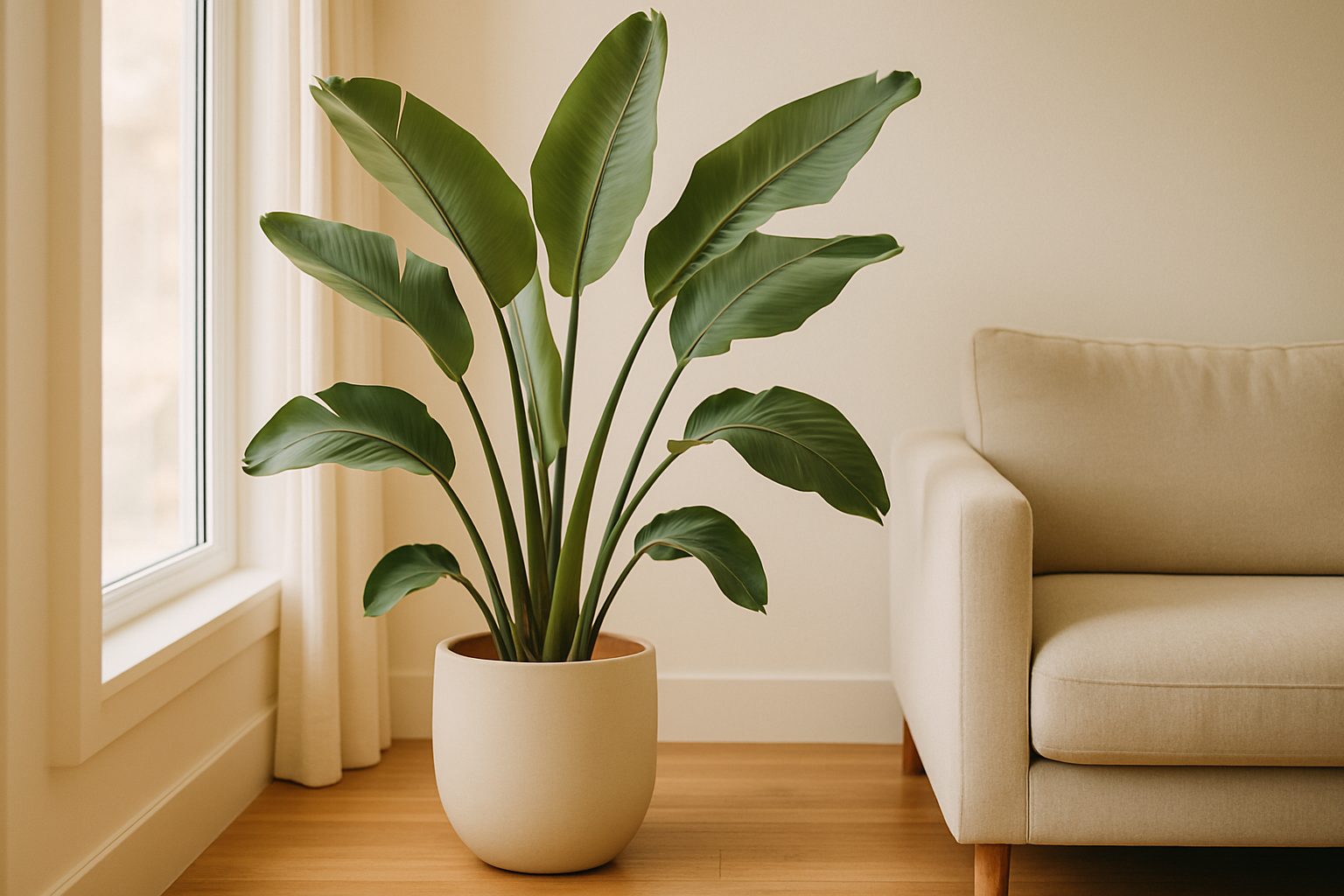
Bird of paradise plant care is more forgiving than its dramatic appearance suggests. Get the light right, water less than you think you need to, and leave the roots a little crowded. That’s roughly 80% of it.
The rest of this guide covers the questions most care pages skip over: why the leaves split, why yours probably won’t bloom for years, what’s causing those brown tips, and what to expect in the first month after bringing one home.
Quick answer: Bird of paradise needs at least 4 to 6 hours of bright direct or indirect light per day, water every 1 to 2 weeks in summer (less in winter), well-draining soil, and temperatures above 55°F. It’s toxic to cats, dogs, and horses (ASPCA). Expect slow growth indoors and no flowers for several years.
Bird of Paradise Plant Care at a Glance
| Factor | What it needs |
|---|---|
| Light | Bright indirect to direct; 4 to 6 hours minimum |
| Water | Every 1 to 2 weeks in summer; every 2 to 4 weeks in winter |
| Soil | Rich, well-draining mix; add perlite to standard potting soil |
| Temperature | 65 to 85°F (18 to 29°C); minimum 55°F |
| Humidity | 40 to 60% preferred; tolerates normal home levels |
| Fertilizer | Monthly in spring and summer with a balanced liquid feed |
| Repotting | Every 2 to 3 years; slightly root-bound is fine (and helps blooming) |
Which Bird of Paradise Do You Have?
Worth clearing up before anything else. “Bird of paradise” refers to two completely different plants:
- Strelitzia reginae: the compact one, usually 4 to 6 feet indoors, with the famous orange-and-blue flowers. This is what most people picture.
- Strelitzia nicolai: the giant white bird of paradise, which can reach 20 feet or more in the ground and 6 to 10 feet in a pot. It rarely blooms indoors. People buy it as a statement foliage plant.
(There’s also a third plant, Caesalpinia, sometimes sold as “bird of paradise.” It’s an outdoor shrub with red and yellow flowers, and no relation to Strelitzia.)
Most care advice applies to both species. When it doesn’t, the sections below say so.
Light
Bird of paradise needs more light than almost any other common houseplant. A spot that gets at least 4 to 6 hours of bright light per day, including some direct sun, is ideal. A south or west-facing window is the natural home for this plant.
“Bright indirect light” works for survival, but plants in indirect-only conditions grow slowly, produce smaller leaves, and will not bloom. If you want flowers, you need direct sun.
Low light is the most common reason bird of paradise underperforms indoors. If yours has produced few new leaves in the past several months, moving it to a brighter spot is the first thing to try. A grow light set to 12 to 14 hours a day is a clean solution for dark apartments.
Watering
The standard mistake is watering too often. Bird of paradise stores water in its thick roots and handles drought better than it handles soggy soil.
The rule: let the top 2 inches of soil dry out before watering again. In most homes, that works out to every 1 to 2 weeks in spring and summer, and every 2 to 4 weeks in autumn and winter. Check with your finger rather than following a calendar.
What a thirsty plant looks like: Leaves curl slightly inward and the pot feels noticeably lighter than usual. Some drooping is normal before you get a feel for the schedule.
What an overwatered one looks like: Yellowing lower leaves, soil that stays wet for more than a week, and a faint musty smell from the pot. Root rot is the outcome if this continues.
When you do water, drench the soil until water runs freely from the drainage holes, then let it drain completely. Shallow watering leads to uneven soil moisture and surface root development.
See the guide to how often to water houseplants for more on adjusting frequency to your home’s conditions.
Soil
Standard potting mix holds too much moisture for bird of paradise roots. The plant grows naturally in well-drained coastal soils that dry out between rain events.
A simple mix that works:
- 50% standard potting mix
- 30% perlite (improves drainage)
- 20% coarse sand or orchid bark
Alternatively, cactus and succulent mix blended 50/50 with regular potting soil produces the right drainage without measuring.
Humidity and Temperature
Bird of paradise handles normal home humidity (40 to 50%) without issues. It prefers 50 to 60%, but it’s not demanding. You don’t need a humidifier.
Temperature matters more. Keep it above 65°F for steady growth, and above 55°F at all times. Sustained temperatures below 55°F can cause leaf damage that doesn’t reverse. Keep the plant away from drafty windows and exterior doors in winter.
If you move the plant outside in summer when temperatures stay above 60°F at night, bring it back in before the first fall chill. Outdoor summer exposure noticeably accelerates growth.
Fertilizing
A balanced liquid fertilizer (10-10-10 or 20-20-20) applied once a month from April through September is enough. Use the label dose or slightly less. Skip fertilizing in autumn and winter when growth slows and the plant is essentially dormant.
One detail that trips people up: if you use tap water regularly, mineral and salt buildup in the soil shows up as brown leaf tips over time, even with correct watering. Flushing the pot thoroughly every few months (run water through three or four times until it drains freely) clears the buildup.
Repotting
Repot every 2 to 3 years, or when roots push through the drainage holes and circle the pot’s bottom.
Here’s something most care guides get backwards: bird of paradise blooms better when it’s slightly root-bound. A plant moved into a pot that’s too large diverts energy toward root production and delays flowering. So when roots start to show at the drainage holes, check whether the plant still has room. If it does, leave it another season.
When you do repot, move up one pot size (2 inches wider). Spring gives the best recovery. For a full walkthrough, the guide to repotting houseplants covers every step.
Why the Leaves Split: Intentional, Not Damage
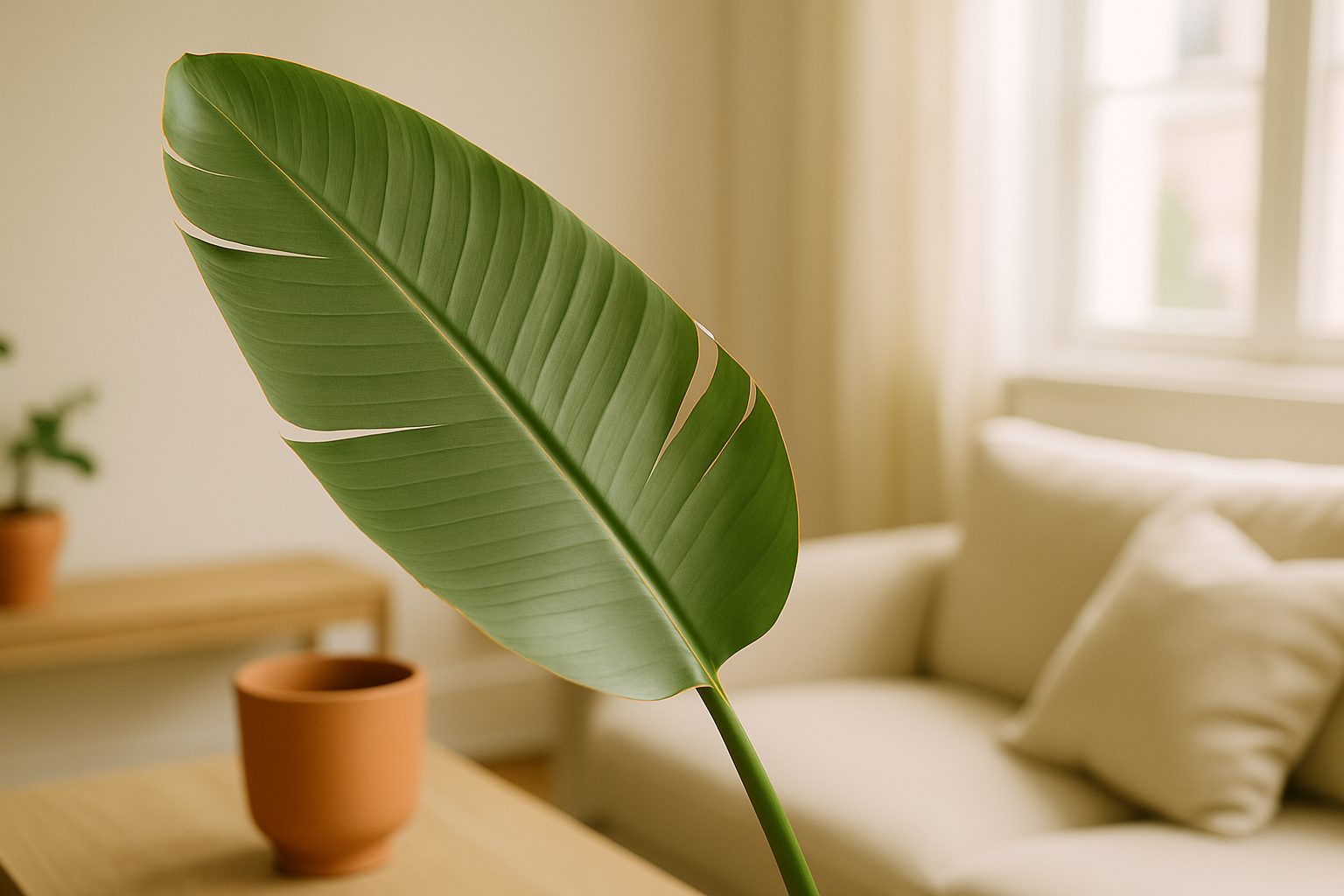
This sends a lot of new owners into a panic. The edges of bird of paradise leaves split naturally as the plant matures, especially on large, older leaves.
It’s not damage. It’s how the plant is designed.
In its natural habitat, bird of paradise grows in exposed, windy coastal areas. The splits act as vents, allowing wind to pass through rather than snapping the whole leaf or tipping the plant over. Indoor plants develop the same splits when leaves get large enough, especially in dry air.
You can’t prevent splits entirely, and you don’t need to. They don’t affect the plant’s health.
Why Your Bird of Paradise Won’t Bloom
The most common conversation about bird of paradise is some version of: “I’ve had this plant for two years and it hasn’t flowered. What am I doing wrong?”
Probably nothing. Here’s the reality:
- Plants grown from seed take 4 to 7 years to bloom. Many plants sold at garden centers are still juveniles.
- A plant that only gets bright indirect light rarely blooms. S. reginae needs 4 to 6 hours of direct sun to trigger flowering. S. nicolai almost never blooms indoors at all.
- Root-bound conditions encourage blooming. A plant recently moved into a large pot will often delay flowering.
If blooming is the goal: maximize light (south or west window, or move it outside in summer), and resist the urge to repot until the plant is genuinely root-bound.
The First Month After Bringing One Home
A newly purchased bird of paradise almost always goes through an adjustment period. Expect some leaf drooping and possibly one or two older leaves yellowing and falling off in the first 4 to 6 weeks.
This is normal acclimation. The plant is adjusting to your home’s specific light levels, humidity, and temperature.
Put it in its permanent spot, water it once correctly, and leave it alone. Do not repot immediately. Repotting on top of adjustment stress slows recovery. Give it 6 to 8 weeks to settle before making any changes.
If new growth appears within the first couple of months, the plant has adjusted.
Common Problems
Yellow leaves usually signal overwatering or poor drainage. Check that the pot has drainage holes and that the soil isn’t staying wet for more than a week. Occasional lower leaf yellowing as the plant ages is normal, but widespread yellowing is a watering problem.
Brown and crispy leaf tips are most often caused by fluoride or mineral buildup from tap water, low humidity, or accumulated fertilizer salts. Not underwatering. If the watering schedule seems right but tips keep browning, try switching to filtered or rainwater and flush the soil monthly.
Leaves that won’t unfurl: new leaves emerge as a tight rolled cylinder and should open within a week or two. If they stay rolled or unfurl damaged and crinkled, low humidity or root stress is usually the cause.
No new growth for months is almost always a light problem. Move the plant somewhere brighter before changing anything else.
Root rot means mushy, dark roots and a plant that stays limp even after watering. Treat it by unpotting, trimming all dark or mushy roots back to healthy white tissue, letting the root ball air-dry for an hour, repotting in fresh well-draining mix, and holding off watering for 10 to 14 days. The root rot guide has a full rescue walkthrough.
Pests
Bird of paradise is resistant to most pests, but three show up regularly:
Spider mites leave fine webbing on the undersides of leaves and cause stippled, dulled foliage. They love dry indoor air. Treat by wiping leaves with a damp cloth, then applying insecticidal soap or neem oil to both sides. Repeat every 5 to 7 days for three weeks.
Mealybugs look like small white cottony clumps in leaf joints and along stems. Remove visible clusters with a cotton swab dipped in rubbing alcohol, then follow up with neem oil spray. Check back weekly.
Scale appear as flat brown bumps on stems and leaf undersides. They don’t move and are easy to miss. Scrape them off with a soft brush and treat with insecticidal soap. Heavy infestations may need a systemic treatment.
Isolate any infested plant immediately to prevent spread. Regular inspection (flip a leaf every couple of weeks) catches problems early.
Is Bird of Paradise Toxic?
Yes. Bird of paradise (Strelitzia species) is toxic to cats, dogs, and horses. The ASPCA lists both S. reginae and S. nicolai. Ingestion can cause nausea, vomiting, and drowsiness in pets.
If you suspect your pet has chewed or eaten part of the plant, contact your vet or the ASPCA Animal Poison Control Center at 888-426-4435.
Pruning and Maintenance
Bird of paradise doesn’t need regular pruning. Dead or yellow leaves can be removed as they appear. Cut at the base of the stem with clean scissors, as close to the main stem as possible.
Brown leaf tips can be trimmed with scissors. Cut at a slight angle to follow the natural leaf shape, and trim only the dead portion. Cutting into healthy green tissue creates a larger brown edge.
Spent flower stalks can be removed at the base after blooming. This tidies the plant without affecting re-blooming.
Propagation
Division is the easier method. When you repot a plant that has produced pups or multiple stems at the base, separate the offsets at the root level and pot them individually. Each offset needs its own established root system to survive. Check that the base of the pup has visible roots before separating it. Division works best in spring.
Seed is slow but possible. Seeds take months to germinate and the resulting plant won’t bloom for 4 to 7 years. Worth it as a long-term project, not as a quick path to more plants.
FAQ
Why are my bird of paradise leaves splitting?
The splits are intentional. Bird of paradise evolved in windy coastal areas, and the splits allow air to pass through the leaves rather than snapping them. Mature indoor plants do the same thing. Low humidity and leaves catching on nearby surfaces can increase splitting, but splits alone are not a problem.
How do I get my bird of paradise to bloom?
Maximize direct sun (a south or west window), keep the plant slightly root-bound, and be patient. S. reginae needs 4 to 6 hours of direct sun to trigger flowering and can take 4 to 7 years to bloom from a small plant. S. nicolai almost never blooms indoors.
Is bird of paradise toxic to cats and dogs?
Yes. The ASPCA lists Strelitzia species as toxic to cats, dogs, and horses. Symptoms include nausea, vomiting, and drowsiness. Keep the plant out of reach of pets and contact your vet if ingestion occurs.
Why are the tips of my bird of paradise leaves turning brown?
Usually fluoride or mineral buildup from tap water, not underwatering. Switch to filtered or rainwater and flush the soil thoroughly every few months. Low humidity can also cause brown tips.
Does bird of paradise need to be root-bound to bloom?
It blooms better in slightly crowded conditions. A plant recently moved into a large pot will often delay flowering. When roots begin appearing at the drainage holes but the plant still has room, leave it for another season.
How fast does bird of paradise grow indoors?
Slowly. In good light, expect 2 to 4 new leaves per growing season. In lower light, growth can stall for months at a time. Bird of paradise is a long-term plant.
Bird of paradise is one of the most rewarding statement plants for a bright room. If you’re just starting out with houseplants and want a plant with a lower learning curve to grow alongside it, the best indoor plants for beginners guide is worth a look.
Sources and Further Reading
- ASPCA Animal Poison Control: Strelitzia toxicity listing at aspca.org/pet-care/animal-poison-control/toxic-and-non-toxic-plants
- NC State Extension: Strelitzia reginae species profile at plants.ces.ncsu.edu
- University of Florida IFAS Extension: Strelitzia production and care guides at edis.ifas.ufl.edu
- Royal Horticultural Society: Strelitzia nicolai and S. reginae cultivation notes at rhs.org.uk