Rubber Plant Care: The Complete Guide
Rubber plant care guide: light, watering schedule, why leaves drop, pet toxicity, and propagation. Clear answers, no guesswork.
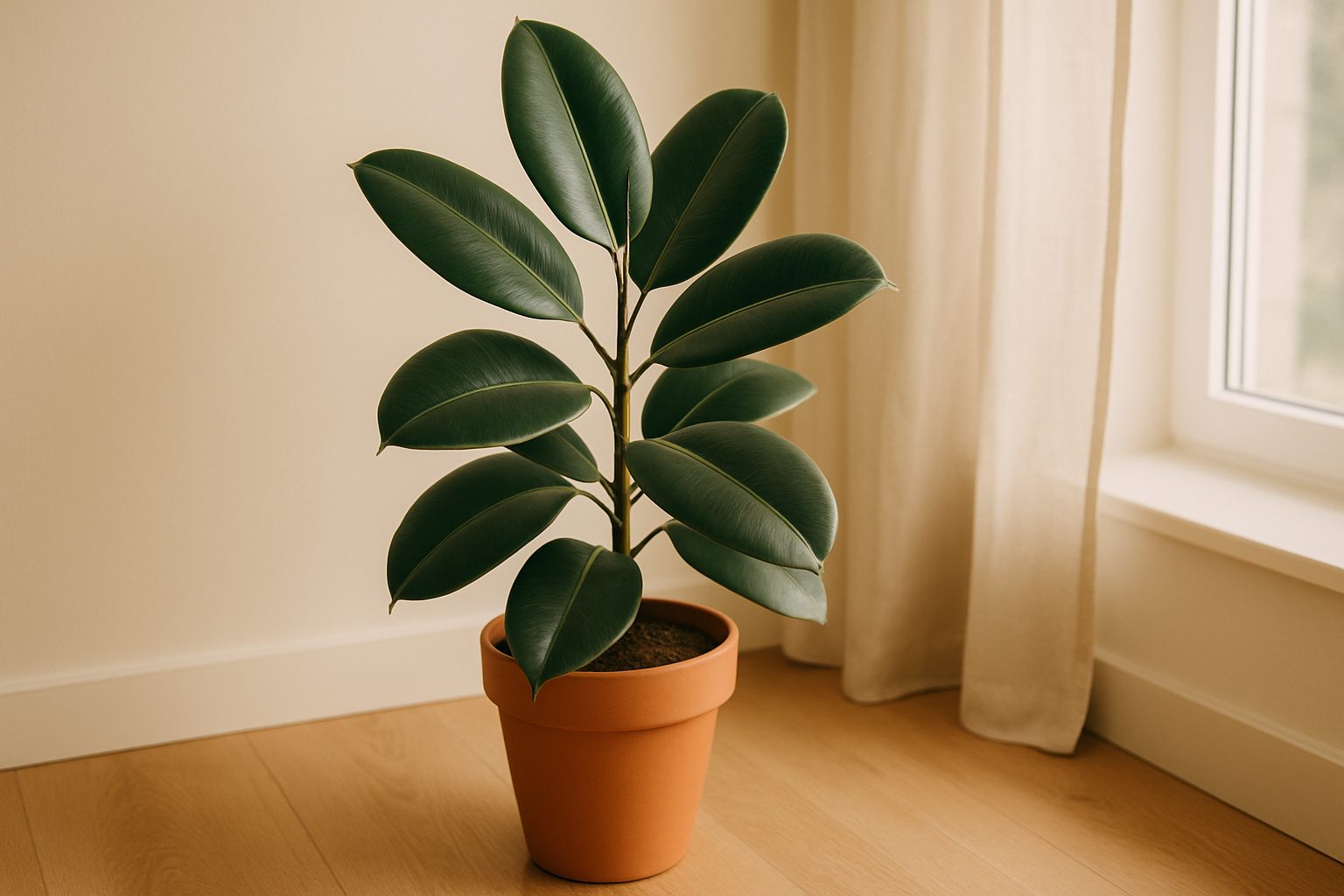
Rubber plant care is more forgiving than most people expect. Give your plant bright indirect light, water when the top 2 inches of soil are dry, and keep it somewhere warm. Do those three things well and it will reward you with fast growth and dramatic, glossy foliage.
Rubber Plant Care: Quick Summary
- Light: Bright, indirect. Near a window, out of direct sun.
- Water: Every 7-10 days in summer. Every 14-21 days in winter. Always check the soil first.
- Temperature: 60-85°F (15-29°C). Never below 55°F (13°C).
- Fertilizer: Monthly at half strength, spring through summer only.
- Repotting: Every 1-2 years, or when roots start circling the pot.
Light
Rubber plants do best in bright, indirect light. A spot within 5-6 feet of a large, uncovered window is ideal. Direct afternoon sun will bleach or scorch the leaves.
They will survive in lower light, but growth slows and the leaves can lose some of their deep color. If your rubber plant is barely growing and the new leaves look small and pale, more light is usually the fix.
Variegated varieties (those with pink, cream, or two-toned leaves, like ‘Tineke’ or ‘Ruby’) need even more light than the solid-green types. A darker corner will cause them to revert toward plain green over time.
Watering
The most common rubber plant mistake is watering on a fixed schedule instead of checking the soil. These plants need a proper dry-out between waterings.
Before you water, push your finger about 2 inches into the soil. If it still feels damp, wait a few more days. If it’s dry, water thoroughly.
A rough schedule as a starting point:
- Spring and summer (active growth): every 7-10 days
- Fall and winter (dormant period): every 14-21 days
These ranges shift based on your pot size, home humidity, and light levels. They’re a starting point, not a rule. See our full guide on how often to water houseplants to read your plant’s actual signals.
Water thoroughly each time, until water runs out of the drainage hole. Let the pot drain completely before putting it back in its saucer. Sitting in pooled water leads to root rot.
One tip: rubber plants can be sensitive to chlorine and fluoride in tap water. Letting water sit in an open container for a few hours helps chlorine escape. If your tap water is heavily fluoridated, filtered or rainwater is the better option.
Soil and Pot
Use a well-draining potting mix. A standard houseplant potting mix with a handful of perlite added works well. The perlite creates air pockets that help water pass through instead of sitting around the roots.
The pot must have drainage holes. A decorative pot without drainage will hold water around the roots, and root rot will follow within a few weeks.
Terracotta pots dry out faster than plastic or ceramic, which is useful if you tend to overwater.
Temperature and Humidity
Rubber plants like warmth. They’re comfortable between 60-85°F (15-29°C). According to Clemson Cooperative Extension, nighttime temperatures of around 60-65°F and daytime temps of 75-80°F are ideal.
The hard floor is 55°F (13°C). Below that, you’ll start seeing leaf damage: brown patches, drooping, or sudden leaf drop. Keep your rubber plant away from cold drafts, air conditioning vents, and unheated rooms in winter.
Humidity above 40% is ideal, though most rubber plants manage fine in normal indoor conditions. If your home gets very dry in winter (below 30%), brown leaf tips are the first sign. A pebble tray with water under the pot, or a small humidifier nearby, is usually enough.
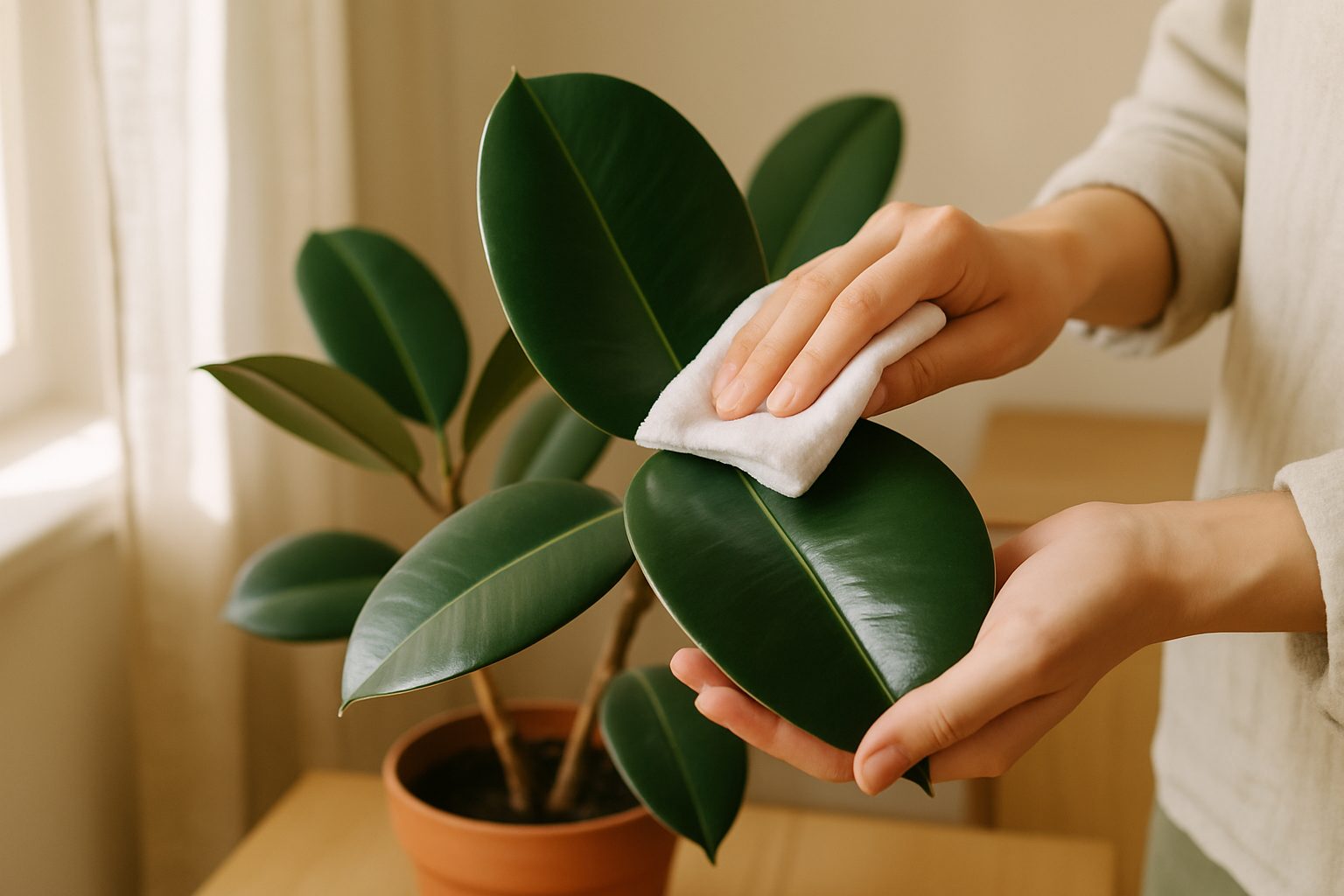
Wipe the leaves every few weeks with a damp cloth. It removes dust, helps the plant absorb light more efficiently, and keeps the foliage looking its best.
Fertilizing
Feed your rubber plant once a month during spring and summer using a balanced liquid fertilizer at half the recommended dose. Rubber plants don’t need heavy feeding, and over-fertilizing causes salt buildup in the soil that damages roots over time.
Stop fertilizing in fall and let the plant rest through winter. Resume when you see new growth starting in spring.
Repotting
Rubber plants are fast growers and will need repotting every 1-2 years while young. Signs it’s time: roots spiraling out of the drainage hole, water passing straight through without absorbing, or the plant becoming top-heavy.
Go up one pot size, about 2 inches wider. A pot that’s too large holds excess moisture around the roots, which can create the same overwatering problems you were trying to avoid.
Spring is the ideal time to repot, but if the roots are clearly overcrowded, don’t wait.
Our full guide on how to repot a houseplant walks through the steps.
Pruning
Rubber plants can reach 6-10 feet indoors. If yours is getting leggy or you want a fuller shape, you can prune it back.
Cut just above a leaf node (the bump where a leaf attaches to the stem). The plant will branch from that point, producing two or more new stems over time. Do this in spring when the plant is actively growing.
Never remove more than about 10% of the plant at one time. Always wear gloves. The cut stems release a white, milky latex sap that irritates skin and eyes. Wash your hands and tools thoroughly after handling it.
Propagation
Propagating a rubber plant is straightforward. It’s also a good use of any stems left over from pruning.
Cut a healthy stem just below a leaf node, making sure the cutting has 2-3 leaves. Let the cut end sit for an hour or two so the latex stops flowing and the wound begins to callus.
Then place the cutting in a glass of water, or plant it directly in a small pot of moist potting mix. If you’re using water, put the cutting somewhere with bright indirect light and change the water every few days. Roots typically appear within 4-6 weeks.
Once the roots are about an inch long, move the cutting into soil.
Why Is My Rubber Plant Dropping Leaves?
Leaf drop is the thing that worries rubber plant owners most. Five causes account for nearly all cases, and each one has a different set of signals.
| Cause | What the leaves look like | Soil state | Timing |
|---|---|---|---|
| Overwatering | Yellow, then drop from the bottom | Wet or soggy | Gradual |
| Underwatering | Limp, curled, or dry-edged before dropping | Bone dry | Gradual |
| Temperature shock | Green leaves drop suddenly | Normal | Within days of cold exposure |
| Moving the plant | A few leaves drop, rest looks healthy | Normal | Within 1-2 weeks of moving |
| Low light | Slow yellowing of oldest, innermost leaves | Normal | Over weeks or months |
Overwatering
The most common cause. Yellow lower leaves followed by dropping is the clearest sign. Check the soil. If it’s been wet for more than 10 days, ease off watering and check the roots. See our guide on root rot in houseplants if the roots look brown and mushy.
Underwatering
Leaves feel limp or soft before they drop, and the soil is completely dry. Water thoroughly and the plant usually recovers within a day or two.
Temperature shock
Green leaves dropping suddenly, with no yellowing first, often follows a cold event. A drafty window, an air conditioner blowing directly on the plant, or overnight temperatures below 55°F can all trigger it. Move the plant somewhere stable and warmer.
Moving the plant
Rubber plants dislike sudden changes in their environment. Losing 2-3 leaves within a couple of weeks of moving is normal. As long as the rest of the plant looks healthy, wait it out.
Low light
The plant sheds leaves it can no longer photosynthesize enough to support. Lower, inner leaves go first. New growth looks small and pale. The fix is more light, not more water.
Pests
Rubber plants are not especially pest-prone, but three show up occasionally.
Mealybugs look like small white cotton fluff in leaf joints and along stems. Wipe them off with a cotton ball dipped in rubbing alcohol, then spray the whole plant with diluted neem oil once a week for a month.
Spider mites leave fine webbing under leaves and cause stippled, dull-looking foliage. They thrive in dry air. Raise humidity and rinse the leaves with water, then use neem oil or insecticidal soap if the infestation is heavy.
Scale insects look like small brown bumps stuck to stems and leaf undersides. Scrape them off with a soft toothbrush and treat with neem oil or horticultural oil.
Catching any pest early makes treatment much easier.
Is a Rubber Plant Toxic to Cats and Dogs?
Yes. The ASPCA lists Ficus elastica (rubber plant) as toxic to cats, dogs, and horses. The plant contains ficin and ficusin, a psoralen compound found throughout all parts of the plant.
If a pet chews on the leaves or stems, the clinical signs listed by the ASPCA are gastrointestinal irritation and dermal irritation (skin irritation from direct contact with the sap). If you think your pet has eaten any part of the plant, contact your vet or the ASPCA Animal Poison Control Center at (888) 426-4435.
Keep the plant out of reach of pets that chew on things. The milky latex sap is also a skin irritant for people, so wear gloves when pruning and wash your hands and tools afterwards.
If you’re building a pet-friendly plant collection, see our guide to pet-safe houseplants.
FAQ
How fast does a rubber plant grow indoors?
Under good conditions (bright light, regular watering, monthly feeding), rubber plants can grow 12-24 inches per year. Growth slows significantly in low light or during winter.
Can a rubber plant live outside?
Rubber plants can live outdoors year-round only in USDA zones 10-12. Everywhere else, they can go outside in summer once nighttime temperatures stay consistently above 60°F. Bring them in before the first frost.
Why are my rubber plant’s leaves turning yellow?
Yellow leaves usually mean overwatering, especially if the lower leaves are affected first. Check the soil and the drainage. Occasionally a nutrient deficiency is the cause, but watering is the first thing to rule out.
How big does a rubber plant get indoors?
Most rubber plants reach 6-10 feet indoors, though they can grow taller. You can control height by pruning the main growing tip. In their native habitat in India and Southeast Asia, they grow into large trees.
Is a rubber plant a good choice for beginners?
Yes. They’re one of the easier large houseplants to own. See our full list of best indoor plants for beginners for more options at a similar difficulty level.
Sources: Clemson Cooperative Extension Home & Garden Information Center (hgic.clemson.edu/factsheet/rubber-plant/); ASPCA Animal Poison Control Center, Ficus entry (aspca.org/pet-care/animal-poison-control/toxic-and-non-toxic-plants/fig).