Common Houseplant Pests: How to Identify and Treat Them
Identify the most common houseplant pests — spider mites, scale, mealybugs, and more — and treat them before they spread to your whole collection.
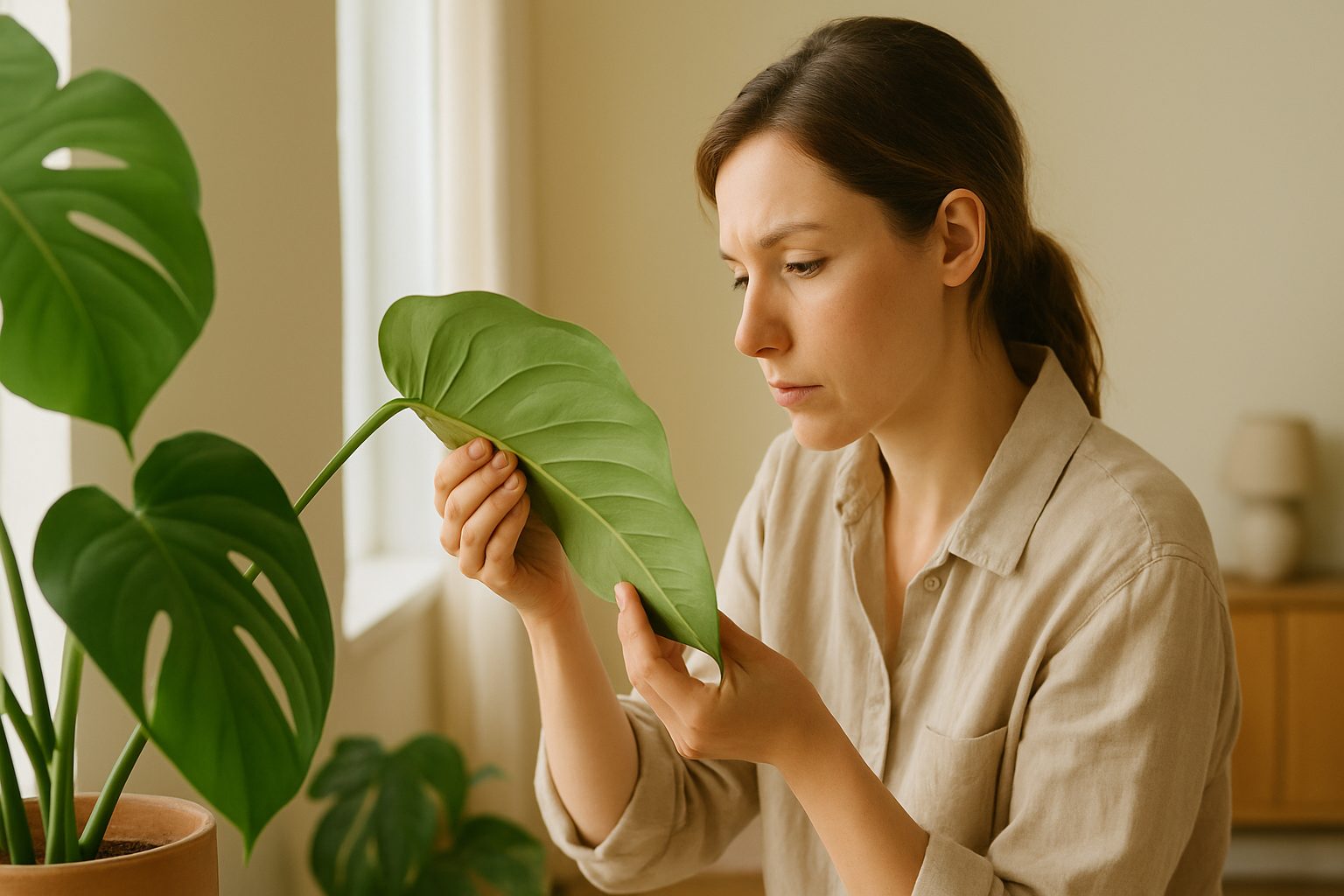
You noticed something crawling on your monstera, or tiny white specks in the soil, or sticky patches forming on the leaves you just wiped clean last week. Finding bugs on your houseplants does not mean you failed. It means you’re paying attention. Most infestations are completely fixable if you catch them early and know what you’re actually dealing with.
Quick answer: The most common houseplant pests are fungus gnats, spider mites, mealybugs, scale, aphids, thrips, and whiteflies. Most respond to isopropyl alcohol, insecticidal soap, or neem oil. The key is identifying the right pest before you treat, then staying consistent for 2 to 4 weeks.
What Do You See? Start Here
Treating for spider mites when you have scale wastes time and stresses your plant. Use this table to narrow it down before reaching for anything:
| What you notice | Likely culprit |
|---|---|
| Tiny dark flies hovering around the soil | Fungus gnats |
| Fine webbing on leaves, dusty or stippled look | Spider mites |
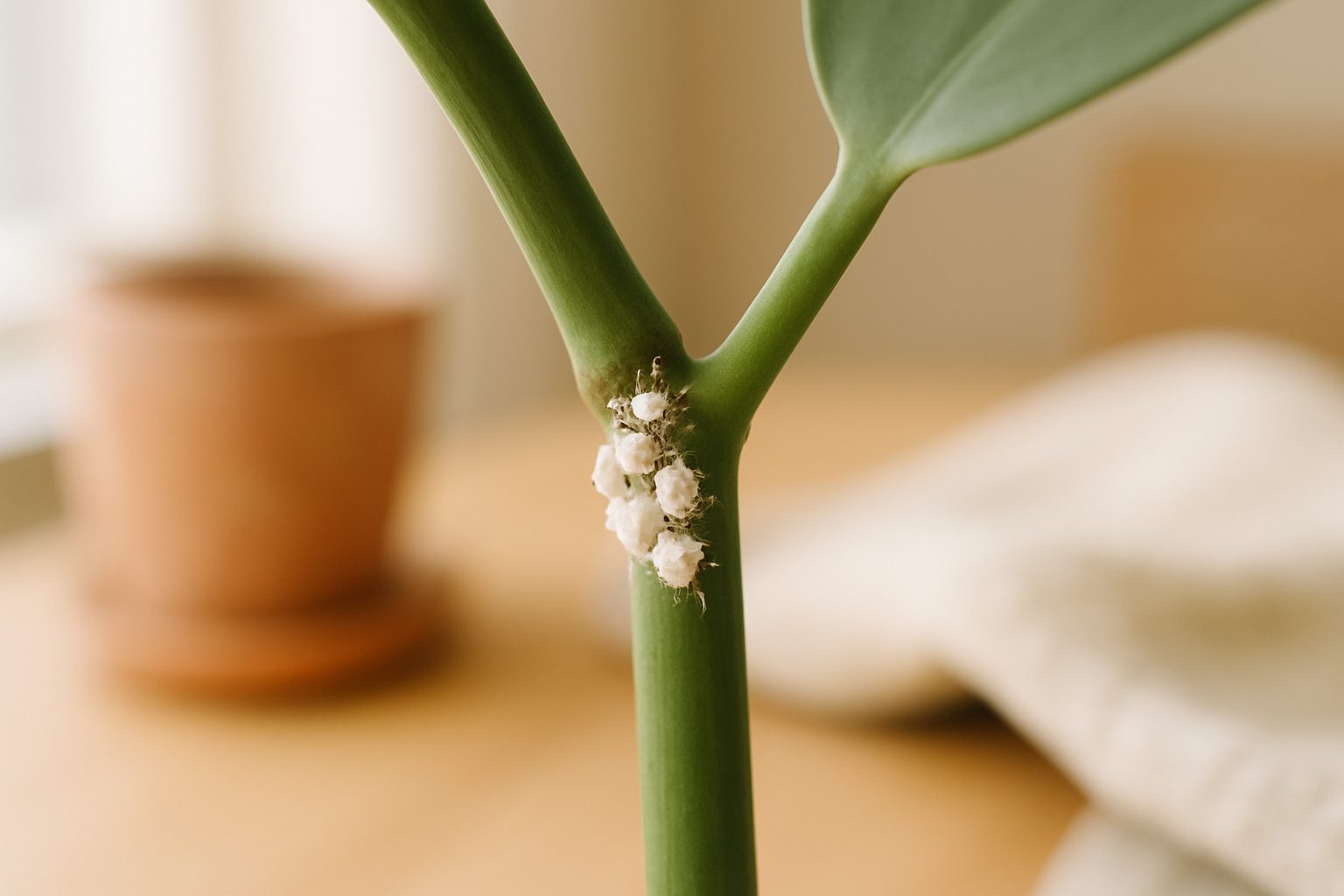
| White cottony blobs in stem joints or leaf axils | Mealybugs |
| Brown bumps on stems that scrape off but don’t move | Scale |
| Clusters of soft bugs on new growth, sticky residue | Aphids |
| Silver streaking on leaves, tiny black specks | Thrips |
| Tiny white bugs jumping around in moist soil | Springtails (harmless, see below) |
Springtails and Other Harmless Bugs
Not everything you find is a problem. Springtails are tiny, white or grey, and jump when disturbed. They live in moist soil and feed on decomposing organic matter. They do not damage your plant.
If you have them, it usually just means your soil stays too wet for too long. Let it dry out more between waterings and they’ll leave on their own.
Soil mites (tiny white specks that barely move) are also largely harmless scavengers. Root aphids are different: they cluster densely on roots and cause wilting even when the rest of the plant looks fine. If your plant is struggling and the top of the soil looks clean, tip it out of the pot and check the roots before you diagnose anything.
The Six Most Common Houseplant Pests
Fungus Gnats
What you see: Small dark flies about the size of a fruit fly, hovering near the soil surface or flying up when you water. Adults are irritating but mostly harmless. The larvae live in the top inch or two of damp soil and feed on roots, which is where the real damage happens.
How to treat:
- Let the top 2 inches of soil dry out completely between waterings. Larvae need moisture to survive and die quickly without it.
- Water with a diluted hydrogen peroxide mix (1 part 3% peroxide to 4 parts water) to kill larvae on contact.
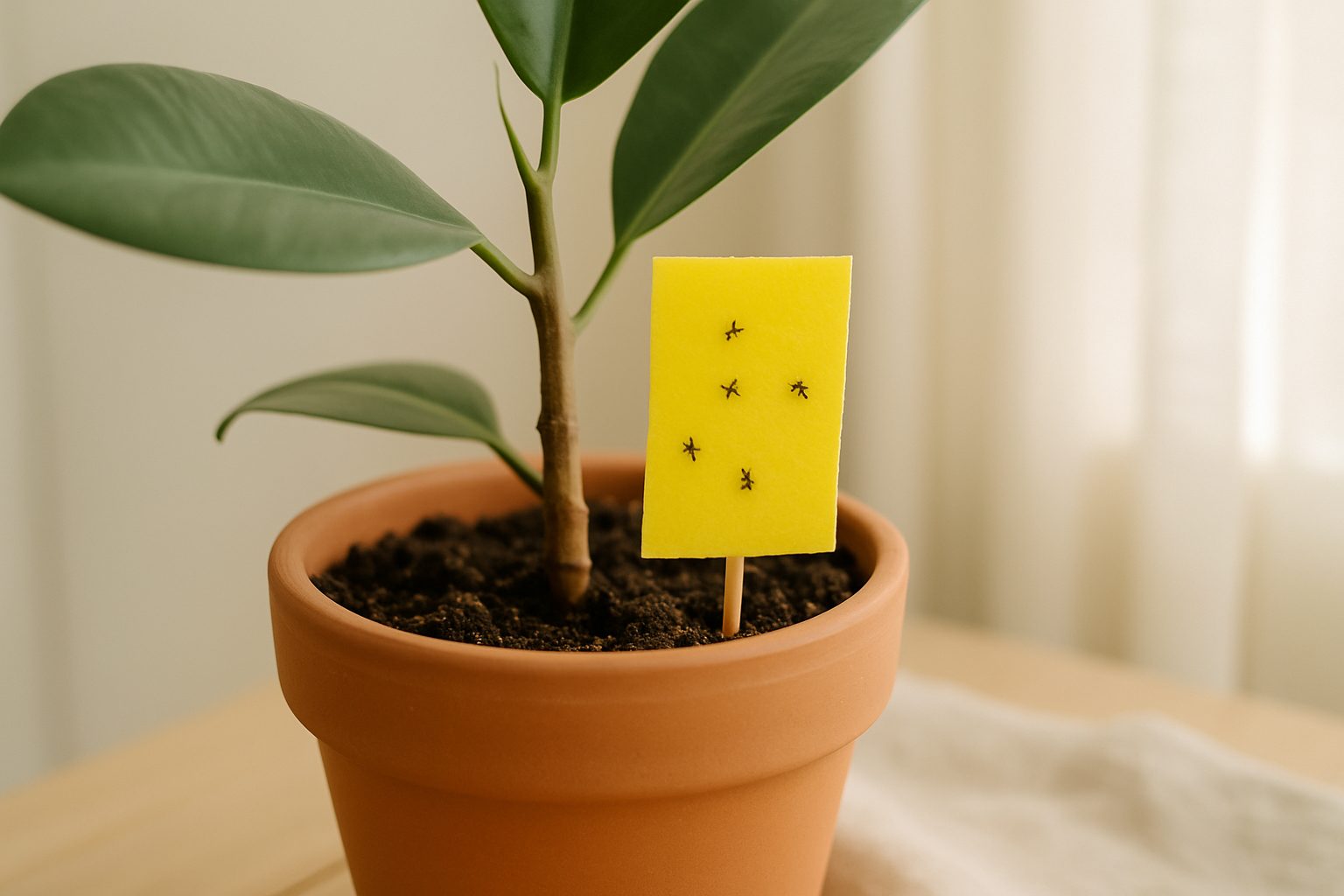
- Place yellow sticky traps near the soil to catch adults and break the cycle.
- For persistent infestations, use Bacillus thuringiensis israelensis (BTi), sold as Mosquito Bits. Water it into the soil. It’s highly effective, and safe around pets and children.
Recovery time: 2 to 4 weeks of consistent dry-out cycles. Fungus gnats are one of the easier pests to clear.
For more detail, see our complete guide to getting rid of fungus gnats.
Spider Mites
What you see: Fine webbing, especially on the undersides of leaves or between stems. Leaves look dusty, stippled, or bleached, with tiny pale dots where feeding happened. The mites themselves are nearly microscopic. They thrive in warm, dry conditions, which makes your heated apartment a perfect home for them.
How to treat:
- Put the plant in the shower first and spray it down. This physically dislodges mites and eggs.
- Follow up with insecticidal soap or neem oil, covering all leaf surfaces, especially the undersides. Repeat every 5 to 7 days.
- Increase humidity around the plant. Mites hate moisture in the air.
- Isolate the plant immediately. Spider mites spread fast.
Recovery time: 3 to 4 weeks of consistent treatment. Spider mites reproduce quickly, so skipping even one round lets them rebound.
We cover these in more depth in our spider mite treatment guide.
Mealybugs
What you see: White, waxy, cottony blobs clustered in leaf joints, along stems, or at the base of the plant. They produce a sticky substance called honeydew that attracts black sooty mold. If you see a sticky film and fuzzy white patches, mealybugs are the likely source.
How to treat:
- Dab individual mealybugs with a cotton swab soaked in 70% isopropyl alcohol. This kills on contact.
- Spray the whole plant with insecticidal soap, getting into every crevice and joint.
- Repeat weekly for 4 to 6 weeks. Mealybugs hide well, and eggs survive a single treatment.
Recovery time: 4 to 6 weeks, sometimes longer if they’ve reached the roots. If they keep coming back despite surface treatment, check the root zone. Our mealybug guide covers root mealybugs specifically.
Scale Insects
What you see: Hard, brown or tan bumps fixed to stems and the undersides of leaves. They don’t move. Scrape one off and there’s a soft body underneath. Like mealybugs, they produce honeydew, so look for sticky leaves and black mold as secondary signals.
Scale is the pest most people give up on. Understandably. The waxy outer shell protects adults from almost every spray you can apply, which is why one treatment does nothing and people get frustrated. The key is targeting the crawler stage, when juveniles haven’t yet formed their armor.
How to treat:
- Scrape off as many as you can physically with a soft toothbrush or your fingernail.
- Wipe stems and leaf undersides with a cotton ball soaked in isopropyl alcohol.
- Follow with neem oil or insecticidal soap. Repeat every 7 to 10 days for 6 to 8 weeks.
Recovery time: 6 to 8 weeks minimum. If a plant is heavily encrusted, consider whether treatment is realistic before committing the time. A severely infested plant can spread scale to everything nearby.
Aphids
What you see: Clusters of small, soft-bodied insects on new growth, stem tips, or flower buds. Usually green, but can be black, yellow, or white. Affected leaves curl or pucker. You’ll also notice sticky residue.
How to treat:
- Blast them off with water. Aphids have weak grip and come off easily.
- Follow with insecticidal soap spray every 3 to 5 days for 2 weeks.
- Stay consistent. A single aphid can produce 80 offspring in a week, so gaps in treatment erase your progress fast.
Recovery time: 2 to 3 weeks with consistent effort. Aphids are one of the faster infestations to resolve.
Thrips
What you see: Silver or bronze streaking on leaf surfaces, distorted or curled new growth, and tiny black specks (their droppings). The insects themselves are thin, fast-moving, and hard to spot with the naked eye. Yellow sticky traps help confirm them.
How to treat:
- Apply insecticidal soap, neem oil, or spinosad (an organic option) to all leaf surfaces, top and bottom, every 5 to 7 days.
- Wipe leaf surfaces to remove eggs, which are laid directly into plant tissue.
- Treat the top layer of soil. Thrips pupate there, so ignoring the soil breaks your treatment cycle.
- Remove and dispose of any badly damaged leaves.
A note on Dawn dish soap: You’ll see it recommended online for thrips. It doesn’t work reliably. Thrips have a tougher body than aphids or mealybugs, and dish soap formulations vary in concentration, which means unpredictable results. Worse, it can cause phytotoxicity on sensitive plants at higher concentrations. Use insecticidal soap instead, which is standardized for plant use.
Recovery time: 3 to 5 weeks. Thrips are persistent because they cycle between the plant and the soil. Three to four full treatment rounds is a realistic minimum, so don’t give up after two.
How to Prevent Pests
A few consistent habits make a real difference:
- Quarantine new plants. Keep any new addition away from your existing plants for 2 to 4 weeks before introducing it. This single habit stops most infestations before they start.
- Inspect weekly. Flip leaves and check stem joints. Scale and mealybugs are easy to miss when small, and catching them early cuts your treatment time in half.
- Watch for sticky leaves. Honeydew residue almost always signals a sap-sucking pest somewhere on or near the plant.
- Avoid chronic overwatering. Damp soil creates conditions where fungus gnats breed and stress sets in. See our guide on how often to water houseplants if you’re not sure how to calibrate.
- Improve airflow. Spider mites love warm, dry, stagnant air. A small fan or slightly more humid environment makes a difference.
How Pests Actually Get Into Your Home
New plants from the store are the obvious route, but there are others most people don’t think about:
- Fresh cut flowers and grocery herbs: florist bouquets and supermarket basil frequently carry aphids, thrips, and whiteflies. Inspect before placing near your collection.
- Open windows in summer: flying adults (whiteflies, aphids, fungus gnats) drift in through screens. This is especially common from late spring through early fall.
- Cuttings from other people’s plants: a well-meaning friend’s propagation can carry mealybugs or scale that are invisible until they’ve already spread.
- Outdoor potting soil: bagged indoor mix is usually safe, but soil from the garden or a bargain bin bag can harbor eggs and larvae. Stick to quality indoor potting mix.
The consistent habit that catches all of these is a weekly leaf flip. By the time a pest colony is visible without looking for it, you’re already behind.
When to Give Up on a Plant
Sometimes the honest answer is that a plant is not worth saving. A heavily infested plant can spread pests to your whole collection, and that’s a much bigger problem. Consider letting it go if:
- It has been under heavy infestation for more than 2 months with no visible improvement.
- Scale or mealybugs have colonized the root zone.
- The plant is actively declining despite treatment.
If you discard an infested plant, bag it before carrying it through the room. Thrips and whiteflies fly. The trip to the bin can become a dispersal event if you’re not careful.
If the plant itself is the issue, also check whether overwatering or root rot is compounding the problem. Stressed plants are much more vulnerable to pests.
Treatment Safety Around Pets and Children
Insecticidal soap, neem oil, and isopropyl alcohol spot treatments are all low-risk around pets and children when used as directed and allowed to dry fully before contact. BTi (Mosquito Bits) and spinosad are also considered safe for both.
Systemic pesticides and higher-concentration chemical insecticides are a different story. Read labels carefully, keep treated plants out of reach while wet, and give leaves 24 hours to dry after any spray application.
For a broader look at which plants themselves are safe around pets, our pet-safe houseplants guide is a good place to start.
Frequently Asked Questions
What is the hardest houseplant pest to get rid of?
Scale is the most difficult, because the hard waxy shell protects adults from most sprays. You can only reliably reach the crawler stage, which means you need multiple rounds over 6 to 8 weeks. Thrips are a close second because they pupate in the soil and require 3 to 4 complete spray cycles to clear.
Does vinegar kill houseplant pests?
No, and it can burn foliage if you spray it directly on leaves. Isopropyl alcohol (70%), insecticidal soap, and neem oil are far more effective and safer for the plant.
Do I need to throw away soil that has fungus gnats?
Usually not. Letting the soil dry thoroughly between waterings kills larvae and breaks the breeding cycle. Watering with BTi (Mosquito Bits) handles persistent cases. Replacing the soil can help in severe infestations but is rarely the right first step.
Should I treat my plant before I know what the pest is?
Identify first, treat second. Using the wrong treatment stresses your plant and gives pests time to spread. The symptom table at the top of this article covers the most common scenarios. If you’re still not sure, a photo posted to r/plantclinic usually gets a fast, accurate answer.
Where do houseplant pests come from?
Common sources: newly purchased plants (always quarantine), grocery store cut flowers and fresh herbs, open windows in summer, cuttings from other people’s plants, and outdoor potting soil brought inside. Pests can come in any of these routes, which is why a weekly inspection habit matters so much.
Why do my plants keep getting pests even after treatment?
The two most common reasons are incomplete treatment coverage (missing leaf undersides, stem joints, or the soil) and stopping too early. Most pests need 3 to 6 weeks of consistent treatment to clear. If the problem keeps returning after full treatment cycles, check whether environmental factors like chronic overwatering or poor airflow are making your plant more vulnerable. Yellow leaves that aren’t pest-related are worth checking out too: see why plant leaves turn yellow.
Sources and Further Reading
- Clemson Cooperative Extension, “Common Houseplant Insects and Related Pests” (HGIC)
- Colorado State University Extension, “Houseplant Pests” (CSU AgBio IPM)
- University of Alaska Fairbanks Cooperative Extension, “Houseplant Pests and Control” (PMC-10073)
- ASPCA Animal Poison Control Center (aspca.org/pet-care/animal-poison-control) for toxicity verification
Finding pests early and treating consistently is almost always enough. You don’t need to throw the plant out, start over, or panic. Just work through it one round at a time.
Keep reading
Related guides
 Pests
Pests How to Get Rid of Fungus Gnats on Houseplants (for Good)
Those tiny black flies are fungus gnats. Here's how to get rid of houseplant gnats for good and stop them coming back.
 Plant Lists
 Best Indoor Plant Stands (and How to Actually Choose One)
Choosing an indoor plant stand isn't just about looks. Here's how to pick the right height, weight capacity, and drainage setup for your plants.
 Guides
 How to Repot a Houseplant (Without Killing It)
How to repot a houseplant step by step: picking the right pot size, soil type, and what to do after so your plant actually recovers.