Best Indoor Plant Stands (and How to Actually Choose One)
Choosing an indoor plant stand isn't just about looks. Here's how to pick the right height, weight capacity, and drainage setup for your plants.
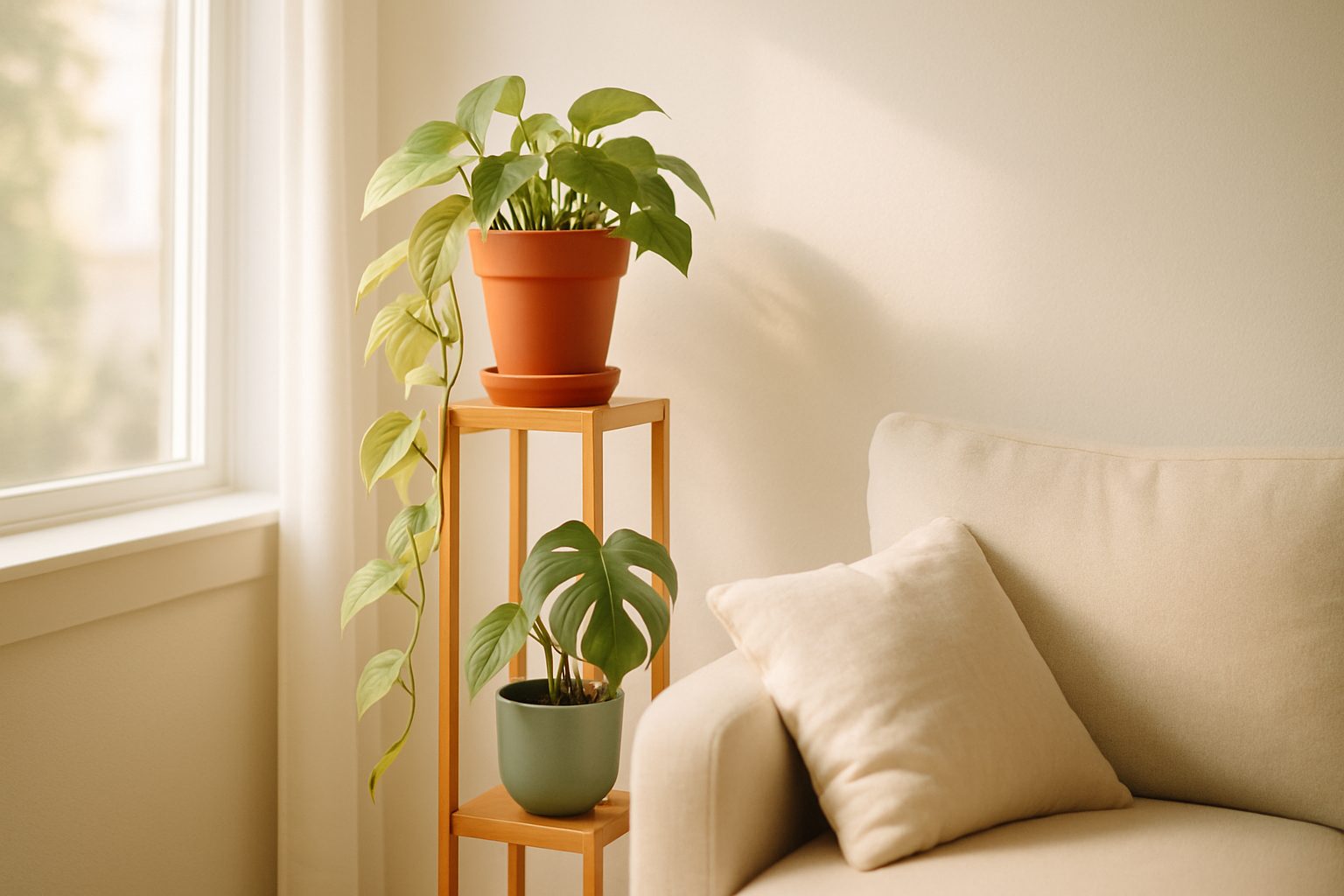
The right indoor plant stand comes down to three things: weight capacity, drainage setup, and how high it puts your plant relative to the nearest window. Get those three right and almost any style works.
Quick answer: For most beginners, the most practical indoor plant stand has a flat shelf (not a ring) wide enough for a saucer, a weight rating at least 20% above your heaviest wet pot, rubber feet for floor protection, and a height that puts your plant’s foliage at or near windowsill level. Tiered stands add complexity because each shelf sits in a different light environment. Read the light gradient section before buying one.
What to sort out before you buy
Weight and pot size
Most decorative plant stands are rated for 5 to 10 lbs per shelf. That sounds generous until you do the math on a real pot.
A 6-inch nursery pot in plastic with moist soil weighs roughly 2 to 3 lbs. Move that plant into a ceramic pot and it runs 5 to 8 lbs. A 10-inch terracotta pot with wet soil and a mature plant can hit 10 to 15 lbs. Many attractive bamboo and thin-metal stands will flex or joint-loosen under that load within a few months.
Before buying, look up the stand’s weight capacity and compare it to your heaviest pot plus a 20% safety margin. A kitchen scale is the most accurate way to weigh your current pot. For a rough estimate: terracotta is heavier than ceramic, ceramic is heavier than plastic, and everything is heavier when the soil is wet.
Shelf diameter matters too. Check that the platform is 1 to 2 inches wider than your pot’s base, measured at the bottom, not the widest point. Wide-lipped terracotta and flared decorative pots often don’t fit ring-style shelves even when the stated shelf size looks right.
Drainage and floor protection
Water drains from the pot, collects in the saucer, and eventually overflows onto the stand surface. On unfinished or lightly sealed wood, that moisture warps the shelf within weeks. On metal, the drainage contact points start to rust, usually at the joints.
That’s just how watering works indoors. The fix is to always use a saucer or drip tray under the pot, sized to hold the volume of water that drains after a full watering session.
For ring-style shelves (a circular frame, no solid base), the saucer needs to sit stably inside the ring without tipping. Check the ring’s inner diameter against your saucer size before buying.
For wood stands, look for a lacquered, painted, or wax-sealed finish. If the stand has bare or lightly oiled wood, seal it yourself with clear outdoor-grade sealant before you use it. Metal stands generally hold up better, but check the finish at joints and welds. In humid rooms like bathrooms, sealed bamboo or teak often outlasts powder-coated metal.
Light access
Stand height changes how much light your plant actually gets, and this is the factor most buying guides skip.
Light intensity drops with distance from the window. A plant sitting 3 feet below the windowsill is in a noticeably dimmer light environment than the same plant elevated to windowsill height, even in the same room.
If you’re placing the stand near a window, position it so your plant’s main foliage sits at or above windowsill level. For tiered stands, each shelf sits in a noticeably different light environment. The bottom shelf of a 5-tier unit can get half the light of the top shelf or less.
Stability
Choose a stand where the base width is at least one-third of its total height. That ratio matters more than weight. A tall five-tier bamboo stand with a 12-inch base footprint and a full load of plants will tip far more easily than a short, wide rattan stand.
Rubber or silicone feet prevent sliding on tile or hardwood and protect the floor from moisture marks. They’re worth checking for before you buy.
For tall stands in homes with cats or small children, anti-tip furniture straps (the kind sold for securing dressers) can be anchored to wall studs without visible damage to most walls. Check with your building before using them in a rental.
Types of indoor plant stands
Single-pedestal stands
One platform, one plant. These are the most stable option for a single specimen and work especially well for trailing plants like pothos or string of hearts, where height lets the vines cascade downward naturally.
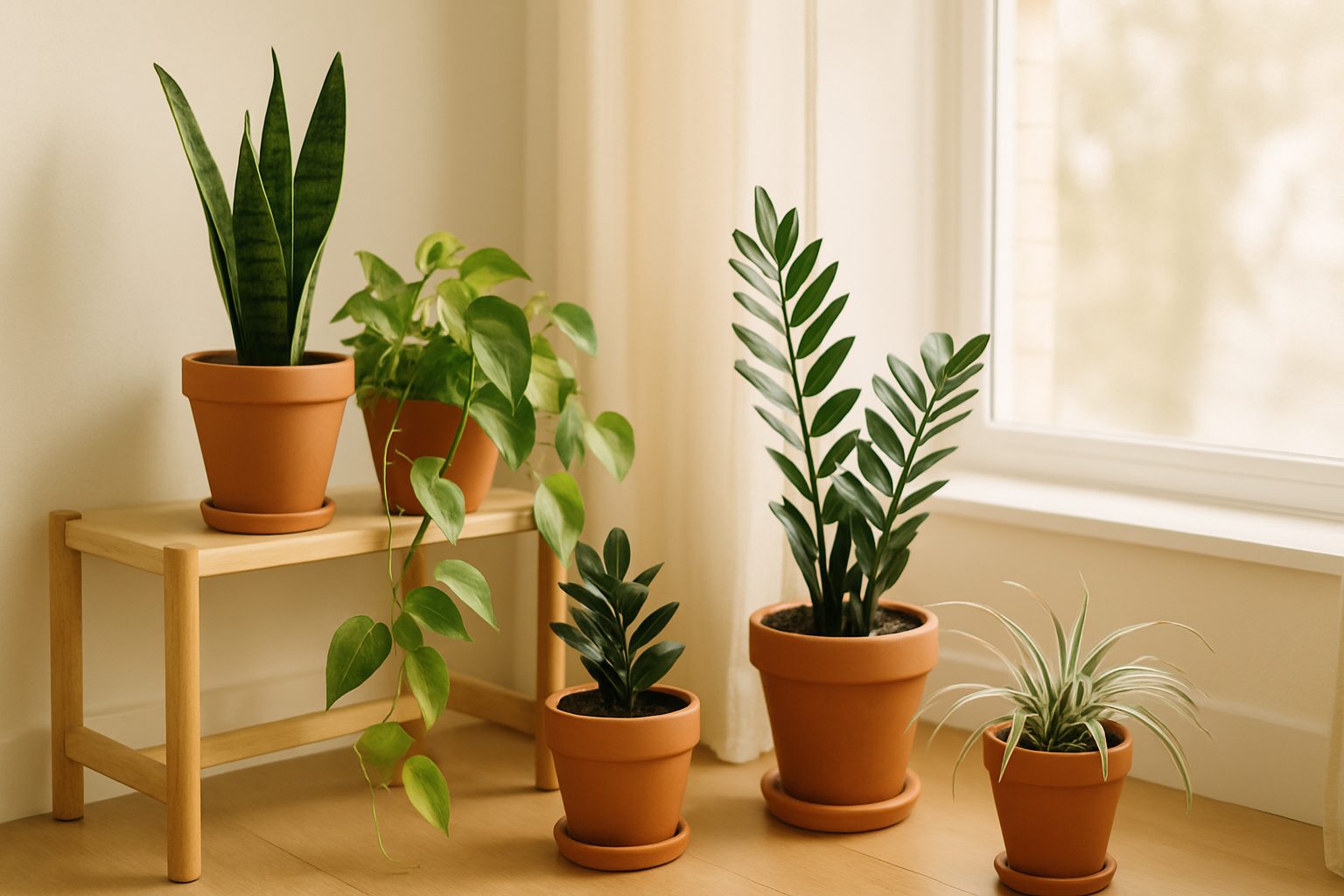
A snake plant on a 24-inch column in a corner looks very different from the same plant on the floor. If you’re deciding which plants suit this kind of placement, our guide to the best indoor plants for beginners covers the most forgiving options.
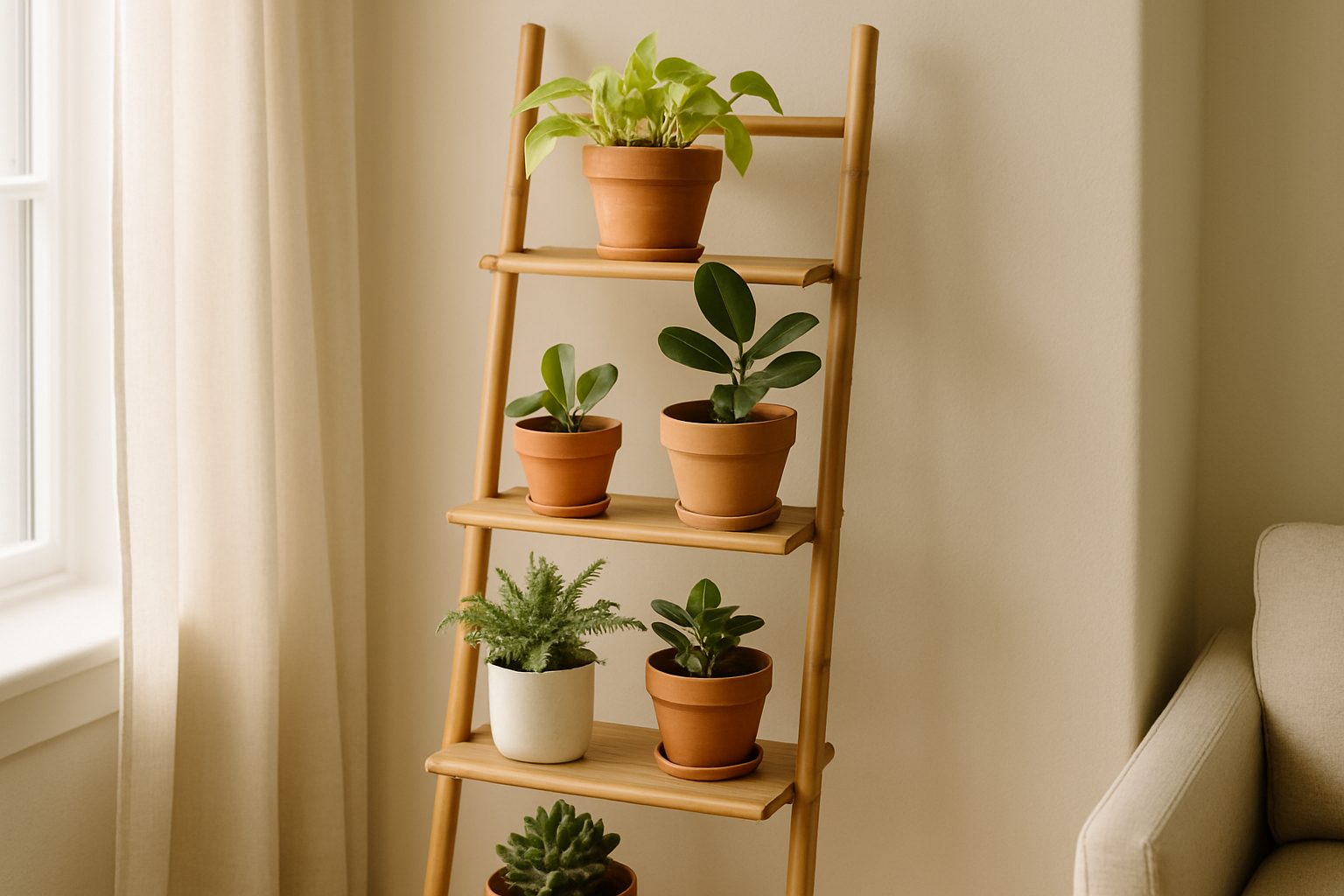
Tiered and ladder stands
Tiered stands hold multiple plants in a compact footprint, usually 3 to 5 shelves stacked vertically. They’re a popular choice for small apartments, but they need more thought than most buyers expect.
The main issue is the light gradient: each lower shelf gets less light than the one above it, and the drop is larger than most people expect. Bottom shelves on a 5-tier unit can be in near-shade even when the stand is placed near a window.
Check that you can comfortably reach the top shelf to water. A 5-foot stand is manageable. An 8-foot one is not.
Corner stands
Corner stands use unused floor space well and tend to be stable because they can brace against two walls. The trade-off is light. Corners are usually the farthest point in a room from the nearest window, so plants placed there often get less light than the room’s general brightness suggests.
If your corner gets genuine bright indirect light (you can see clear sky from the corner when you look toward the window), a corner stand works for moderate-to-bright-light plants. If the corner is dim, keep it for low-light species. Our guide to low-light indoor plants covers the best options for dim spots.
Wall-mounted shelves and plant ledges
Wall mounting gives you full control over height and shelf spacing. You can position each shelf where light is best, which makes it the most flexible option for light accuracy.
The downside is permanence. Wall anchors leave holes, which matters in rentals. Floating shelves also have no built-in drainage accommodation, so every pot needs a saucer, and you need to be consistent about checking for overflow. A drip from a wall shelf down a painted wall is an easy way to lose a deposit.
What do plant stands cost?
Prices vary a lot, and the gap between cheap and mid-range matters more than the gap between mid-range and expensive.
Under $30: Single-pedestal metal stands, simple ring-shelf designs, and thin-tubed tiered stands. Most are fine for light loads under 8 lbs per shelf. Finish quality is variable. Expect to reseal wood stands yourself and check metal joints for rust regularly.
$30 to $80: Mid-range tiered bamboo stands, ladder-style shelves, and basic solid-wood pedestals. Weight ratings are more reliable, finishes hold up better, and assembly is tighter. This range works well for most beginners.
Over $100: Solid hardwood, cast iron, or designer-brand stands rated for heavier loads. Worth it for long-term setups or heavy terracotta and ceramic pots.
At the lower end, you tend to lose shelf width (ring shelves that won’t fit a saucer), finish durability at drainage contact points, and joint stability under sustained load.
Match the stand to your plant
Most buying guides tell you to “consider your plant’s characteristics” without actually doing it.
Trailing plants (pothos, string of hearts, heartleaf philodendron): Use a single-pedestal stand 24 to 36 inches high so the vines have room to hang. A tiered stand works only if the trailing plant sits on the top shelf.
Large floor plants (fiddle-leaf fig, monstera, bird of paradise): These plants don’t need much elevation. A low, wide platform stand 6 to 12 inches high is enough to protect the floor and tidy up the look without making a heavy plant unstable. As these plants grow and eventually need repotting, consider whether your current stand will still fit the new pot. Our guide to repotting a houseplant explains how to know when it’s time.
Humidity-loving plants (ferns, calathea, prayer plants): Group multiple humidity-lovers on a wide tray-style stand, ideally one with a base tray at least 12 inches across. Fill the tray with pebbles and keep the water level just below the pot bases. The combined evaporation from soil and pot surfaces can raise ambient humidity 5 to 10 percent within a foot of the group. That’s enough to notice on a hygrometer, and enough to help sensitive plants. Individual pedestals for each plant don’t produce the same effect.
Heavy pots (terracotta, concrete, large ceramics): Skip decorative thin-legged stands. Use a stand with a flat, solid shelf rated above your pot’s actual weight. Metal construction is more reliable than bamboo or rattan for anything over 10 lbs per shelf.
Low-light tolerant plants (ZZ plant, snake plant, cast iron plant): These belong on bottom shelves, in corners, and on stands far from windows. Our low-light indoor plants guide gives specific options that genuinely thrive without strong light.
The light gradient problem on tiered stands
On a five-tier stand placed near a window, each shelf sits in a different light environment. In a bright room, the bottom shelf can receive half the light of the top shelf or less, because the upper shelves block part of the incoming light from reaching the lower ones.
A rough guide by tier:
- Top shelf: Closest to the light source. Best for plants that need bright indirect light: pothos, spider plants, most succulents, trailing philodendrons.
- Middle shelves (tiers 2 and 3): Moderate light, with some variation by window distance. Works for tolerant plants: heartleaf philodendron, tradescantia, peace lily.
- Bottom shelves (tiers 4 and 5): Often in near-shade even in a bright room. Best for genuinely low-light plants: ZZ plant, cast iron plant, some ferns.
Placing a light-hungry plant on the bottom shelf is a common reason plants “just stop growing” after a move to a new stand.
Watering frequency also shifts by shelf. Lower shelves with less light dry out more slowly than top ones. Watering everything on the same schedule leads to overwatered bottom plants and underwatered top ones. Our guide to watering houseplants covers how to read your plant’s soil instead of following a fixed schedule.
If you plan to rotate plants on the stand for even growth, make sure you can reach each shelf easily enough to remove, spin, and replace the pot. Corner stands and wall shelves often make rotation awkward.
Frequently asked questions
What height should an indoor plant stand be?
For trailing plants, 24 to 36 inches gives vines room to hang. For a specimen plant at eye level when seated, 18 to 24 inches usually works. For large floor plants, 6 to 12 inches is enough to lift the pot without making a tall plant unstable.
Can you put a plant stand near a window?
Yes. A position near a window is often the best choice for light-loving plants. Put the stand close enough that the plant’s foliage sits at or above windowsill height. A stand placed well below the windowsill will receive less light than the window position suggests.
Are tiered plant stands good for indoor plants?
They work well, but not equally on every shelf. Light decreases with each lower tier. Match plants to shelves by light need, with your most light-demanding plants at the top.
Do I need to seal a wooden plant stand?
If the stand has an unfinished or lightly oiled surface, seal it before using it. Drainage water will warp or stain unprotected wood within a few waterings. A clear outdoor-grade sealant protects the surface without changing the look much.
Are metal plant stands safe for bathrooms?
Powder-coated metal handles humidity short-term, but the finish chips at joints and drainage contact points, leading to rust. In high-humidity rooms, sealed bamboo or teak holds up better. If you use metal in a bathroom, dry the contact points after heavy humidity exposure.
How do I stop a tall plant stand from tipping over?
Choose a stand where the base width is at least one-third of its total height. Rubber feet help on smooth floors. For tall stands near pets or small children, anti-tip furniture straps anchored to wall studs are the most reliable fix. If you’re also choosing plants for a home with animals, our guide to pet-safe houseplants covers which plants are safe if a pot does fall and gets investigated.
Start with your budget, then work through weight capacity, drainage accommodation, and stand height relative to your window. Get those four things right, and the style is yours to choose.
Sources and further reading: ASPCA Animal Poison Control Center (toxicity); University of Missouri Extension (houseplant care basics); Royal Horticultural Society (indoor plant light guidance).
Keep reading
Related guides
 Plant Lists
 20 Pet-Safe Houseplants (Non-Toxic to Cats and Dogs)
The best pet-safe houseplants for cats and dogs, ASPCA-verified. Plus the popular plants that aren't actually safe and what to do in an emergency.
 Plant Lists
 15 Best Low-Light Indoor Plants
15 low-light indoor plants that genuinely thrive in dim rooms. Includes a shadow test, watering guide, and pet-safety table.
 Plant Lists
 18 Best Indoor Plants for Beginners (Nearly Impossible to Kill)
The best indoor plants for beginners: 18 nearly unkillable houseplants that thrive on neglect, with light, water and pet-safe notes for each.