15 Best Low-Light Indoor Plants
15 low-light indoor plants that genuinely thrive in dim rooms. Includes a shadow test, watering guide, and pet-safety table.
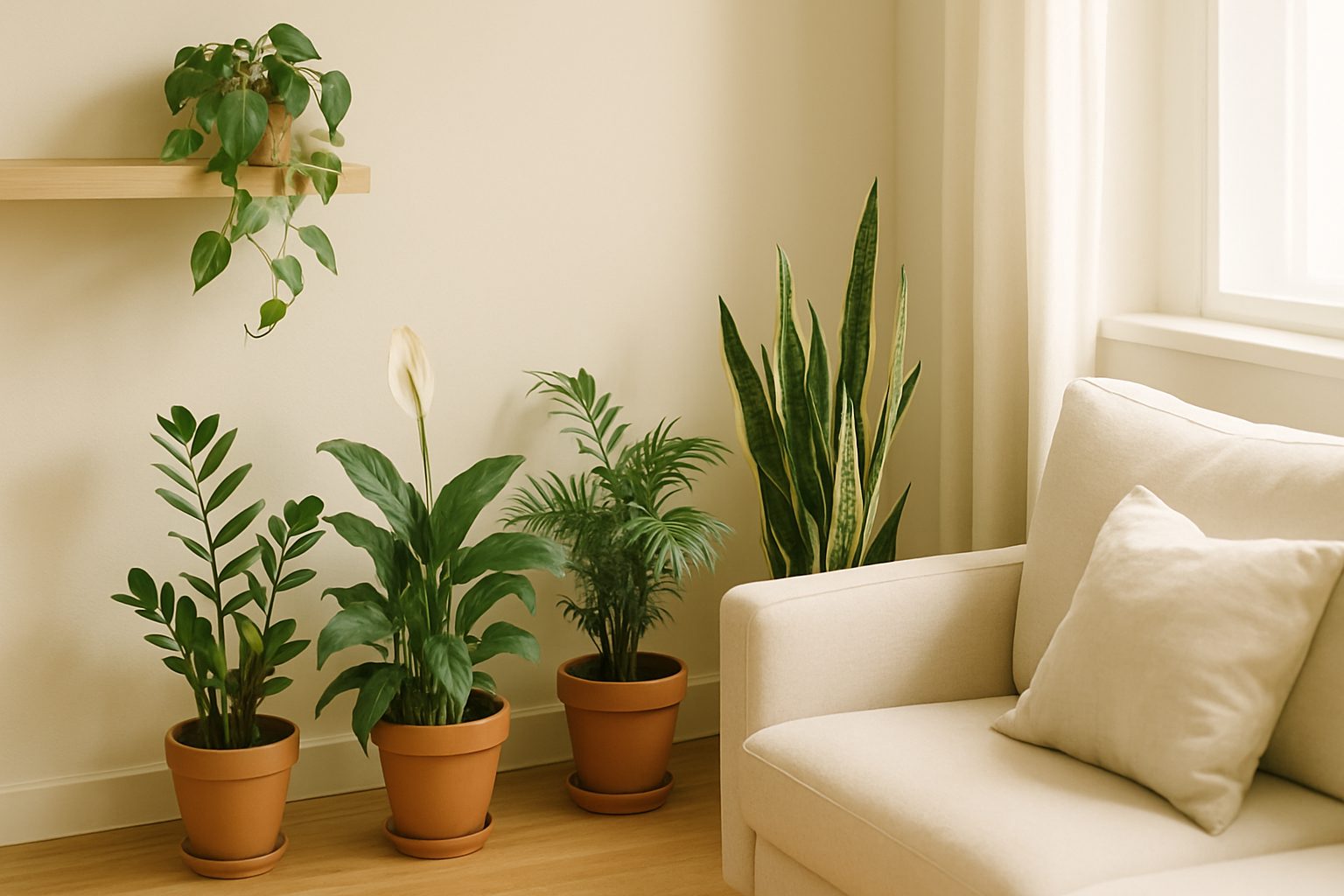
Finding the best low-light indoor plants is trickier than it looks. Most lists recommend the same 10 plants and give them a 2-sentence blurb, and at least 3 of those plants aren’t actually suited for low light. This guide covers 15 that genuinely work in dim rooms, plus what you really need to know to keep them alive there.
Quick answer: The ZZ plant, cast iron plant, and peace lily are the safest bets for genuinely low-light rooms. Snake plant and pothos are popular choices but only tolerate low light. They won’t thrive in real darkness. Details on all 15 are below.
What “Low Light” Actually Means
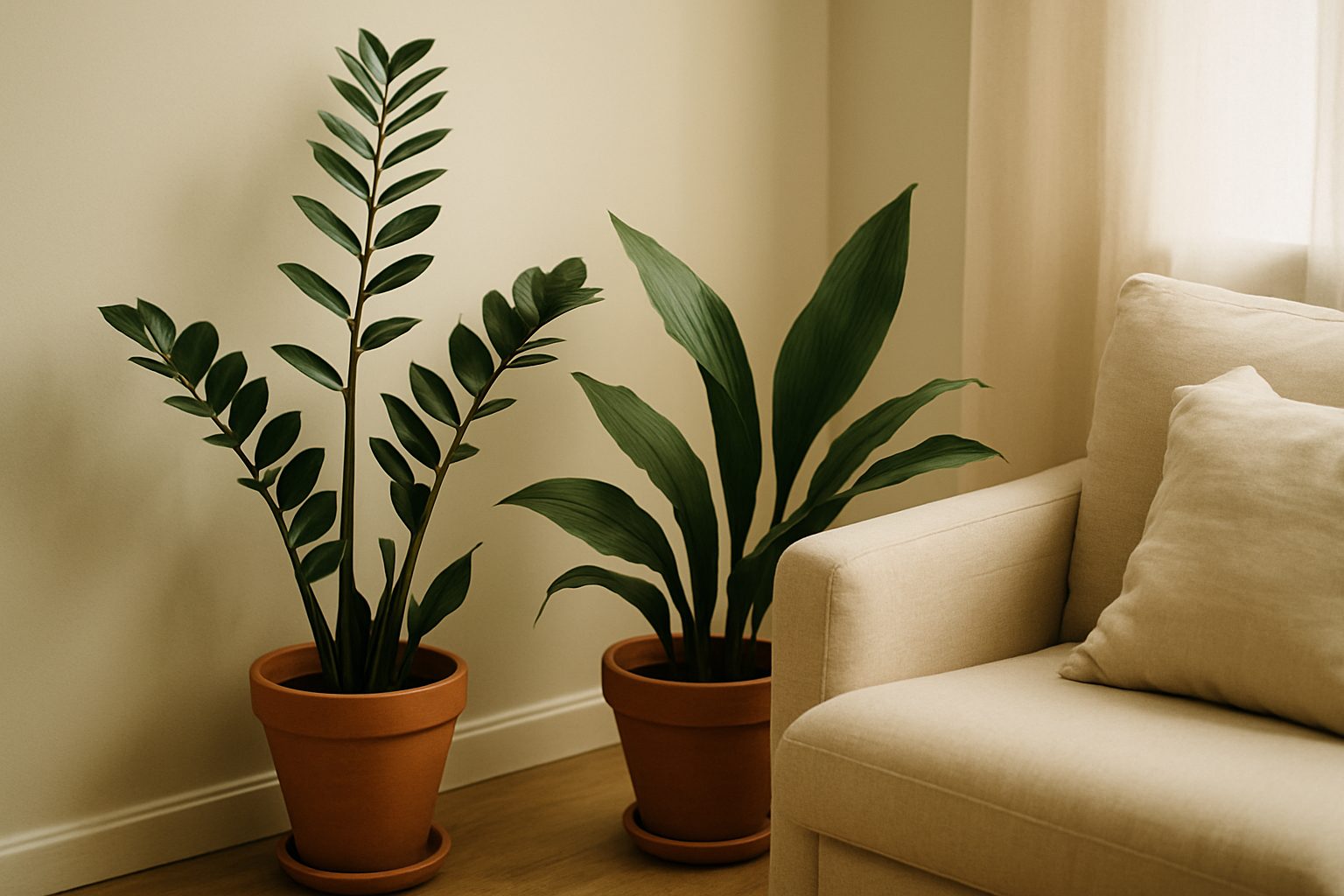
Hold your hand a few inches above a piece of white paper in the spot where you want to put the plant. Clear shadow means indirect light. Faint shadow means low light. No shadow at all means almost nothing will grow there without a grow light.
In real terms, low light is a north-facing room, a corner more than 8 feet from a window, or a well-lit room in the middle of winter.
Most plants marketed as “low light” only tolerate it. They won’t actively grow or look their best. They just won’t die immediately. That’s a meaningful difference when you’re picking something for a dim corner.
Plants in low light also need less water. Less light means slower photosynthesis, which means the soil stays wet longer, which means root rot if you keep your usual schedule. Expect to water most of these plants 30 to 50 percent less often than you would in a bright spot.
The 15 Best Low-Light Indoor Plants
1. ZZ Plant (Zamioculcas zamiifolia)
The ZZ plant is one of the few genuinely low-light tolerant plants that’s also nearly indestructible. Its waxy leaves store water, so it can go weeks between waterings without complaint.
It grows slowly in low light, which is fine. You won’t get fast new growth, but what’s there stays healthy and glossy. The ‘Raven’ variety (black-green leaves) is particularly striking in dark corners.
ZZ plants are toxic to cats and dogs, so keep them out of reach. For a full breakdown, see our ZZ plant care guide.
Light: True low light, adapts to near-dark
Water: Every 3 to 4 weeks in low light
Size: 2 to 4 feet tall
Pet safe: No
2. Cast Iron Plant (Aspidistra elatior)
The cast iron plant earns its name. It tolerates temperature swings, neglect, low light, and low humidity without complaining. It’s been used in Victorian hallways and Japanese shade gardens for centuries for exactly this reason.
Growth is very slow, so buy the size you want. Once established, it stays healthy and green in spots where most plants would give up.
Light: True low light, tolerates near-darkness
Water: Every 2 to 3 weeks in low light
Size: 2 to 3 feet tall
Pet safe: Yes
3. Peace Lily (Spathiphyllum)
The peace lily is one of the few low-light plants that will actually flower in dim conditions, producing white blooms in spring. It handles low light well and communicates clearly when it needs water: the leaves droop slightly, then bounce back within hours of a drink.
It’s one of the most reliably beginner-friendly plants on this list. See the peace lily care guide for watering specifics.
Peace lilies are toxic to cats and dogs.
Light: Low to indirect light
Water: Every 7 to 10 days; less in winter
Size: 1 to 4 feet depending on variety
Pet safe: No
4. Parlor Palm (Chamaedorea elegans)
Parlor palms are one of the few palms that genuinely do well in low light. They were popular as indoor plants in the 1800s precisely because they survived in dimly lit drawing rooms.
They’re also one of the safer picks for cat and dog households. Growth is slow, but these plants are long-lived and rarely have pest problems.
Light: Low to indirect light
Water: Every 1 to 2 weeks; let top inch dry out
Size: 2 to 6 feet tall
Pet safe: Yes
5. Chinese Evergreen (Aglaonema)
Chinese evergreens come in dozens of varieties. The important detail: the darker the leaves, the more low-light tolerant the plant. Solid green or dark green varieties (like ‘Maria’ or ‘Silver Bay’) handle low light well. Bright pink and red varieties need more light to keep their color.
This is one of the most forgiving plants for beginners. It tolerates inconsistent watering and poor light without dramatic reactions.
Light: Low light (dark green varieties)
Water: Every 1 to 2 weeks
Size: 1 to 3 feet tall
Pet safe: No (mildly toxic)
6. Snake Plant (Dracaena trifasciata)
The honest version: snake plants tolerate low light but don’t thrive in it. In a dark corner, they’ll sit and survive for months without putting out a single new leaf. In medium indirect light, they actually grow.
If a dark spot is your only option, a snake plant is a reasonable choice. Just know it’s in survival mode. Water it much less than you think (every 3 to 6 weeks in low light), because root rot from overwatering when photosynthesis has slowed is how most snake plants die.
Our snake plant care guide covers the common problems in detail.
Light: Tolerates low light; prefers indirect
Water: Every 3 to 6 weeks in low light
Size: 1 to 4 feet tall
Pet safe: No (mildly toxic)
7. Heartleaf Philodendron (Philodendron hederaceum)
One of the most adaptable houseplants you can buy. The heartleaf philodendron trails or climbs, works in a hanging basket or on a shelf, and handles low light without turning ugly. In dim conditions, growth slows and the leaves get a bit larger as the plant reaches for light, but it stays healthy.
Like pothos, it signals thirst clearly: the leaves curl slightly when it needs water.
Light: Low to indirect light
Water: Every 7 to 10 days; less in low light
Size: Vines to 10 feet or more if allowed
Pet safe: No
8. Jade Pothos (Epipremnum aureum ‘Jade’)
Standard golden pothos is often recommended for low light, but it’s not the best pick. Variegated leaves (the yellow-green parts) have less chlorophyll, which means less photosynthesis, which means they struggle more in dim conditions. Jade Pothos (solid dark green) performs significantly better because every part of its leaves is working.
In genuinely low light, expect slow growth and longer trailing vines rather than bushy growth. It’s still one of the more reliable options.
See the pothos care guide for detailed watering and light guidance.
Light: Low to indirect light (Jade variety specifically)
Water: Every 1 to 2 weeks; less in low light
Size: Trailing vines up to 10 feet
Pet safe: No
9. Spider Plant (Chlorophytum comosum)
Spider plants are pet-safe and adaptable to low light. They won’t produce as many of their characteristic “babies” (the small dangling offsets) in dim conditions, but they stay healthy and green.
Spider plants forgive irregular watering well. Occasional drought won’t set them back significantly.
For full care details, see our spider plant care guide.
Light: Low to indirect light
Water: Every 1 to 2 weeks
Size: 1 to 2 feet wide
Pet safe: Yes
10. Prayer Plant (Maranta leuconeura)
Prayer plants are named for how their leaves fold upward in the evening. They prefer indirect light but handle low light reasonably well, especially where humidity is decent. In very dark spots, the distinctive leaf patterning fades over time.
They’re pet-safe, which makes them a good option for households with cats or dogs who investigate plants.
Light: Low to indirect light
Water: Every 1 to 2 weeks; keep soil slightly moist
Size: 1 to 2 feet
Pet safe: Yes
11. Dracaena (Corn Plant / Dracaena fragrans)
The corn plant dracaena is a tall, structural plant that handles low light better than most large houseplants. Its wide, dark green leaves make the most of available light.
Dracaenas are toxic to cats and dogs. The leaf tips can also brown if your tap water has fluoride in it; filtered or rainwater fixes that.
Light: Low to indirect light
Water: Every 2 to 3 weeks
Size: Up to 6 feet indoors
Pet safe: No
12. Arrowhead Plant (Syngonium podophyllum)
Arrowhead plants start compact and eventually want to vine or climb. They’re fast-growing compared to most low-light plants, which makes them satisfying for beginners. Darker green varieties handle low light better than pink or white variegated ones.
They like consistent moisture but don’t want to sit in water. Let the top inch of soil dry before watering.
Light: Low to indirect light
Water: Every 7 to 10 days
Size: Compact to vining (2 to 6 feet)
Pet safe: Mildly toxic (irritant)
13. Lucky Bamboo (Dracaena sanderiana)
Lucky bamboo is not actually bamboo; it’s a dracaena relative sold in water or soil arrangements. It genuinely thrives in low light and grows in a glass of water with no soil at all, which makes it useful for desks and windowless offices.
Change the water every 1 to 2 weeks if growing it in water, or keep soil lightly moist if planted. Avoid direct sun, which scorches the leaves.
Light: Low light; avoid direct sun
Water: Fresh water weekly if grown in water; lightly moist if in soil
Size: 1 to 3 feet
Pet safe: No (mildly toxic to cats and dogs)
14. Bird’s Nest Fern (Asplenium nidus)
Bird’s nest ferns are one of the better fern options for low-light homes. They’re less demanding about humidity than most ferns and do well in dim, humid spots like bathrooms.
The key is keeping the soil from drying out completely. They don’t want soggy roots, but consistent moisture matters.
Light: Low to indirect light
Water: Every 7 to 10 days; keep moist
Size: 1 to 2 feet
Pet safe: Yes
15. Peperomia (various species)
Peperomias are small, easy, and non-toxic, which makes them good choices for plant shelves, desks, or homes with curious pets. Most varieties handle low-to-indirect light fine. They store some water in their thick leaves, so they’re tolerant of occasional missed waterings.
The most commonly available low-light varieties include Peperomia obtusifolia (baby rubber plant) and Peperomia caperata (ripple peperomia).
Light: Low to indirect light
Water: Every 10 to 14 days; let top inch dry
Size: 6 to 12 inches
Pet safe: Yes
How Low Light Changes Your Care Routine
A plant in low light is doing less: photosynthesis slows, growth stalls, and the soil holds moisture longer. That changes three things in your care routine.
Water less. This is the most important adjustment. A plant that needed watering every week in a bright window might only need watering every 2 to 3 weeks in a low-light spot. The soil stays wet longer, and wet soil with little light is how root rot starts. Check the soil by feel before every watering: if the top inch or two is still damp, wait.
Expect slower growth. Plants in low light don’t put out new leaves quickly. That’s normal. If a plant has been in a dim spot for months with no new growth, it’s not necessarily dying; it might just be in maintenance mode.
Skip or reduce fertilizer. A plant that’s barely growing doesn’t need fertilizer. Fertilizing a low-light plant heavily can burn the roots. Cut back to once or twice a year in the growing season, or skip it entirely if the plant isn’t actively growing.
For more on dialing in watering schedules, see how often to water houseplants.
Pet Safety at a Glance
| Plant | Pet Safe? |
|---|---|
| Cast iron plant | Yes |
| Parlor palm | Yes |
| Spider plant | Yes |
| Prayer plant | Yes |
| Bird’s nest fern | Yes |
| Peperomia | Yes |
| ZZ plant | Toxic |
| Peace lily | Toxic |
| Snake plant | Mild irritant |
| Pothos | Toxic |
| Heartleaf philodendron | Toxic |
| Chinese evergreen | Mild irritant |
| Dracaena | Toxic |
| Lucky bamboo | Mild irritant |
| Arrowhead plant | Mild irritant |
“Toxic” here means the ASPCA lists it as toxic to cats or dogs, with potential symptoms like vomiting or oral swelling. “Mild irritant” means it can cause discomfort but is less likely to cause serious harm. Neither is safe to have within reach of a pet who chews plants.
The safe six (cast iron plant, parlor palm, spider plant, prayer plant, bird’s nest fern, peperomia) are your best options for a home with curious pets. When in doubt, check the ASPCA toxic plant list before buying any new plant.
What About Grow Lights?
If your apartment gets almost no natural light, a low-wattage grow light changes what’s possible. You don’t need anything sophisticated. A simple LED grow light strip (15 to 20 watts) on a shelf or a clip-on LED bulb works for most of the plants on this list.
For foliage plants, look for a bulb or strip rated 5000K to 6500K (this is the color temperature, printed on the packaging). Keep it 6 to 12 inches above the plant. A timer set to 12 hours on, 12 off mimics a reasonable day length and costs less than $10.
A T5 fluorescent or LED tube setup runs $20 to $40. Less intimidating than it sounds, and it genuinely opens up north-facing rooms and shelving units that would otherwise stay plantless.
Low light also gets worse in winter. A north-facing room that was borderline manageable from May through September may drop below the threshold for even tolerant plants by November. If you notice leaves dropping or no new growth in winter, the season is probably the culprit, not your care routine. Moving plants closer to any available window, or adding a grow light for 4 to 6 hours a day, usually solves it.
FAQ
What is considered low light for indoor plants?
Low light means roughly 50 to 250 foot-candles of illumination, equivalent to a north-facing room or a spot more than 6 to 8 feet from a south-facing window. A practical test: hold your hand over a piece of white paper in that spot. Faint or no shadow means you’re in low light territory.
Can succulents grow in low light?
Almost none can, despite common advice. Most succulents (echeveria, aloe, jade, cacti) need bright direct sun to stay healthy. Haworthia is the real exception, genuinely tolerating low light. It makes a good beginner choice for dim spots.
Why is my pothos getting leggy in low light?
Leggy growth (long stretches of bare stem between leaves) means the plant is reaching for more light. Moving it closer to a window helps, as does switching to a Jade Pothos (solid green, more chlorophyll). Pruning the longest stems also encourages bushier growth.
How do I know if my low-light plant is getting too little light?
The clearest signs: no new growth over 2 to 3 months, leaves that are smaller or paler than previous growth, and in variegated plants, the patterning fading toward plain green. These mean the plant is coping, not growing.
Do low-light plants need fertilizer?
Very little. A plant in low light grows slowly and can’t use much fertilizer. Over-fertilizing builds up salts in the soil and can damage roots. A half-strength balanced fertilizer once or twice in spring and summer is plenty.
Sources and Further Reading
- ASPCA Toxic and Non-Toxic Plants: aspca.org/pet-care/animal-poison-control/toxic-and-non-toxic-plants
- RHS houseplant guides: rhs.org.uk
- North Carolina State University Extension Plant Toolbox: plants.ces.ncsu.edu
If you’re just starting out, the best indoor plants for beginners guide covers the easiest overall picks. And if you’ve had plants struggling and aren’t sure why, how often to water houseplants is usually where the answer is.
Keep reading
Related guides
 Plant Lists
 Best Indoor Plant Stands (and How to Actually Choose One)
Choosing an indoor plant stand isn't just about looks. Here's how to pick the right height, weight capacity, and drainage setup for your plants.
 Plant Lists
 20 Pet-Safe Houseplants (Non-Toxic to Cats and Dogs)
The best pet-safe houseplants for cats and dogs, ASPCA-verified. Plus the popular plants that aren't actually safe and what to do in an emergency.
 Plant Lists
 18 Best Indoor Plants for Beginners (Nearly Impossible to Kill)
The best indoor plants for beginners: 18 nearly unkillable houseplants that thrive on neglect, with light, water and pet-safe notes for each.