20 Pet-Safe Houseplants (Non-Toxic to Cats and Dogs)
The best pet-safe houseplants for cats and dogs, ASPCA-verified. Plus the popular plants that aren't actually safe and what to do in an emergency.
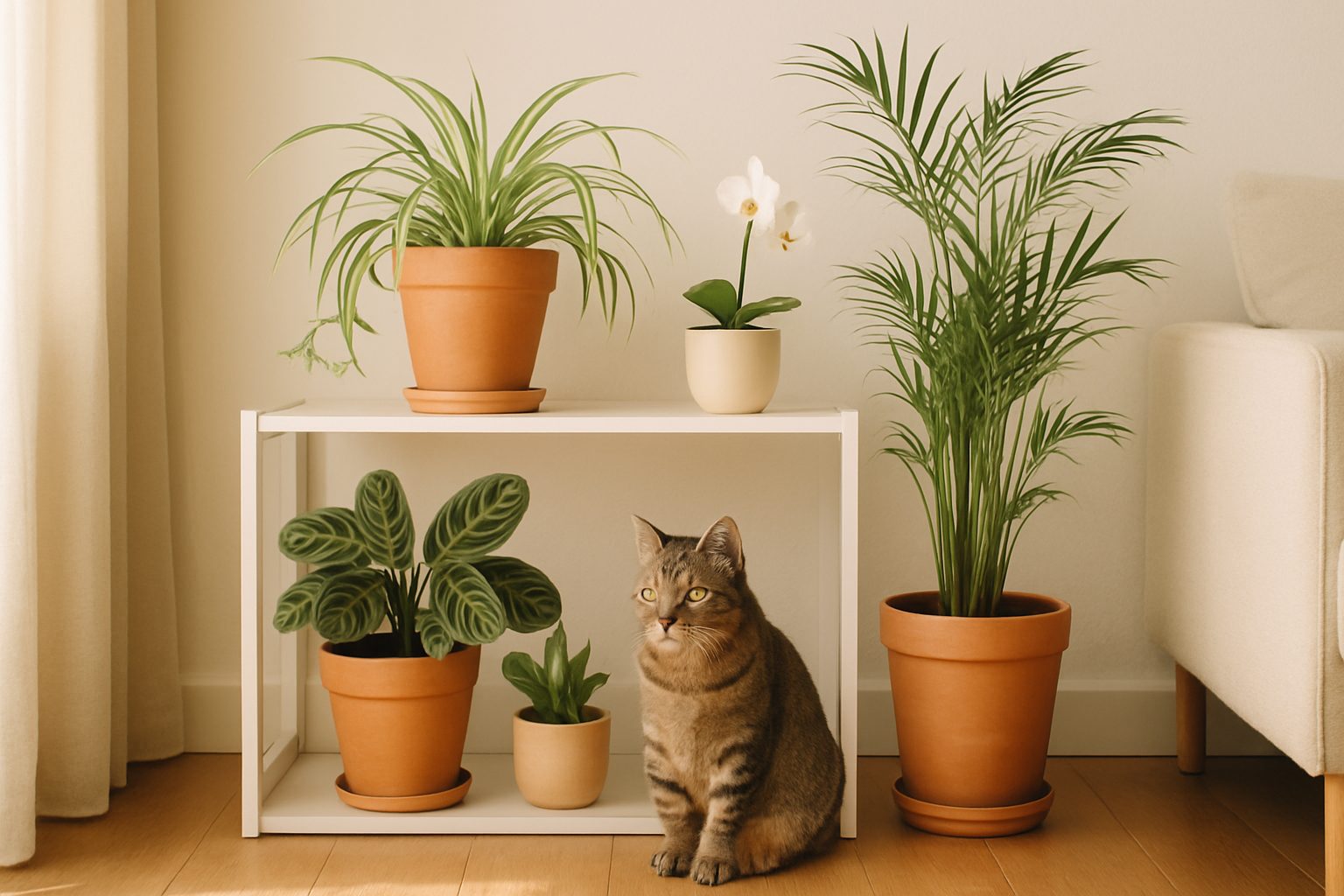
The ASPCA maintains a database of plants verified as non-toxic to cats and dogs, and there are far more beautiful options on that list than most people expect. This guide covers 20 of the best pet-safe houseplants, organized by how you’d actually use them.
You’ll also find the plants commonly mislabeled as safe (snake plant, pothos, aloe), what to do if your pet chews something, and answers to the questions pet owners actually search at midnight.
Quick answer: the safest and most common pet-safe houseplants
- Spider plant (Chlorophytum comosum)
- Parlor palm (Chamaedorea elegans)
- Prayer plant (Maranta leuconeura)
- Calathea / Goeppertia species
- Orchid (Phalaenopsis)
- Peperomia (all species)
- Areca palm (Dypsis lutescens)
- Boston fern (Nephrolepis exaltata)
- African violet (Saintpaulia)
- Hoya carnosa
All are listed as non-toxic on the ASPCA’s toxic and non-toxic plants database. When in doubt about a specific plant, that database is the most reliable place to check.
What “Pet-Safe” Actually Means for Houseplants
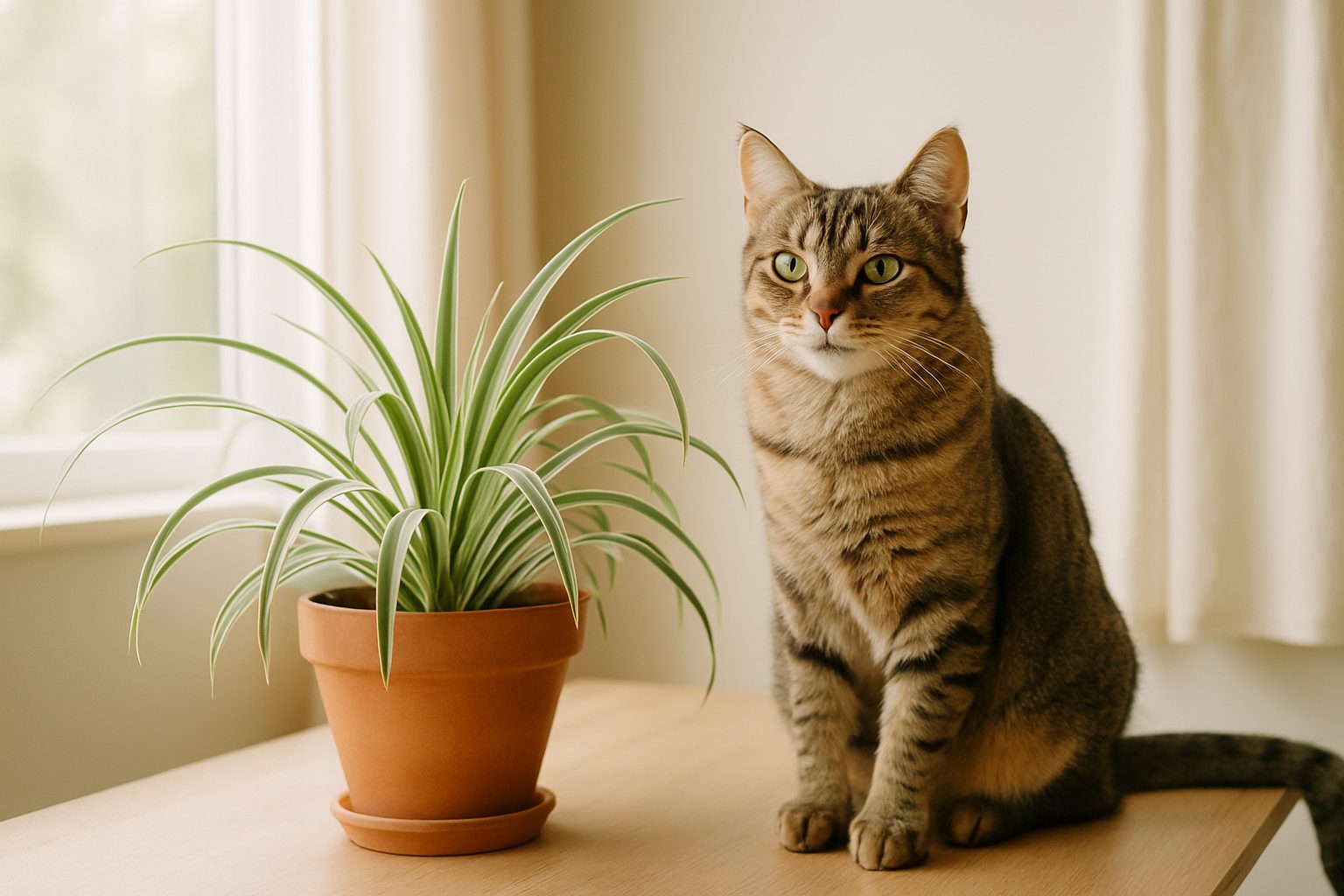
Non-toxic is not the same as edible. Even plants the ASPCA lists as safe can cause mild vomiting or stomach upset if your pet eats a large amount. The classification means the plant doesn’t contain compounds known to cause serious illness or organ damage. It doesn’t mean a full belly of leaves is fine.
Spider plants are a good example. They’re listed as non-toxic, but they have a mild effect on cats similar to catnip. A cat that eats too much will usually vomit it back up.
Two things to keep in mind:
- “Non-toxic” means no serious systemic risk, not zero effect
- True lilies are so dangerous to cats that licking pollen off their fur can cause kidney failure. Being off the safe list matters.
The 20 plants below are all ASPCA-listed as non-toxic unless noted. Where a plant isn’t formally in the database, the entry says so.
20 Pet-Safe Houseplants
Easy Everyday Picks
These five are hard to kill, widely available, and safe for both cats and dogs.
1. Spider plant (Chlorophytum comosum)
Spider plants are among the easiest houseplants you can own. They tolerate low light, drought, and neglect, and they produce trailing plantlets that curious cats find irresistible.
The ASPCA lists them as non-toxic. One caveat: the compounds in spider plant leaves have a catnip-like effect on some cats, so yours may be unusually interested in chewing them. Eating a lot will likely cause vomiting, but nothing worse.
Water every 1 to 2 weeks and let the soil dry between drinks. Full details in the spider plant care guide.
2. Peperomia (various species)
There are several hundred peperomia varieties, from watermelon peperomia (striped, rounded leaves) to ripple and trailing jade. All are listed as non-toxic by the ASPCA.
They stay compact and don’t need much water. Lower light is fine, which makes them easy to place anywhere a cat might investigate. Water every 10 to 14 days and let the soil dry out fully between drinks.
3. African violet (Saintpaulia ionantha)
African violets bloom reliably in moderate indirect light and are listed as non-toxic for both cats and dogs. They produce clusters of purple, pink, or white flowers on and off all year.
Water from the bottom (pour into the saucer and let the soil absorb it) to avoid leaf spotting. Small enough to keep on a windowsill well out of reach.
4. Ponytail palm (Beaucarnea recurvata)
The ponytail palm is actually a succulent, not a palm. It stores water in its bulbous trunk, which means you only need to water it every 2 to 4 weeks. It’s on the ASPCA non-toxic list and can live for years with minimal attention.
It grows slowly, so what you buy is roughly the size you’ll have for a while. Bright light works best.
5. Christmas cactus (Schlumbergera bridgesii)
Most holiday plants are a problem for pets. Christmas cactus is an exception. It’s listed as non-toxic by the ASPCA, and it blooms in late fall and winter with pink, red, or white flowers.
Cool nights in October and November trigger blooming. After that, it’s happy in bright indirect light with watering every 10 to 14 days.
Safe Plants for Low-Light Rooms
The combination of “low-light” and “pet-safe” is one of the most searched needs in houseplant care, and one of the least-answered. These five work in rooms away from windows.
6. Parlor palm (Chamaedorea elegans)
The parlor palm is one of the few larger plants that genuinely thrives in low light. It’s been grown as a houseplant since the Victorian era for exactly this reason. The ASPCA lists it as non-toxic for cats and dogs.
It grows slowly, which keeps it manageable, and adds a tropical feel to a dim corner. Water when the top inch of soil is dry, roughly every 1 to 2 weeks.
7. Prayer plant (Maranta leuconeura)
Prayer plants fold their leaves upward at night, which is where the name comes from. They’re non-toxic and do well in low to moderate indirect light.
They’re a little more demanding than most on this list: they like consistent moisture, don’t want to dry out completely, and appreciate higher humidity. The payoff is striking leaf patterns in green and burgundy. Full details in the prayer plant care guide.
8. Calathea / Goeppertia
Calatheas (now reclassified botanically as Goeppertia, though most shops still label them Calathea) have some of the most dramatic foliage of any houseplant. All species in this family are listed as non-toxic.
They want filtered water, consistent moisture, and indirect to low light. Not the most forgiving if you miss a watering, but completely safe around pets and genuinely beautiful.
9. Boston fern (Nephrolepis exaltata)
Boston ferns are widely listed as non-toxic by the ASPCA. They thrive in indirect light with consistent moisture and prefer humidity, so a bathroom with a window is often ideal.
They’ll droop and shed fronds if the air is too dry. A pebble tray with water underneath helps in winter. They trail nicely from a hanging basket, which naturally puts them out of reach.
10. Nerve plant (Fittonia)
Nerve plants are small, low-growing, and dramatic, with vivid white, red, or pink veins through each leaf. The ASPCA lists them as non-toxic.
They prefer consistent moisture and indirect light. They wilt visibly when thirsty and bounce back quickly with watering. Compact enough for a terrarium, and the low growth habit makes them less tempting to cats than hanging vines.
Trailing and Hanging Options
Hanging planters solve two problems at once: the plant stays out of reach and your space gets some visual depth. These three trail or climb and are listed as safe by the ASPCA.
11. Hoya (Hoya carnosa)
Hoya carnosa is listed as non-toxic by the ASPCA, making it one of the better pet-safe alternatives to pothos for anyone who wants a trailing vine.
They’re slow-growing, tolerant of neglect, and eventually produce clusters of waxy star-shaped flowers with a light scent. Bright indirect light, watering every 2 to 3 weeks, let them dry out between drinks. The vines get long over time, which makes them ideal for a hanging basket.
12. Polka dot plant (Hypoestes phyllostachya)
A cheerful plant with pink, red, or white-spotted leaves on a green base. The ASPCA lists it as non-toxic, though large amounts may cause mild GI upset.
It trails slightly as it matures. Moderate indirect light keeps the color vivid; lower light fades the spots. Pinch the growing tips regularly to keep it bushy rather than leggy.
13. String of turtles (Peperomia prostrata)
String of turtles is a trailing peperomia with tiny round leaves patterned like turtle shells. As a peperomia, it’s non-toxic. It grows slowly and looks best in a small hanging pot or trailing from a shelf.
Bright indirect light and infrequent watering. Let the soil dry completely between drinks to avoid rot. It’s harder to find in big box stores than most plants on this list, but widely available online.
Bigger Statement Plants
Most large houseplants are either toxic or thirsty. These three offer real size and are listed as safe.
14. Areca palm (Dypsis lutescens)
The areca palm is a full, feathery palm that reaches 6 to 7 feet indoors over time. The ASPCA lists it as non-toxic for both cats and dogs. It’s also one of the better air-purifying plants for a living room.
It prefers bright indirect light and consistent watering. Let the top inch of soil dry between drinks. The arching fronds look dramatic but aren’t particularly tempting to pets.
15. Bamboo palm (Chamaedorea seifrizii)
Similar to the areca palm in shape, but more tolerant of lower light and with a denser, more structured look. Listed as non-toxic by the ASPCA.
It grows at a moderate pace and is generally unfussy. Works well in a corner that doesn’t get direct sun. Water when the top inch of soil dries out, roughly every 1 to 2 weeks.
16. Bird’s nest fern (Asplenium nidus)
Bird’s nest ferns have wide, bright green, strap-like fronds that grow from a central rosette. The ASPCA lists them as non-toxic. They tolerate low to medium indirect light and prefer consistent moisture with good humidity.
They don’t like direct sun and do well in bathrooms or near a humidifier. The wide fronds are less appealing to cats than feathery varieties, which can save you some frustration.
Flowering and Unusual Picks
17. Orchid (Phalaenopsis)
Most people assume orchids must be toxic. They’re not: Phalaenopsis orchids are listed as non-toxic to cats and dogs by the ASPCA.
They bloom for 8 to 12 weeks at a time, then rest before reblooming. Bright indirect light, water every 7 to 10 days, let the roots dry slightly between drinks. Low maintenance once you get the rhythm right.
18. Bromeliad
Bromeliads are architectural, long-lived, and listed as non-toxic by the ASPCA. They water differently from most plants: fill the central cup at the base of the leaves rather than the soil.
The mother plant blooms once and then slowly produces offsets (pups) you can separate and grow on. They’re an unusual choice that pets tend to ignore, possibly because the stiff leaves aren’t particularly chewable.
19. Friendship plant (Pilea involucrata)
Pilea involucrata has textured, quilted-looking leaves in bronze and green. It’s listed as non-toxic by the ASPCA and stays compact.
It does well in moderate indirect light with consistent moisture. Not as dramatic as some others on this list, but easy to grow and easy to propagate from cuttings.
20. Haworthia
A note first: the ASPCA hasn’t formally evaluated all haworthia species, so confirm your specific variety at aspca.org/toxic-and-non-toxic-plants before buying.
With that said, haworthia is the answer if you love the look of aloe but have cats or dogs. It resembles a small aloe and is generally considered safe for pets, unlike aloe vera (which is toxic). It needs very little water (every 3 to 4 weeks), tolerates indirect light, and stays small enough for a windowsill or desk.
Popular Plants That Aren’t Actually Pet-Safe
A few very common houseplants are frequently mislabeled as safe. If you own any of these, keep them out of reach.
Not all toxic plants carry the same risk. True lilies can cause kidney failure in cats within 24 to 72 hours, and pollen alone is enough. Pothos causes intense burning in the mouth and throat but is rarely fatal. Knowing the difference helps you prioritize.
| Plant | Safe for cats? | Safe for dogs? | Risk level |
|---|---|---|---|
| Pothos (Epipremnum) | No | No | Moderate (calcium oxalate, burning) |
| Snake plant (Sansevieria) | No | No | Mild (nausea, GI upset) |
| ZZ plant (Zamioculcas) | No | No | Mild to moderate |
| Monstera deliciosa | No | No | Moderate (calcium oxalate) |
| Peace lily (Spathiphyllum) | No | No | Moderate |
| Aloe vera | No | No | Moderate (saponins) |
| True lilies (Lilium spp.) | No | Low risk | Fatal to cats, even from pollen |
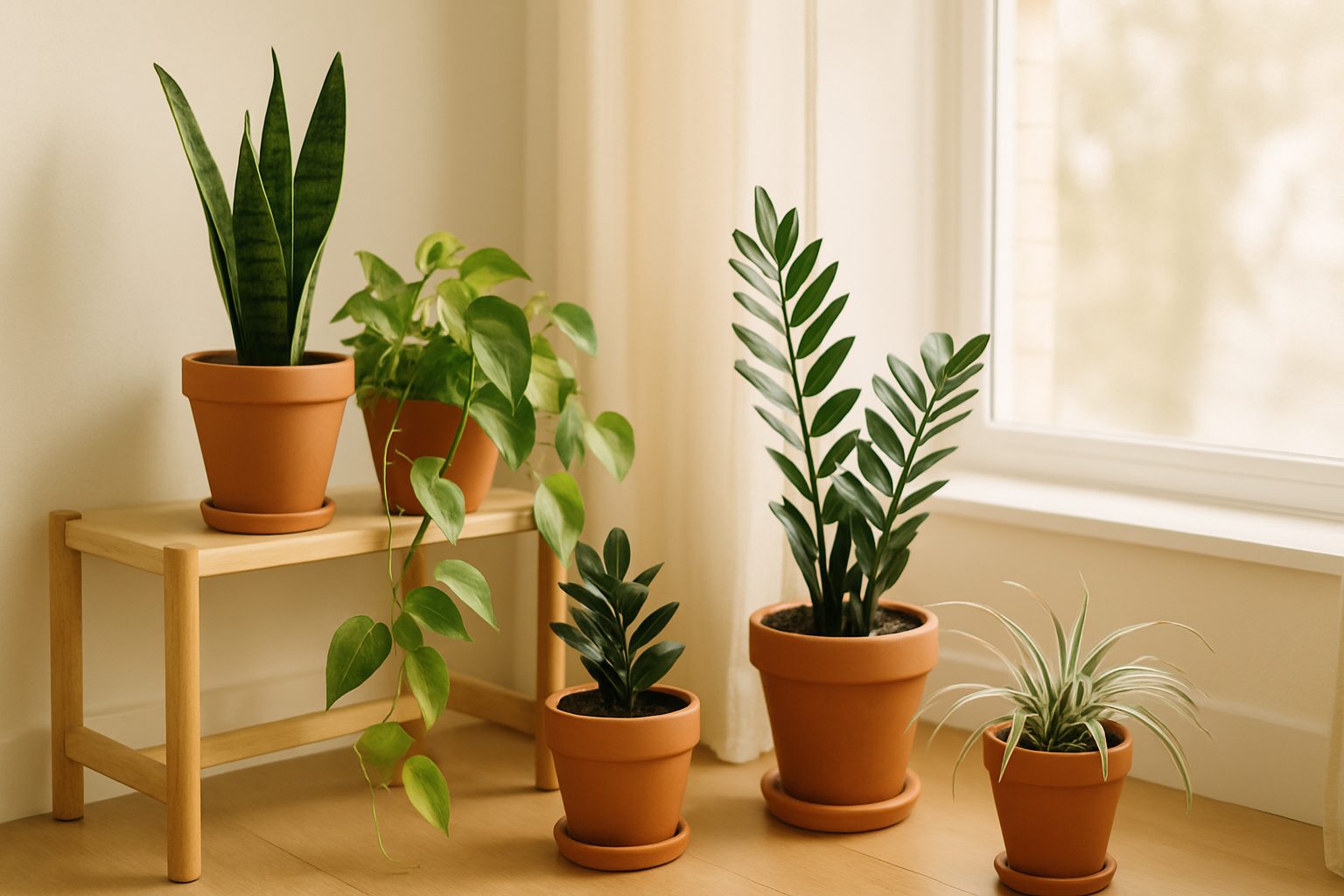
Snake plant is the biggest source of confusion. Many older plant articles still list it as safe. It’s not. The ASPCA lists it as toxic; it causes nausea and GI upset in cats and dogs.
Pothos is a similar problem. One of the most popular houseplants in the world, and many people assume it must be safe. It contains calcium oxalate crystals that cause intense burning in the mouth and throat.
If you love pothos, hoya is a safe alternative with a similar trailing habit. If you love snake plants, ponytail palm or bird’s nest fern gives a comparable bold look without the risk.
What to Do If Your Pet Chews a Plant
Stay calm. Even with a plant you’re not sure about, here’s what to do.
- Identify the plant by name, ideally the Latin name if you have it.
- Check aspca.org/toxic-and-non-toxic-plants.
- Call your vet if the plant is toxic or if your pet shows symptoms (drooling, vomiting, lethargy, difficulty breathing, loss of coordination).
- ASPCA Animal Poison Control Center: 888-426-4435 (consultation fee applies, available 24/7).
Don’t wait for symptoms if you know the plant is toxic. With true lilies, the treatment window is a few hours.
FAQ
Are spider plants safe for cats?
Yes. Spider plants are listed as non-toxic by the ASPCA for both cats and dogs. They can cause mild vomiting if eaten in large amounts, and some cats are drawn to them because of a mild catnip-like effect. Safe, but your cat may be more interested in them than you’d like.
Are succulents safe for pets?
It depends on the species. Haworthia is generally considered safe. Aloe vera is toxic (ASPCA confirms). Jade plant, kalanchoe, and most euphorbias are also toxic. Don’t assume all succulents are fine; check the specific plant at the ASPCA database before buying.
Is snake plant safe for cats?
No. Despite being widely recommended as a safe beginner plant, snake plant (Sansevieria) is listed as toxic by the ASPCA for both cats and dogs. It causes nausea, vomiting, and GI upset. Many older articles still list it as safe. They’re wrong.
Which low-light plants are safe for pets?
Parlor palm, prayer plant, calathea, Boston fern, bamboo palm, and nerve plant are all good low-light options that are listed as non-toxic. For more options, see best low-light indoor plants.
Is aloe vera toxic to cats and dogs?
Yes. Aloe vera is listed as toxic by the ASPCA for both cats and dogs. The toxic compounds (saponins and anthraquinones) are concentrated in the latex layer between the skin and the gel. Keep aloe out of reach or swap it for haworthia, which looks similar and is generally considered safe.
Pet-safe doesn’t mean settling for green blobs. Orchids, areca palms, calatheas, and hoyas are all genuinely striking plants that happen to be safe. Start with one or two from the easy picks, confirm what’s in your home now against the ASPCA database, and go from there.
For help choosing your first plants, the best indoor plants for beginners guide covers easy options at every care level.
Sources and further reading
- ASPCA Toxic and Non-Toxic Plants database: aspca.org/toxic-and-non-toxic-plants
- ASPCA Animal Poison Control Center: 888-426-4435
- Royal Horticultural Society (rhs.org.uk): houseplant care guides
Keep reading
Related guides
 Plant Lists
 Best Indoor Plant Stands (and How to Actually Choose One)
Choosing an indoor plant stand isn't just about looks. Here's how to pick the right height, weight capacity, and drainage setup for your plants.
 Plant Lists
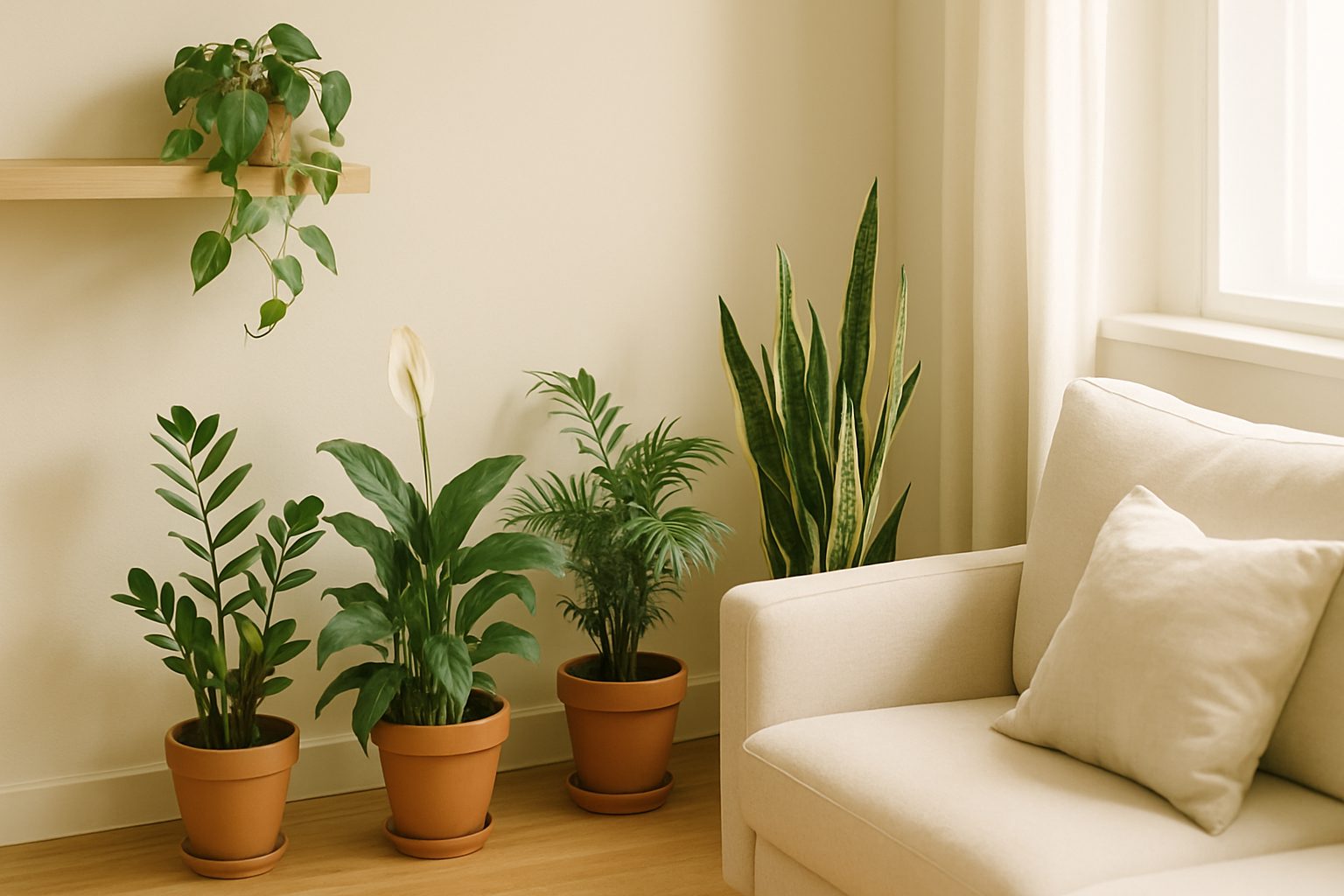
 15 Best Low-Light Indoor Plants
15 low-light indoor plants that genuinely thrive in dim rooms. Includes a shadow test, watering guide, and pet-safety table.
 Plant Lists
 18 Best Indoor Plants for Beginners (Nearly Impossible to Kill)
The best indoor plants for beginners: 18 nearly unkillable houseplants that thrive on neglect, with light, water and pet-safe notes for each.