Jade Plant Care: The Complete Guide for Beginners
Jade plant care guide: how to water, light, and soil correctly, plus fixes for leaf drop, leggy growth, and other common problems.
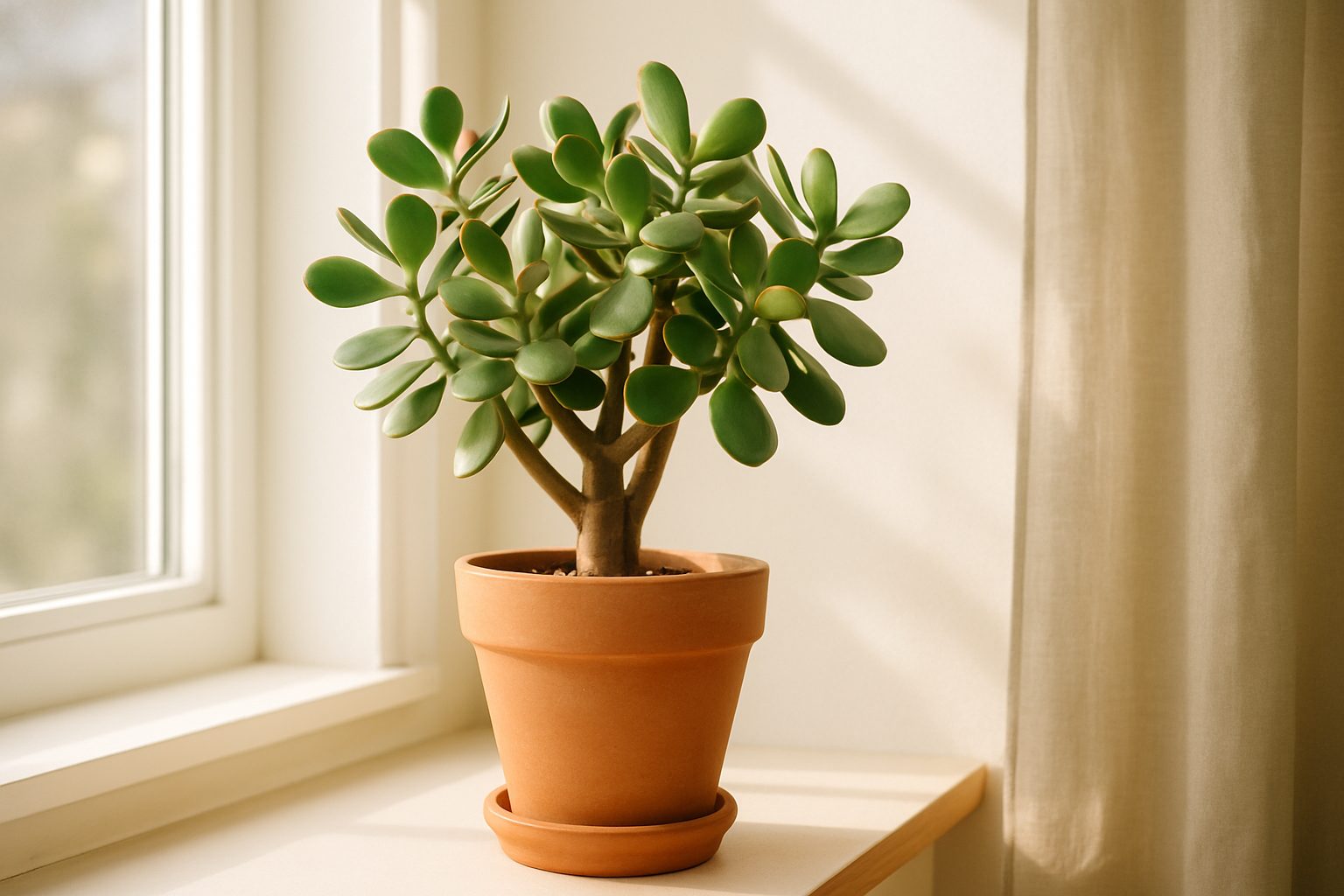
Good jade plant care comes down to two things: enough direct sun, and restraint with water. Jade plants are one of the most forgiving succulents you can own, but also one of the most commonly mistreated. Overwatering kills more jades than anything else, and it is almost always caused by advice that treats them like tropical houseplants.
Quick answer: Give your jade bright, direct sunlight for 4+ hours a day. Water only when the soil is completely dry all the way through, which is roughly every 2 to 3 weeks in summer and once a month or less in winter. Use well-draining soil amended with perlite. Avoid overwatering, which is the number one jade killer.
| Care factor | What jade needs |
|---|---|
| Light | Bright direct sun, 4+ hours/day (south window best) |
| Water | Every 2 to 3 weeks in summer; monthly or less in winter |
| Soil | Cactus mix with 30 to 50% perlite or pumice |
| Pot | Terracotta preferred |
| Temperature | 65 to 75°F (13°C minimum) |
| Humidity | Low to average; tolerates dry indoor air well |
| Fertilizer | Half-strength balanced liquid, monthly in spring/summer only |
| Repotting | Every 2 to 3 years, spring |
What Makes Jade Plant Care Different
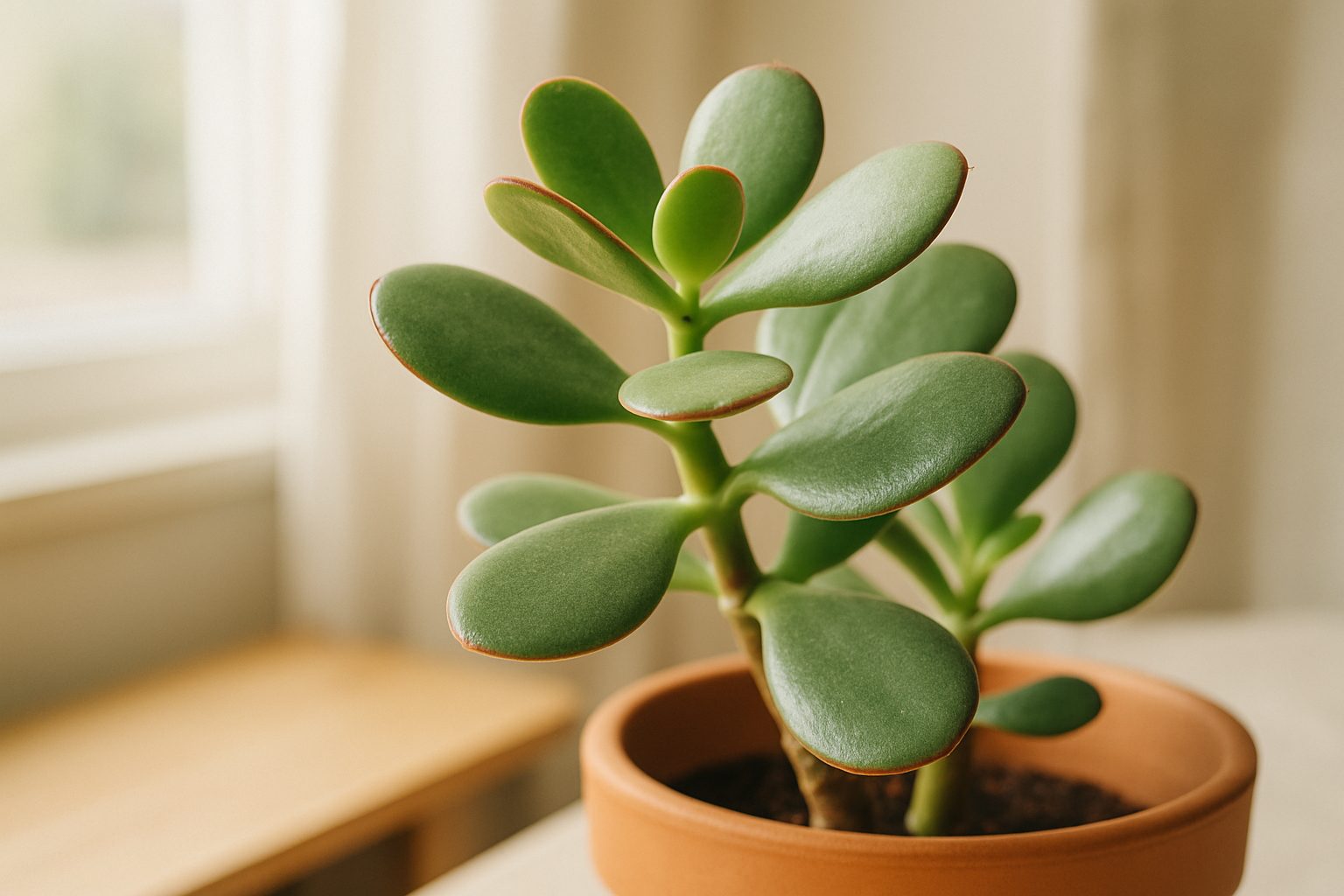
Jade plants (Crassula ovata) are succulents from South Africa, not tropical houseplants. That distinction matters. They are built to survive drought, poor soil, and intense sun. When you treat them like a pothos or a peace lily, things go wrong fast.
The good news: once you understand their rhythm, jade plants are genuinely easy to keep alive. Some live for decades and get passed down through families. If you inherited a jade and feel pressure not to kill it, take a breath. This plant wants to live.
Light: More Direct Sun Than You’d Expect
Your jade wants at least 4 hours of direct sunlight per day. A south-facing window is the best spot indoors. East or west windows work if they get a few hours of real sun, not just bright sky.
If your jade is in low light, it will start to etiolate. The stems stretch out, the spaces between leaves get longer, and the plant looks thin and weak. This is not a watering problem or a soil problem. It is a light problem, and moving the plant is the only real fix.
One thing that surprises people: if the tips of your jade’s leaves turn slightly red, that is not a problem. It is the plant responding to strong light, and some growers actually encourage it. If you see red tips alongside firm leaves and steady growth, your jade is happy.
How to Water a Jade Plant
Water jade when the soil is completely dry, all the way through. Not just the top inch. Push your finger into the soil to the second knuckle. If it feels dry at that depth, water. If it feels cool or damp at all, wait.
When you do water, water thoroughly until it drains from the bottom. Then let it dry out completely before the next watering. In summer, that usually means every 2 to 3 weeks. In winter, once a month or less is normal.
One myth to skip: the advice to water when the top inch of soil is dry was written for tropical plants, not succulents. Following it with jade will keep the roots chronically too wet, and chronic wet roots lead to rot. The entire root zone needs to dry out between waterings, not just the surface layer.
Signs of overwatering include soft, mushy leaves, yellowing lower leaves, and a soft or dark stem at the base. If you see those, check the roots right away. A rotting jade can sometimes be saved, but you need to act fast. See our guide on root rot in houseplants for the full rescue process.
Underwatered jade looks different: the leaves wrinkle or shrivel as the plant draws on its leaf reserves. A deep watering usually fixes this within a few days.
For more on getting the timing right, how often to water houseplants covers the soil-dryness method in more detail.
Soil and Pot: Two Things That Work Together
The right soil and the right pot matter more for jade than for most houseplants.
Jade needs fast-draining soil. A commercial cactus or succulent mix is a good base, but most store-bought versions still hold too much moisture on their own. Add 30 to 50% perlite or pumice by volume, and you will have a mix that drains quickly and dries out at the right pace.
For pots, terracotta is the best choice. It is porous, which means air moves through the walls and the soil dries faster. Plastic pots hold moisture much longer and raise the overwatering risk significantly. If you love a decorative ceramic pot, plant your jade in terracotta first and set it inside the ceramic as a sleeve.
Temperature and Humidity
Jade plants like the same temperatures most people keep their homes: 65 to 75°F. They will tolerate a bit cooler at night, down to about 55°F, but they are not frost-hardy. If you move your jade outside for summer, bring it back in before the first frost, and do not leave it in front of an air conditioning vent.
Humidity almost never comes up in jade care guides, and that is worth addressing. Jade plants do well in dry indoor air, even below 40% relative humidity. They evolved in a dry climate and are fine with the 30 to 50% RH typical in most homes. If your indoor humidity runs above 60%, the soil stays wet longer and fungal growth becomes more likely on the surface. You do not need a pebble tray or a humidifier.
Fertilizing
Feed your jade during the growing season: spring and summer. Use a balanced liquid fertilizer (something like 10-10-10 or a succulent-specific formula) diluted to half the recommended strength. Once a month is enough.
Stop fertilizing in fall and winter. Growth slows significantly during this period, and the roots are far less active. Fertilizing at that point pushes weak, soft growth the plant cannot support, and it stresses the root system when it is already dealing with lower light.
The slower pace in winter also means the soil takes much longer to dry out. In a warm, bright summer, you might water every 2 weeks. In winter, the same pot in lower light might need a full 5 to 6 weeks to dry through. Always check before watering, and when in doubt, wait another few days.
Repotting: When and How to Tell
Jades generally need repotting every 2 to 3 years, but watch the plant rather than the calendar. Signs that your jade is ready to move up:
- Roots circling inside the bottom of the pot, or pushing out of the drainage holes
- The plant feels unstable or tips over easily
- Water runs straight through without slowing down at all
- Growth has slowed noticeably even in good conditions
Spring is the best time to repot. Go up one pot size only. A pot too large holds too much soil and moisture, which increases overwatering risk. After repotting, wait a week before watering to let any damaged roots recover.
Propagation: Stem and Leaf Cuttings
Jade is easy to propagate. Stem cuttings are the most reliable method.
Take a cutting 3 to 4 inches long, with at least two or three leaf pairs. Let it dry in open air for 2 to 3 days until a callus forms over the cut end. Then plant it in dry succulent soil mix and wait. Water very lightly once a week until you see new growth, which indicates roots have formed. That usually takes 2 to 4 weeks.
Leaf cuttings work, but success rates are lower. Remove a healthy leaf cleanly from the stem, let it callus for a day or two, then lay it flat on top of dry soil. Tiny rosettes will eventually form at the base. It is slower and less predictable than stem cuttings.
Common Problems: Reading Your Plant’s Signals
Jade plants give you information. Here is a quick diagnostic guide. Find your symptom and follow it to the cause.
If leaves are turning red at the tips: This is a healthy stress response to direct sunlight. The plant is producing anthocyanin as a kind of sunscreen. As long as the rest of the leaf is firm and green, red tips are nothing to fix.
If firm green leaves are dropping suddenly: Environmental shock is the most likely cause. Repotting stress, a big temperature shift, drafts from an air conditioner or open window, or moving the plant from one light level to another can all trigger sudden leaf drop. Give the plant 2 to 3 weeks to settle before assuming something is wrong.
If leaves are yellow and soft, or the stem feels squishy at the base: This is overwatering, and the roots may be rotting. Check the roots immediately. If you see dark, mushy roots, the plant needs emergency repotting into fresh dry soil. Our overwatered plant guide walks through the recovery steps.
If leaves are wrinkled or shriveled despite regular watering: Either the plant is underwatered, or the roots are too damaged to absorb water. Try a thorough watering and wait 48 hours. If the leaves do not firm up, the problem is likely root rot, not thirst.
If growth is stretching with long gaps between leaves: Not enough light. The plant is reaching for the nearest bright source. Move it closer to a window that gets direct sun, or add a grow light. Prune the leggy stems to encourage a bushier shape.
If you see white crusty residue on the soil surface or leaf tips: Mineral salt buildup from tap water. Flush the soil thoroughly with filtered water or rainwater every few months, or switch water sources going forward.
If you see white cottony clusters on stems or leaf joints: Mealybugs. Dab each cluster with a cotton swab soaked in rubbing alcohol. Check every joint and the undersides of leaves. Repeat weekly until they are gone.
Is Jade Plant Toxic to Pets?
Yes. According to the ASPCA, jade plants are toxic to cats and dogs. Symptoms of ingestion include vomiting, lethargy, and loss of coordination. If your pet chews on your jade, contact your vet or the ASPCA Animal Poison Control hotline.
Jade is generally not considered harmful to humans, though eating the plant is not recommended. If you have curious pets, keep your jade on a high shelf or in a room they do not access. See our full list of pet-safe houseplants if you need alternatives.
FAQ
How often should I water a jade plant?
Water every 2 to 3 weeks in spring and summer, and once a month or less in fall and winter. The actual frequency depends on your pot size, soil, and how dry your home is. The reliable test is to check the soil by pushing your finger in 2 inches. Water only when it is completely dry at that depth.
Can jade plants grow in low light?
They can survive, but they will not thrive. In low light, jade plants etiolate, which means they stretch toward the nearest light source, growing spindly with wide spaces between leaves. Bright, direct sun for at least 4 hours daily gives you the compact, sturdy growth jade is known for.
Why is my jade plant dropping leaves?
Healthy green leaves dropping suddenly usually means a recent environmental change: repotting, a move to a new spot, a cold draft, or temperature shock. Yellow, soft, or mushy leaves dropping are a sign of overwatering or root rot. Wrinkled leaves dropping point to underwatering or root damage.
Do jade plants go dormant in winter?
They slow down, which is close to dormancy. Growth nearly stops, and the plant needs much less water. Reduce watering to once a month or less, stop fertilizing, and do not repot until spring. This rest period is healthy and normal.
Can I propagate jade from a single leaf?
Yes, but success rates are lower than with stem cuttings. Let the leaf dry for a day or two, then rest it on top of dry succulent soil. Tiny plants will eventually sprout from the base of the leaf. Stem cuttings root faster and more reliably.
Is jade plant toxic to cats?
Yes. The ASPCA lists jade plant as toxic to cats and dogs. Symptoms include vomiting, lethargy, and coordination problems. Keep it out of reach of pets or choose a non-toxic plant instead.
Sources and Further Reading
- ASPCA Animal Poison Control: Crassula ovata toxicity
- University of Wisconsin Extension, Division of Extension: Jade Plant, Crassula ovata
- South Dakota State University Extension: Jade Plant, Houseplant How-To
Get the watering right and keep it in a sunny spot, and a jade plant will basically take care of itself. Some of the oldest ones in people’s homes are 40 or 50 years old. That is not luck.
If you are just getting started with houseplants, our guide to the best indoor plants for beginners has more options at the same difficulty level. And if your jade is looking rough right now, the root rot troubleshooting guide is the most likely next step.
Keep reading
Related guides
 Care Guides
 Monstera Plant Care: The Complete Guide
Monstera plant care made simple: light, watering, soil, aerial roots, and why your leaves might not have holes yet.
 Care Guides
 Prayer Plant Care: Keeping Those Leaves Moving
Prayer plant care made clear: light, water, humidity, why leaves stop praying, and the honest truth about brown tips.
 Care Guides
 Peace Lily Care: How to Get Yours to Bloom
Peace lily care made simple: light, water, humidity, and the one thing that actually triggers blooms. Plus the two kinds of droop and how to tell them apart.