Peace Lily Care: How to Get Yours to Bloom
Peace lily care made simple: light, water, humidity, and the one thing that actually triggers blooms. Plus the two kinds of droop and how to tell them apart.
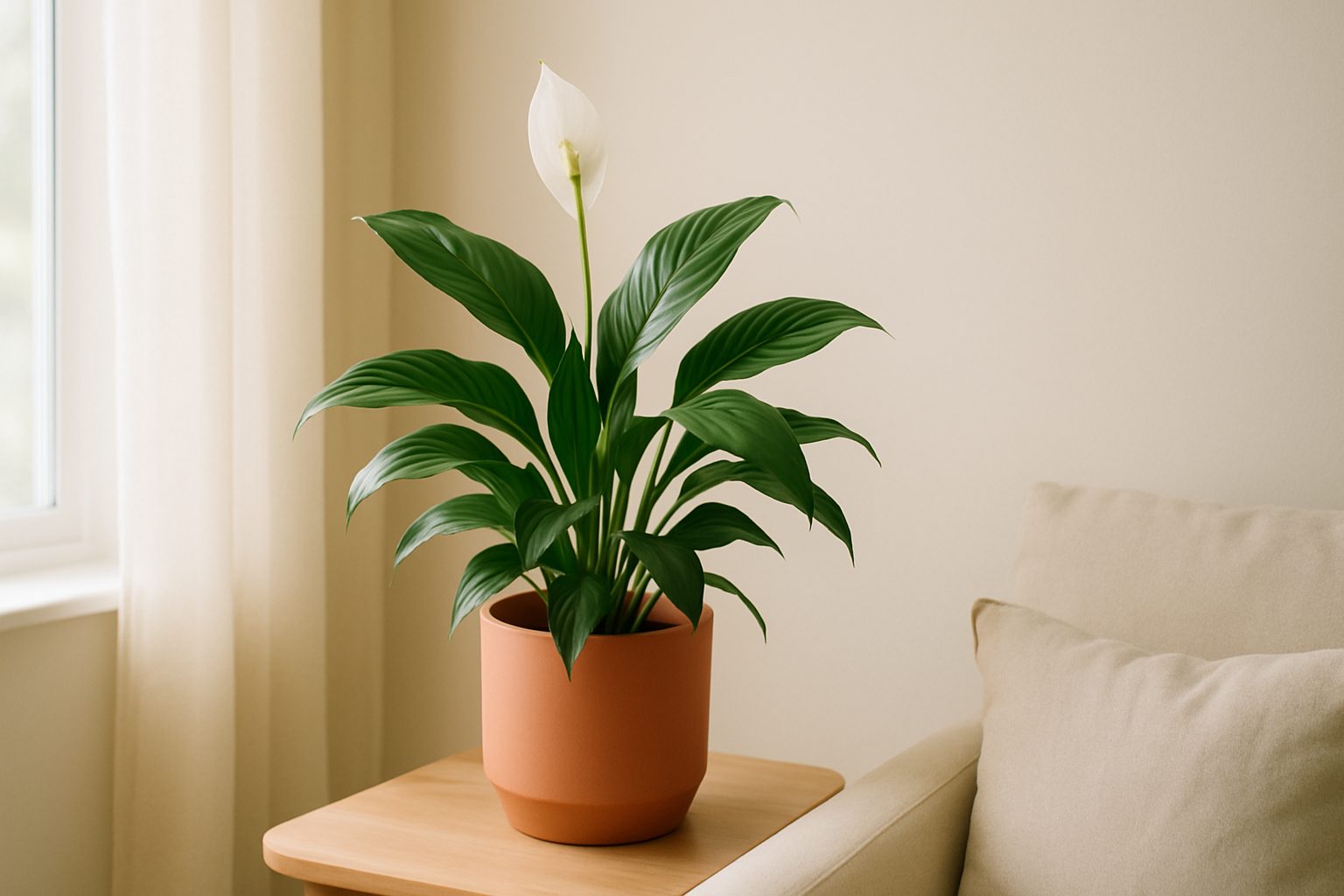
Peace lily care comes with a built-in alarm system most plant owners don’t know about. When yours is thirsty, it tells you in the most dramatic way possible: the leaves go soft and hang down like a wet flag. Water it, and within a few hours it’s standing straight again. Once you understand that signal, peace lily care gets a lot easier.
Quick answer: Peace lilies need medium to bright indirect light, watering every 1 to 2 weeks (let the top inch of soil dry out first), humidity above 50%, and temperatures between 65 and 85°F. They’re toxic to cats and dogs. To trigger blooms, they need more light than most guides suggest plus occasionally cooler nights.
Peace Lily Care at a Glance
| Factor | What it needs |
|---|---|
| Light | Medium to bright indirect; no direct sun |
| Water | Every 1 to 2 weeks in summer; every 2 to 3 weeks in winter |
| Soil | Well-draining potting mix with peat or coco coir |
| Temperature | 65 to 85°F (18 to 29°C) |
| Humidity | 50% or higher |
| Fertilizer | Monthly April to September; pause in winter |
| Repotting | Every 1 to 2 years in spring |
| Toxicity | Toxic to cats, dogs, and people (wear gloves when pruning) |
Light
Peace lilies have a reputation as a low-light plant, and they will survive in dim conditions. But surviving and blooming are different things, and light is almost always what separates them.
In a genuinely dark corner, your peace lily will stay alive and push out leaves. It probably won’t bloom. Move it to a spot with medium to bright indirect light, a few feet back from a south or east-facing window, and you’ll see faster growth and, eventually, those white blooms.
Direct sun burns the leaves quickly. If the sun actually touches the leaves at any point in the day, that spot is too bright. Filtered light through a sheer curtain is ideal.
Water
This is where the droop signal comes in.
Peace lilies visibly droop when thirsty. The leaves go limp, the stems soften slightly, and the whole plant looks miserable. New owners often panic at this. Don’t. It’s the plant telling you it needs water, and it’s more reliable than any watering calendar. Water it deeply and check back in a few hours.
The problem is there are two kinds of droop, and they look similar.
- Thirst droop: the soil is dry or nearly dry, the leaves are limp, but the stems still feel firm. Water your plant deeply. The leaves should be standing upright within 2 to 6 hours. If they’re not, the problem isn’t dehydration.
- Overwater droop: the soil is still moist or wet, the leaves are limp AND yellowing, and the base or roots may smell musty. Watering more will make this worse. Stop watering, let the soil dry completely, and check whether the roots are affected. See root rot in houseplants if you suspect deeper damage.
The moist-soil droop is the one that catches people out, because the instinct is still to water the drooping plant. Check the soil first, every time.
If the top inch is dry, water. If it’s still moist, wait a few days and check again.
In summer, most peace lilies need water every 7 to 14 days. In winter, stretch that to every 2 to 3 weeks. The right frequency depends on your home’s temperature, pot size, and light levels. The soil and the plant are better guides than a schedule. For a fuller framework, see how often to water houseplants.
Tap water and brown tips
Peace lilies are sensitive to fluoride and chloramine, both common in municipal tap water. These compounds accumulate in the soil over time and cause chronic brown tips that no amount of watering changes will fix.
If your tips keep browning despite adequate water and humidity, the culprit is probably your tap water. Switch to filtered or distilled water.
Many people know to leave tap water out overnight to let chlorine off-gas. That works for chlorine. It does not work for chloramine, which most water utilities now use instead. If the overnight method hasn’t helped your brown tips, chloramine is likely why. Your local utility’s water quality report will tell you which treatment they use.
Humidity and Temperature
Peace lilies come from the humid forest floors of Central and South America. They want humidity above 50%. Drop below that and you’ll see crispy tips and browning edges.
In most heated or air-conditioned homes, humidity can drop to 30% or below in winter. A few practical ways to help:
- Place the pot on a tray of pebbles with water just below the drainage holes. As the water evaporates, it raises local humidity around the plant.
- Group it near other houseplants, which collectively raise the humidity around them.
- Run a small humidifier nearby during dry months.
For temperature, the range of 65 to 85°F (18 to 29°C) covers most normal indoor conditions. Keep your peace lily away from cold drafts, heating vents, and windows that get very cold in winter. Anything below 55°F for more than a brief period will damage the leaves.
Soil
A well-draining potting mix is all you need. Look for one with peat moss or coco coir as the base material. It should hold some moisture without becoming waterlogged.
Use a pot with drainage holes. Peace lilies are prone to root rot if water sits in the bottom of the pot. Good soil cannot compensate for no drainage.
Fertilizer
Feed once a month from April through September with a balanced liquid fertilizer diluted to half the recommended strength. That’s it for fertilizer.
Skip fertilizing in winter. Growth slows down, and pushing the plant with fertilizer leads to salt buildup in the soil. Salt buildup causes the same brown tips and edge burn that tap water causes, and many growers never connect the two. If you’ve been fertilizing through winter, flush the soil with plain water a few times to clear the salt.
Repotting
Repot every one to two years, or when you see roots circling out of the drainage holes or pushing the plant visibly upward in the pot. Move up one pot size (about two inches wider) and use fresh potting mix. Spring is the ideal time.
Peace lilies handle being slightly rootbound just fine. You don’t need to rush repotting. In fact, a slightly cramped pot can encourage blooming (more on this below).
Repotting is also how you propagate a peace lily. When you take it out of the pot, look for natural offshoots at the base with their own root system attached. Pull or cut these gently away from the main root ball and pot them individually. They may droop for a week or two while adjusting, which is normal transplant stress.
How to Get Your Peace Lily to Bloom
Most peace lily owners want blooms. Most of them don’t get them, and the reason is almost always light.
The blooming trigger is brighter indirect light than peace lilies are commonly given. If yours has been in a dim spot and has never bloomed or hasn’t bloomed in over a year, move it to the brightest indirect light in your home first. Near a window with good morning or afternoon light (no direct sun hitting the leaves) is the right spot.
Two more things help:
- Cooler nights. A drop to around 60°F (15°C) at night for a few weeks in late winter or early spring can trigger bud set. If your home stays consistently warm, this is harder to replicate indoors. A slightly cooler room near a window in winter can make a difference.
- Slight rootboundness. Hold off on repotting if you’re hoping for blooms. Some growers find that a slightly cramped pot nudges the plant toward flowering, though brighter light matters more.
Peace lilies bloom naturally in spring, typically March through June. Outside that window, they need conditions to feel right.
One thing worth knowing: most peace lilies sold in garden centers were treated with ethylene gas by the grower to force early blooming. That’s why a newly purchased plant might bloom in November. Once that initial boost has worn off, the plant follows its natural rhythm. So if your plant hasn’t rebloomed since you bought it, that’s common, and it’s not a sign you’ve done anything wrong.
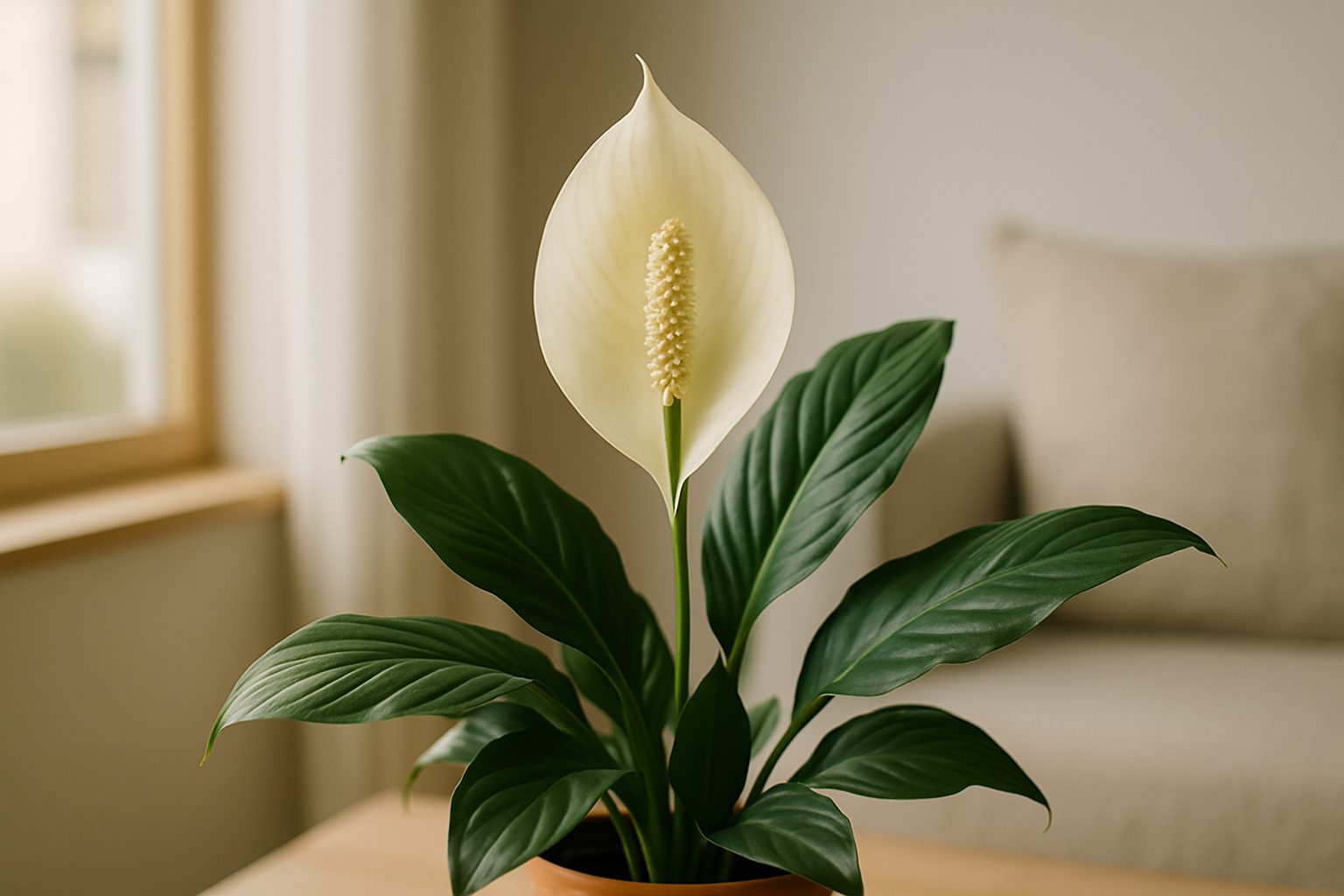
Once a bloom appears, the white spathe (the hood-shaped leaf, not technically a flower) will stay white for two to six weeks. Then it gradually fades to green. That’s just aging. The chlorophyll that gives leaves their color takes over as the bloom matures. Cut the stem off at the base once the spathe is fully green and beginning to droop.
Common Problems
Brown tips. The most common complaint. Usually tap water chemistry, low humidity, overfertilizing, or some combination. Switch to filtered or distilled water, raise humidity, and make sure you’re not feeding more than once a month. Trim brown tips with clean scissors at a slight angle. New growth will come in clean once you address the cause.
Yellow leaves. Overwatering is the most likely reason. Lower leaves tend to yellow first. Let the soil dry out before watering again, and check that your pot isn’t sitting in standing water. If the soil stays wet and yellowing continues, check for root rot and follow the steps in how to rescue an overwatered plant.
Drooping that won’t recover. If your plant doesn’t bounce back within a few hours of watering, the issue is not thirst. Check the roots. Dark brown, mushy roots with a bad smell confirm root rot. See root rot in houseplants for how to treat it.
No blooms. Almost always a light issue. Move it closer to a bright window.
Flowers turning green. Normal. The spathe ages from white to green over a few weeks. Cut the stem at the base once it’s fully green.
A note on air purification
Peace lilies appear on most “best air-purifying houseplants” lists, and that reputation comes from a 1989 NASA study. That study was done in sealed chambers at pollutant concentrations far higher than anything you’d find in a normal home. In a real room with normal air exchange, the effect is too small to notice. A peace lily won’t meaningfully change your indoor air quality.
This doesn’t make them a bad plant choice. The air-purifying claim is just overstated. Buy one because it’s beautiful and genuinely easy to keep. Don’t expect it to clean your air.
Toxicity
Peace lilies are toxic to cats, dogs, and people. They contain insoluble calcium oxalate crystals, which cause burning and irritation in the mouth and throat, excessive drooling, vomiting, and difficulty swallowing if eaten. The ASPCA lists Spathiphyllum as toxic to both cats and dogs.
If you have pets or young children, keep the plant out of reach. Wear gloves when pruning or handling cut stems. The sap can cause skin and eye irritation on contact.
Peace Lily Care FAQ
How often should I water a peace lily?
Every 7 to 14 days in spring and summer, every 2 to 3 weeks in winter. Skip the fixed schedule. Check the soil and watch for the droop signal. Water when the top inch of soil is dry and the leaves are beginning to soften.
Why is my peace lily drooping?
Either it’s thirsty or it’s overwatered. Check the soil. Dry soil with firm (but limp) leaves means it needs water. Wet or damp soil with yellowing leaves means overwatering. Both cause drooping, so the soil check is the only way to tell them apart.
Why are my peace lily leaves turning yellow?
Overwatering is the most common cause. Let the soil dry out before watering again. If the yellowing continues alongside wet soil and the roots smell off, check for root rot.
Is a peace lily toxic to cats and dogs?
Yes. Peace lilies contain calcium oxalate crystals that cause oral irritation, drooling, vomiting, and difficulty swallowing. The ASPCA classifies Spathiphyllum as toxic to cats and dogs. Keep the plant out of reach of pets and small children.
Why does my peace lily have brown tips?
Tap water chemistry or low humidity is the most common cause. Fluoride and chloramine accumulate in the soil over time and cause tip burn that watering adjustments won’t fix. Switch to filtered or distilled water. If you’re fertilizing regularly, cut back and flush the soil.
Why are my peace lily flowers turning green?
That’s the spathe aging naturally. The white spathe fades to green over two to six weeks as the bloom matures. It’s not dying. Cut the stem at the base once it’s fully green.
Can a peace lily live in low light?
It survives but won’t bloom, and growth slows noticeably. For genuinely dark spaces, a ZZ plant or pothos handles low light better without complaint. If blooming matters to you, a peace lily needs medium to bright indirect light to deliver on that.
Should I remove yellow leaves from my peace lily?
Yes. A yellowed leaf won’t turn green again. Removing it redirects energy to healthy growth. Trim it at the base with clean scissors. If multiple leaves are yellowing at once, check whether overwatering is the underlying cause first.
Will adding sugar or baking soda help my peace lily bloom?
No. Both are garden myths. Sugar in the soil feeds bacteria, not your plant. Baking soda can alter soil pH in ways that harm roots. What actually triggers blooming is a combination of brighter indirect light, a slight dry period between waterings, and patience around the natural spring bloom cycle.
How long does it take for a peace lily to perk back up after watering?
For a thirsty plant, usually 2 to 6 hours. By the end of the day it should be standing upright. If the plant is still drooping 12 to 24 hours after a thorough watering, the problem isn’t dehydration. Check the roots for rot and reassess.
What month do peace lilies bloom?
Naturally, spring, typically March through June. Plants sold in stores may have been treated by the grower to bloom out of season. Once that initial forced bloom is over, the plant tends to settle into its natural spring rhythm.
Do peace lilies purify the air?
The claim comes from a 1989 NASA study conducted in sealed chambers at pollutant concentrations far higher than a typical home. In a normal room with regular air exchange, houseplants have a negligible effect on air quality. A peace lily won’t measurably clean your air. It’s a genuinely beautiful plant worth owning, just not for that reason.
Ready to expand your plant collection? The best indoor plants for beginners has solid picks at every light level.
Sources: ASPCA Animal Poison Control Center (aspca.org), University of Florida IFAS Extension (edis.ifas.ufl.edu), Royal Horticultural Society (rhs.org.uk), Clemson Home & Garden Information Center (hgic.clemson.edu).
Keep reading
Related guides
 Care Guides
 Jade Plant Care: The Complete Guide for Beginners
Jade plant care guide: how to water, light, and soil correctly, plus fixes for leaf drop, leggy growth, and other common problems.
 Care Guides
 Monstera Plant Care: The Complete Guide
Monstera plant care made simple: light, watering, soil, aerial roots, and why your leaves might not have holes yet.
 Care Guides
 Prayer Plant Care: Keeping Those Leaves Moving
Prayer plant care made clear: light, water, humidity, why leaves stop praying, and the honest truth about brown tips.