Monstera Plant Care: The Complete Guide
Monstera plant care made simple: light, watering, soil, aerial roots, and why your leaves might not have holes yet.
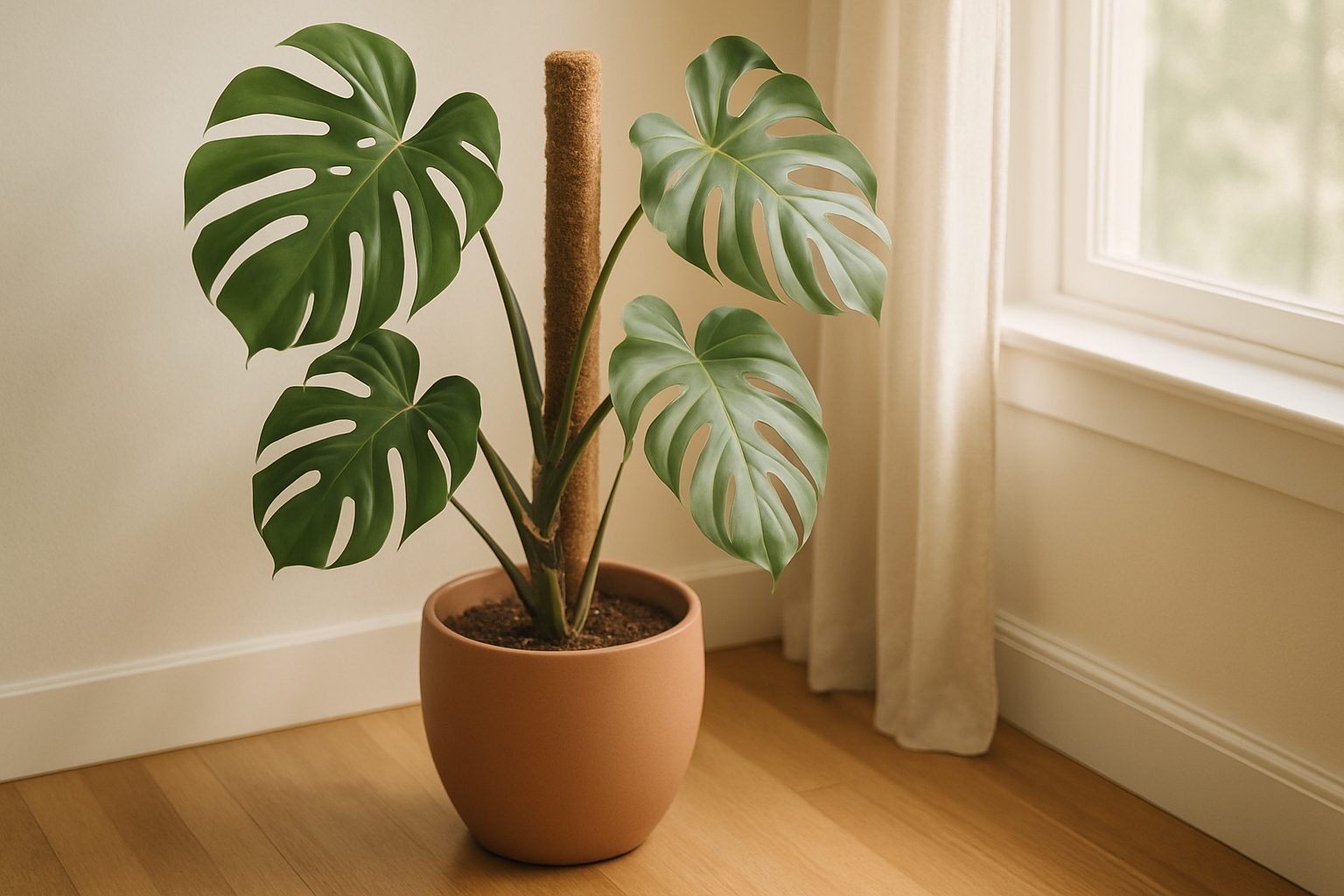
Monstera is a tropical climbing plant native to Central American rainforests, best known for the distinctive splits and holes (fenestrations) that develop in its leaves as it matures. Monstera plant care is more forgiving than most people expect. Your plant will tolerate imperfect conditions, shrug off a missed watering, and survive a lot of beginner mistakes. What trips people up are a handful of specific requirements that most guides handle vaguely: soil that actually drains, light that’s genuinely bright, and an understanding of what those hanging roots are supposed to do.
This guide covers the full picture, including the questions other care guides skip over.
Quick answer: Monstera needs bright indirect light (it can see sky, but not direct sun), water every 2 to 3 weeks in summer (check the soil, not the calendar), chunky well-draining soil, and temperatures between 65 and 85°F. It’s toxic to cats, dogs, horses, and humans if ingested (ASPCA).
Monstera Plant Care at a Glance
| Factor | What it needs |
|---|---|
| Light | Bright indirect; tolerates medium but grows slowly |
| Water | Every 2 to 3 weeks in summer, every 3 to 4 weeks in winter |
| Soil | Chunky, well-draining mix with perlite and orchid bark |
| Temperature | 65 to 85°F (18 to 29°C); no drafts below 55°F |
| Humidity | 50 to 60% preferred; tolerates normal home levels (~40%) |
| Fertilizer | Monthly April through September; pause in winter |
| Repotting | Every 1 to 2 years, or when roots circle the pot bottom |
Light
Monstera plant care starts with getting the light right, because almost everything else follows from it. The ideal spot lets the plant see open sky through the window, with no direct sun rays landing on the leaves. An east-facing window is close to perfect. A few feet back from a bright south or west window works well too.
Direct sun scorches the leaves within days, leaving bleached patches that can’t be reversed. Low light keeps the plant alive but produces small, slow growth and leaves that stay solid green with no holes.
If your home doesn’t have a reliably bright spot, a grow light set to 10 to 12 hours per day is a clean fix. Monsteras respond well to them.
Watering
Skip the schedule. The standard “water once a week” advice that nurseries hand out is calibrated for an average plant in average conditions, which your home almost certainly isn’t.
Check the soil instead. Push your finger about an inch into the soil near the edge of the pot. If it’s still damp, leave it alone. If it’s dry at that depth, water thoroughly until it drains freely from the bottom. In most homes, that works out to every 2 to 3 weeks in the warmer months and every 3 to 4 weeks in winter.
What a thirsty monstera looks like: Leaves droop and lose their stiffness. The pot feels noticeably lighter than usual.
What an overwatered one looks like: Lower leaves turn yellow. The soil stays wet for more than a week. There may be a faint musty smell from the pot.
One detail most guides skip: tap water quality affects monstera more than most houseplants. Fluoride and chlorine from tap water accumulate in the soil and show up as brown leaf tips over time. If you’re seeing crispy tips but the watering and humidity seem fine, try letting tap water sit overnight before using it, or switch to filtered or rainwater. For more on how often to water houseplants, including how home conditions change the equation, that guide goes deeper.
Soil
Standard potting mix holds too much moisture for monstera roots. It stays wet long enough to invite root rot, which is how most monsteras die.
A chunky mix drains fast and stays airy between waterings. A ratio that works reliably:
- 60% regular potting mix
- 20% perlite (improves drainage, keeps the mix light)
- 20% orchid bark (adds air pockets, breaks up dense soil)
Most plant specialty shops and online retailers sell pre-mixed aroid soil that does the same job if you’d rather not mix your own.
Humidity and Temperature
Monsteras prefer 50 to 60% humidity but adapt to normal home conditions (around 40%) without much complaint. The reputation for being humidity-demanding is exaggerated. Most do fine in standard rooms without a humidifier.
What actually helps when humidity is low: grouping plants together, setting the pot on a pebble tray filled with water, or keeping the plant in a naturally humid room with good light. Misting the leaves raises humidity for a few minutes at most.
Temperature should stay between 65 and 85°F (18 to 29°C). Below 55°F, growth stops and the leaves can be damaged. Keep monsteras away from drafty windows, air conditioning vents, and exterior walls in winter.
Fertilizing
A balanced liquid fertilizer, something like a 10-10-10 formula at half the label dose, applied once a month from April through September is enough. Pause through autumn and winter. The plant grows slowly then, and excess fertilizer builds up as salt in the soil, causing brown leaf tips and root damage over time.
Slow-release granular fertilizer at the start of spring is a simpler option if monthly applications are easy to forget.
Repotting
Repot when roots start to circle the bottom of the pot or push out through the drainage holes. For most monsteras, that’s every one to two years.
Move up one pot size. A pot too large holds more soil than the roots can absorb, which keeps the mix wet longer than it should be. Spring is the best time to repot, when the plant is waking up and handles the disruption better.
Aerial Roots: What to Actually Do With Them
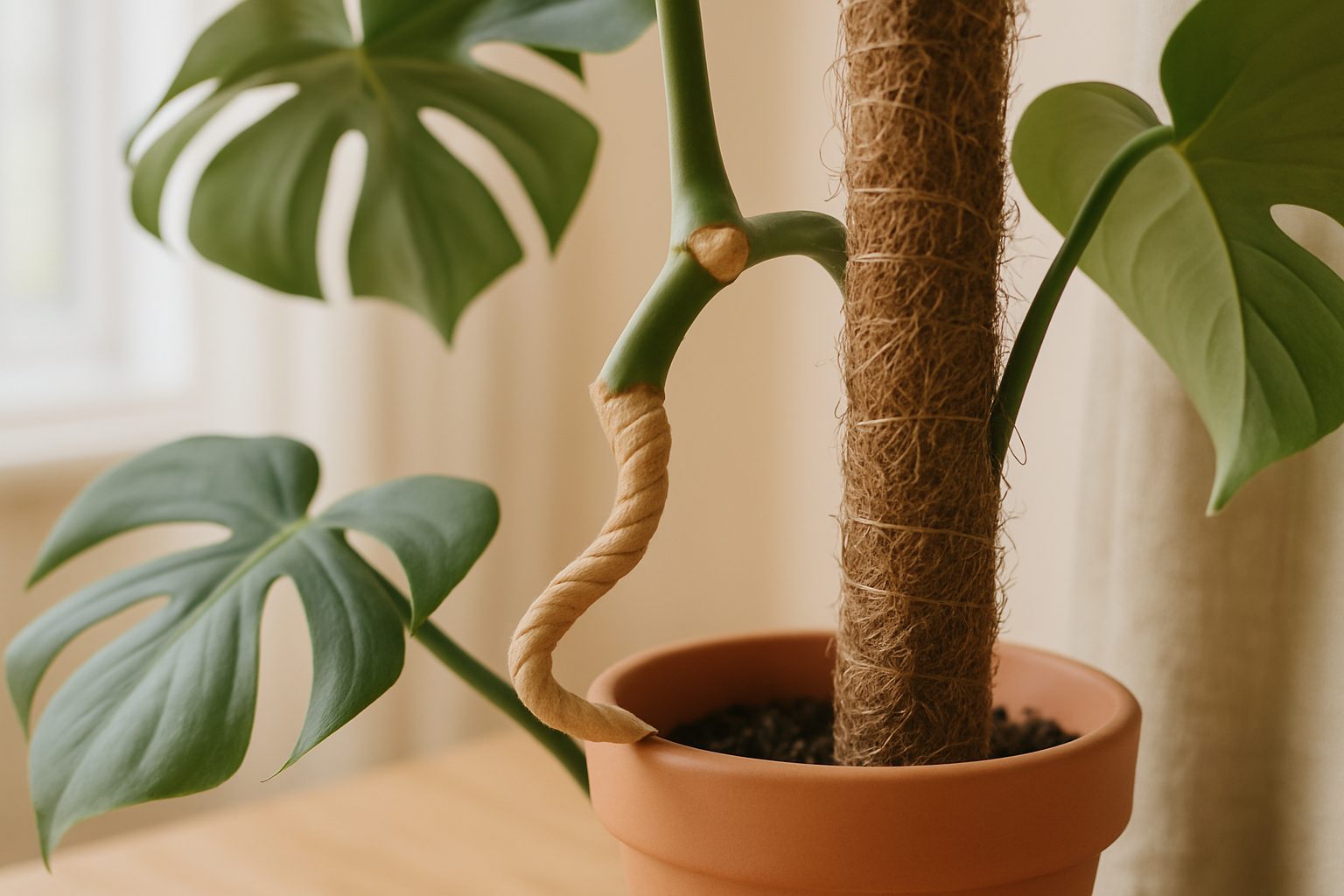
Monsteras produce thick, rope-like aerial roots from nodes above the soil. They’re normal and not a sign that anything is wrong. What almost no guide explains is what you’re supposed to do with them.
- Guide them to a moss pole or coir pole. Best option. Aerial roots anchor to the pole and absorb moisture from it, which feeds the plant. Growth speeds up and leaves get bigger.
- Push them back into the soil. Works fine. They function as regular roots and help anchor the plant.
- Put them in a glass of water. Possible short-term, but change the water weekly. Algae grows quickly and the tips can rot without fresh water.
- Trim them. Fine if they’re getting in the way. Cutting an aerial root does not harm the plant.
Why Your Monstera Leaves Have No Holes Yet
The fenestrations (the splits and holes in the leaves) are what most people buy a monstera for. Then the first several leaves come in completely solid, and the panic starts.
Young plants don’t develop fenestrations. In the wild, monstera leaves develop holes to let light filter through the forest canopy and to reduce wind resistance as the plant climbs. Juvenile plants, still close to the ground, don’t need that adaptation yet.
Maturity is the biggest factor. Most plants need a few years before the stem is old enough to produce fenestrated leaves. Leaves also need to reach roughly 6 to 8 inches before holes tend to appear. There’s no shortcut here.
Light is the lever you actually control. Brighter conditions prompt the plant to invest in larger, more structurally complex leaves. Low light produces small, solid leaves for years. Moving the plant to a better-lit spot is often the fastest change you can make.
Vertical support helps too. Monsteras are natural climbers. A moss pole encourages the upward growth pattern that triggers larger, fenestrated leaves. A plant sprawling sideways on a shelf grows more slowly and produces smaller leaves.
If your plant is in a reasonably bright spot, the holes are coming. If it’s been in low light for over a year with no progress, a brighter location will produce a visible difference within two or three new leaves.
The First Few Weeks After Bringing One Home
New monstera drooping is normal. Moving from a greenhouse into your home is a genuine shock: different light, humidity, temperature, and air movement. A healthy plant often looks worse before it looks better.
Expect some limpness in the first month, and maybe one or two older leaves yellowing and dropping. That’s normal adjustment, not a crisis.
Put the plant in its permanent spot, water it once correctly, and leave it alone. A drooping new plant is not asking for more water. Overwatering a stressed, adjusting plant is more damaging than underwatering during this window. Resist the urge to repot immediately. Repotting on top of adjustment stress slows recovery.
Ongoing drooping with wet soil is worth investigating (possible root rot). Pale yellowing on new growth is usually a light issue.
Common Problems
Yellow leaves are almost always a sign of overwatering or inadequate drainage. Check that the pot has drainage holes and that the soil dries out between waterings. A detailed look at yellow monstera leaves covers the other causes and how to tell them apart.
Brown leaf tips usually come from low humidity, fluoride in tap water, or accumulated fertilizer salts. Try switching to filtered water and skip a fertilizing cycle.
Root rot means dark, mushy roots and a plant that stays limp even after watering. To rescue it: unpot the plant, trim all black or mushy roots back to healthy white tissue, let the root ball air-dry for an hour, repot in fresh chunky mix, and hold off watering for one to two weeks. The complete guide to root rot in houseplants walks through the full diagnosis and recovery. If you’re unsure whether the problem is overwatering or actual rot, the overwatered plant guide helps you tell the difference.
Leggy growth with small leaves usually means the plant is stretching toward the nearest light source. More light and a vertical support structure will compact the growth over time.
Is Monstera Safe for Cats and Dogs?
No. Monstera contains calcium oxalate crystals, which cause oral irritation, drooling, and vomiting if chewed or ingested. Symptoms are painful but rarely life-threatening. The ASPCA lists it as toxic to cats, dogs, and horses. The same crystals affect humans too, so keep it away from small children.
If you suspect ingestion, contact your vet or the ASPCA Animal Poison Control Center at 888-426-4435.
FAQ
How often should I water a monstera plant?
Every 2 to 3 weeks in spring and summer, every 3 to 4 weeks in autumn and winter. The real answer is: when the top inch of soil feels dry. Check with your finger rather than following a fixed schedule. A fixed schedule is the most reliable way to kill a monstera.
Why doesn’t my monstera have holes in its leaves?
Fenestrations come with maturity, light, and vertical support. Young plants produce solid leaves. Once the stem is a few years old and the plant gets consistent bright indirect light, holes appear in new growth. A moss pole speeds up the process. Moving the plant to a brighter spot makes a real difference.
Can I put monstera aerial roots in water?
You can. Change the water every week to prevent algae and tip rot. A better long-term option is guiding the aerial roots to a moss pole, where they anchor and absorb moisture naturally.
Does monstera need a moss pole?
It grows significantly better with one. A moss pole mimics the trees monsteras climb in the wild. Plants with a support structure produce larger leaves, develop fenestrations earlier, and grow more compactly. Without support, a monstera sprawls and grows at a slower pace.
How fast does monstera grow indoors?
In good conditions, one to two new leaves per month during spring and summer. In low light, growth slows to a few leaves per year. Consistent fertilizing during the growing season makes a noticeable difference.
Is monstera hard to care for?
It’s somewhere between easy and intermediate. The two things that go wrong most often are watering on a fixed schedule and placing the plant in light that’s too dim. Get those right, and the rest is straightforward. If you want something with a lower learning curve, the best indoor plants for beginners guide has options that forgive more mistakes.
Sources and Further Reading
- ASPCA Animal Poison Control: Monstera deliciosa toxicity listing
- University of Florida IFAS Extension: Araceae foliage plant production guides
- Royal Horticultural Society: Monstera cultivation notes
Keep reading
Related guides
 Care Guides
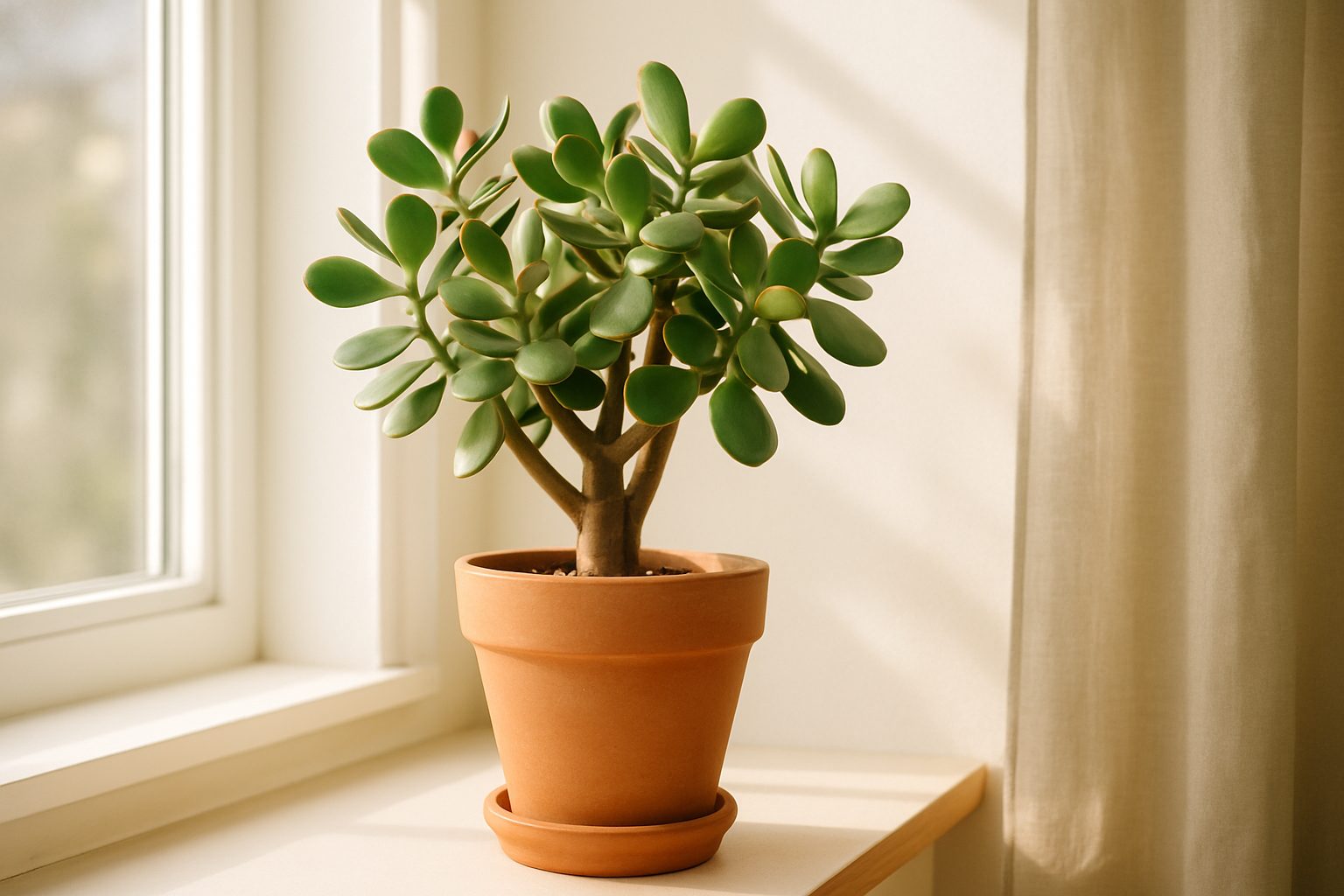
 Jade Plant Care: The Complete Guide for Beginners
Jade plant care guide: how to water, light, and soil correctly, plus fixes for leaf drop, leggy growth, and other common problems.
 Care Guides
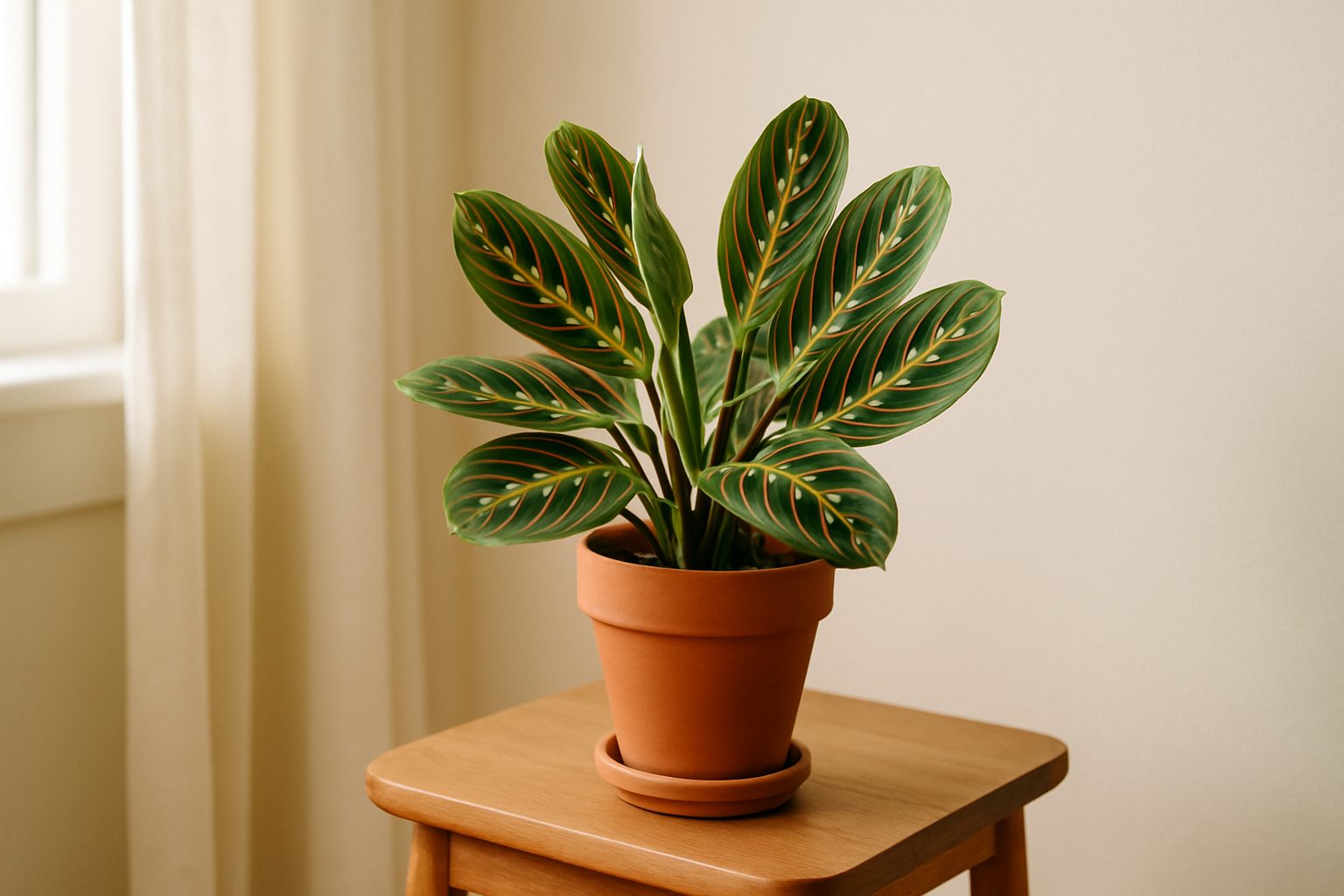
 Prayer Plant Care: Keeping Those Leaves Moving
Prayer plant care made clear: light, water, humidity, why leaves stop praying, and the honest truth about brown tips.
 Care Guides
 Peace Lily Care: How to Get Yours to Bloom
Peace lily care made simple: light, water, humidity, and the one thing that actually triggers blooms. Plus the two kinds of droop and how to tell them apart.