Prayer Plant Care: Keeping Those Leaves Moving
Prayer plant care made clear: light, water, humidity, why leaves stop praying, and the honest truth about brown tips.
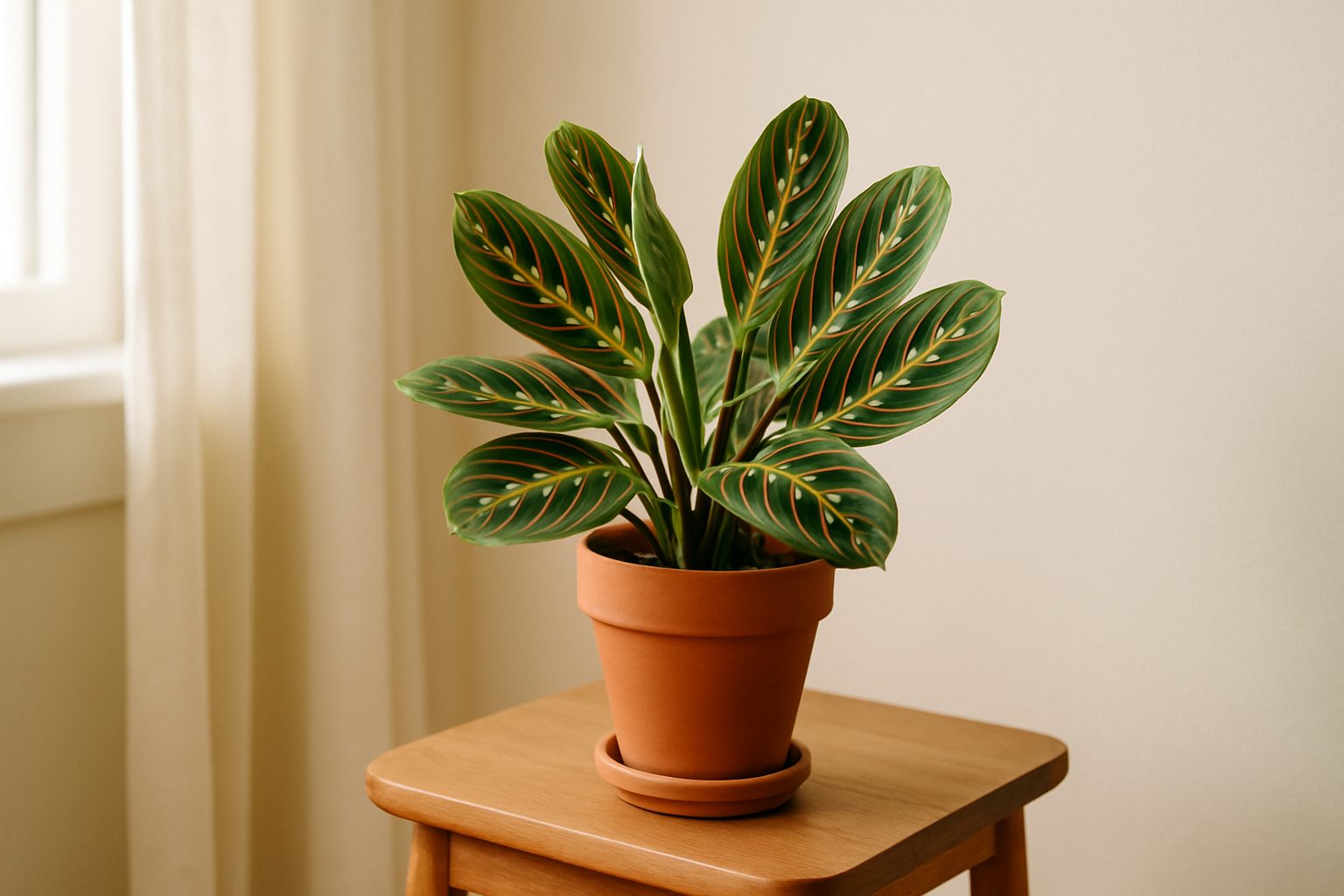
Prayer plants fold their leaves up at night and open them again in the morning. If your plant is doing that, you’re already winning.
Care can feel finicky at first, but most prayer plants are more forgiving than their reputation suggests. The key is understanding a few specific quirks around water quality, humidity, and light. Get those right and the plant mostly takes care of itself.
Quick answer: Give your prayer plant bright indirect light, water when the top inch of soil dries out using filtered water, and keep humidity above 50%. Maranta varieties handle more neglect. Calathea types need more precision.
| Factor | What it needs |
|---|---|
| Light | Bright to medium indirect; east or west window ideal |
| Water | Every 7 to 10 days in summer; less in winter. Filtered or distilled. |
| Humidity | 50% minimum (60% is better) |
| Temperature | 65 to 80°F (18 to 27°C). No cold drafts. |
| Soil | Well-draining, peat-based mix |
| Fertilizer | Half-strength balanced, monthly in spring and summer |
| Toxic to pets? | No. Safe for cats, dogs, and children. |
Wait: what kind of prayer plant do you actually have?
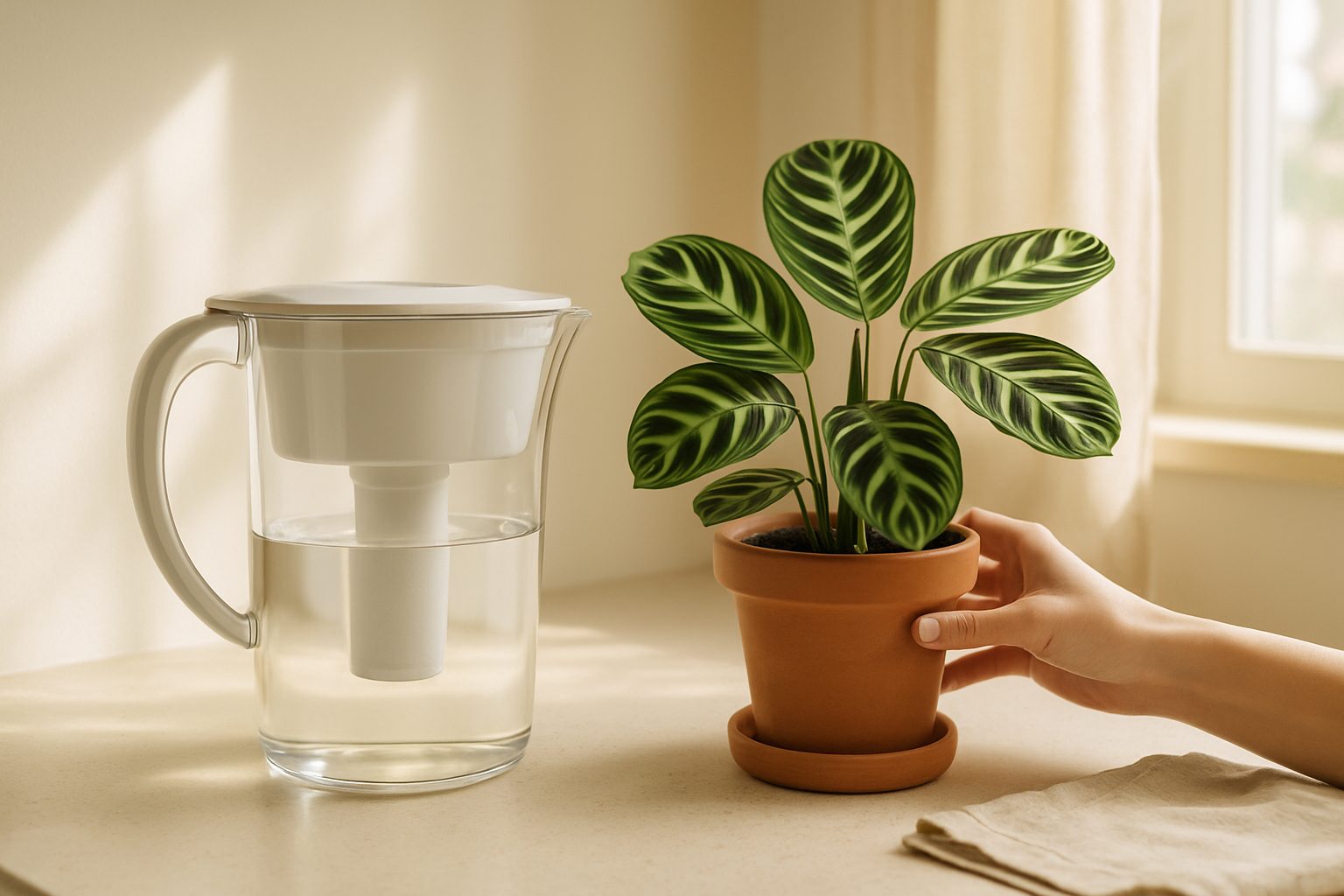
“Prayer plant” is a nickname that stores apply to at least four different plant genera: Maranta, Calathea, Ctenanthe, and Stromanthe. They all fold their leaves up at night, which is why they share the name. Care difficulty varies considerably between them.
Maranta leuconeura (the Red Prayer Plant, Herringbone Plant, or Rabbit’s Foot) is the most forgiving. It tolerates lower humidity and is more resilient to imperfect watering. Compact rosette, green leaves with dark blotches or red veins? That is almost certainly a Maranta.
Calatheas are beautiful and notoriously finicky. The varieties with white leaf patterning (White Fusion, White Star) are among the most challenging houseplants you can buy. If you’re doing everything right and the plant keeps declining, it may be a Calathea. These need more precision: exact humidity, consistent moisture, and filtered water without fail.
This guide focuses on Maranta first. Calathea differences are called out where care actually diverges.
Light
Prayer plants want bright to medium indirect light. An east-facing window is ideal: morning sun, afternoon shade. West-facing windows work too. North-facing is usually too dim for strong growth, though the plant will survive.
Direct afternoon sun bleaches the leaves pale and washed-out. If you see large faded patches, move the plant back from the glass or add a sheer curtain.
Low light slows growth and can suppress the leaf-folding movement entirely. If you’re working with a dark apartment, a grow light set to 12 hours on a timer solves this. Full-spectrum lights and purple grow lights both work.
Watering
Let the top inch of soil dry out between waterings. In most homes that translates to every 7 to 10 days in summer and every 14 days or more in winter. Poke your finger into the soil rather than following a fixed schedule. Prayer plants in low light or cooler spots drink more slowly than you’d expect.
About tap water. Prayer plants are sensitive to minerals and chemicals in tap water, specifically fluoride, chlorine, and dissolved mineral salts. Fluoride accumulates in leaf tissue over time and causes brown tips with a yellowing border. Chlorine causes similar leaf damage. Leaving tap water out overnight helps with chlorine (it off-gasses into the air) but does nothing for fluoride. A filtered pitcher, reverse osmosis, or collected rainwater solves both. Distilled water also works.
If you have already switched to filtered water and the plant is still getting brown tips, the more likely cause is low humidity.
In winter, cut back on watering even if the soil looks similar to summer. The plant slows down and may drop a leaf or two (normal dormancy, not distress). Wet soil in a cool spot is a fast route to root rot. If you notice the leaves looking dull or growth has completely stalled, that’s expected from November through February. Resume normal watering and fertilizing once you see new leaves pushing in spring.
Humidity and Temperature
Aim for 50% relative humidity, and 60% or higher if you can manage it. Calatheas in particular look rough below 40%.
A small humidifier placed about a foot or two from the plant is the most reliable solution. Grouping several plants together raises ambient humidity a little. Pebble trays can help too. Fill a tray with pebbles, add water to just below the pebble surface, and set the pot on top. The pot should sit above the water, not in it. Direct contact wicks moisture into the roots and causes the same problems as overwatering.
Avoid misting the leaves directly. Wet foliage in a humid room invites fungal problems.
Temperature: keep the plant between 65 and 80°F. Below 60°F the growth slows and leaves begin to curl. Cold drafts from air conditioning vents or single-pane windows cause sudden stress, so keep the plant away from both.
In winter, heated homes dry out fast. Bump up the humidifier output during heating season. Indoor heating drops humidity fast, and low humidity causes more visible damage than a slightly cool room.
Soil and Potting
The goal is a mix that drains well but holds some moisture without becoming waterlogged. A standard peat-based potting mix blended with perlite (roughly 2 parts mix to 1 part perlite) works well. African violet mix is another good option.
Pure potting soil straight from the bag tends to compact over time and hold more water than these plants want, which is why many prayer plants develop root rot even with careful watering habits.
Use a pot with drainage holes. Prayer plants do not like sitting in wet soil. If you prefer a decorative pot without drainage, use it as an outer cachepot and keep the plant in a plastic nursery pot inside it.
Fertilizer
Feed once a month from spring through summer with a balanced fertilizer at half the strength shown on the label. Full-strength fertilizer can burn the roots and cause brown leaf tips.
Stop fertilizing in fall and winter. The plant is growing slowly and does not need the extra nutrients. Excess fertilizer salts build up in the soil and damage roots over time.
If you haven’t repotted in a year or more, flushing the soil with plain water every few months helps clear accumulated salts.
Why Did My Prayer Plant Stop Praying?
The leaf-folding behavior (called nyctinasty) is triggered by changes in light levels. When light drops, the plant folds its leaves upward. When light returns, they open flat again.
If your plant has stopped doing this, start with light. In a dark spot, the light change throughout the day isn’t dramatic enough to trigger the movement. Moving to a brighter spot usually restores it within a few weeks.
A newly bought or recently moved plant often stops praying while it adjusts to the new environment. That’s normal. Give it two to four weeks.
If the movement stopped alongside other symptoms (yellow leaves, wilting, visible pests), those are the actual problem. Address them first and the praying usually returns on its own.
Leaves that only fold partway, or movement that’s inconsistent, usually means the plant is still settling into its light conditions.
Common Problems
Brown tips
Brown tips are the most common prayer plant complaint. Here’s the honest answer: some amount of browning is just the plant’s nature, especially on older leaves. If only the tips of mature leaves are brown and new growth looks healthy, your plant is probably fine.
The main causes of significant browning are fluoride in tap water, low humidity, and fertilizer buildup. Switch to filtered water, raise humidity, and flush the soil occasionally. You can trim brown tips with clean scissors, following the natural leaf shape. It doesn’t fix the cause, but it makes the plant look tidier.
Yellow leaves
Yellow leaves usually point to too much water, too little light, or both. Check the soil before you water: if it still feels damp an inch down, wait. Consistently soggy soil leads to root rot, which shows up as yellowing alongside soft, darkened stems near the base. For a full rundown of the signs, see overwatered plant symptoms.
A single yellow leaf on an otherwise healthy plant is normal aging and nothing to worry about.
Curling leaves
Curling usually signals stress, and the two most common causes point in opposite directions: too dry (underwatered or very low humidity) or too wet (struggling roots).
Check the soil first. Bone dry? Water thoroughly and increase your watering frequency. Wet and has been for a while? Let it dry out more and check for root rot. Curling from low humidity usually appears alongside brown tips and crispy edges and improves within a week or two of running a humidifier nearby.
Pests
Spider mites and mealybugs are the two pests to watch for. Spider mites leave fine webbing on leaf undersides and cause silvery, stippled patches. Mealybugs show up as white cottony clusters in leaf joints and along stems.
Both respond to neem oil or insecticidal soap spray applied every 5 to 7 days for at least three weeks. Isolate an affected plant right away to stop the spread to your other plants.
Fungus gnats are common when the topsoil stays consistently moist. Letting the surface dry out more between waterings is the fix. For a more detailed approach, see how to get rid of fungus gnats on houseplants.
Propagation
The simplest method is division: when repotting, separate the root ball gently into two or three sections at natural gaps in the roots. Pot each section separately and keep them in warm, humid conditions while they establish.
Stem cuttings in water are a good option for beginners who don’t want to disturb the whole root system. Take a cutting just below a leaf node (the slightly raised joint where a leaf meets the stem), remove any leaves that would sit below the waterline, and place the cutting in a glass of filtered water in bright indirect light. Roots typically appear in three to five weeks. Pot up when roots reach about an inch long.
Repotting
Repot every one to two years, or when roots are circling the bottom of the pot or pushing through drainage holes. Move up by one pot size only. A much larger pot holds more moisture than the roots can use and increases the chance of overwatering.
Spring is the best time to repot. Prayer plants can sulk for a week or two after repotting while they adjust to the root disturbance. Keep the plant in a warm, humid spot and hold off on fertilizing for about a month after repotting.
About Those Flowers
Prayer plants produce small, pale lilac or white flowers on thin stalks, usually in spring or summer. They are modest looking, not particularly showy.
There is a strong opinion in plant communities that you should remove the flower stalks immediately. The reasoning: flowering takes energy, and the plant looks its best when that energy goes to foliage instead. Maranta plants also tend to flower more when stressed or rootbound, so a sudden burst of blooming can be a signal worth paying attention to.
The direct answer: the flowers won’t harm the plant. If you like them, keep them. If you want to prioritize leaf growth, snip the flower stalks at the base. Either choice is fine.
FAQ
Where is the best place to put a prayer plant?
An east or west-facing window with bright indirect light is the sweet spot. Avoid direct afternoon sun, which fades the leaf color. In a darker apartment, a full-spectrum grow light on a 12-hour timer works well as a substitute.
How often should I water a prayer plant?
Every 7 to 10 days in summer, every 14 days or more in winter, depending on how quickly your soil dries. Always check the top inch of soil before watering rather than following a calendar. Use filtered or distilled water to avoid fluoride buildup.
What is the lifespan of a prayer plant?
With good care, an individual prayer plant can live for 5 years or more indoors. If you propagate it through division or stem cuttings, the plant’s genetics continue indefinitely. Many plant owners cycle theirs every few years when a plant gets leggy or starts to decline.
Do prayer plants like big pots?
No. A slightly snug pot is better than a large one. Excess pot volume holds more moisture than the roots need, which leads to soggy soil and root rot. When repotting, go up by one size only (one to two inches in diameter).
Can curled leaves go back to normal?
Yes, if you fix the underlying cause. Leaves that curled from underwatering often flatten out within a day or two after a thorough watering. Leaves that have been curled for a long time, or that are also crispy, may not fully recover, but healthy new growth will look normal.
Is it normal for a prayer plant to stop praying?
Yes, sometimes. Insufficient light is the most common reason. Plants that were recently moved or bought often take a few weeks to settle in before resuming movement. If the plant looks healthy otherwise, give it time and try moving it to a brighter spot.
Most prayer plant problems trace back to water quality, humidity, or light. Get those sorted and the plant is genuinely easy to keep.
If you’re building out a plant collection, the beginner houseplant guide covers which plants pair well with prayer plants. For problems beyond the basics, prayer plant problems goes deeper. For watering help across all your plants, see how often to water houseplants.
Sources: University of Florida IFAS Extension (Maranta leuconeura care), Royal Horticultural Society (Maranta leuconeura), ASPCA Animal Poison Control Center (prayer plants listed as non-toxic to cats and dogs).
Keep reading
Related guides
 Care Guides
 Jade Plant Care: The Complete Guide for Beginners
Jade plant care guide: how to water, light, and soil correctly, plus fixes for leaf drop, leggy growth, and other common problems.
 Care Guides
 Monstera Plant Care: The Complete Guide
Monstera plant care made simple: light, watering, soil, aerial roots, and why your leaves might not have holes yet.
 Care Guides
 Peace Lily Care: How to Get Yours to Bloom
Peace lily care made simple: light, water, humidity, and the one thing that actually triggers blooms. Plus the two kinds of droop and how to tell them apart.