Overwatered Plant: Signs, and How to Save It
Spot an overwatered plant fast: yellowing leaves, mushy stems, wet soil. Learn the signs and the exact steps to save it before root rot sets in.
If your plant looks sad and the soil is still damp days after you watered, you are probably looking at an overwatered plant. It is the number one way beginners lose houseplants, so you are in good company. And caught early, an overwatered plant is one of the easiest problems to fix. Below are the signs, how to tell overwatering apart from underwatering (both make a plant wilt, which throws everyone off), and the steps to bring your plant back.
Quick answer: overwatered plant signs and the fix
Top signs: yellowing leaves, soft or mushy stems, wilting even though the soil is wet, mold or fungus gnats on the surface, and brown mushy roots.
The immediate fix:
- Stop watering. Right now. Do not give it “a little more to perk it up.”
- Check the roots. Slide the plant out of its pot. Healthy roots are firm and white or cream. Brown, soft, smelly roots mean rot.
- Improve drainage. Move it somewhere bright and airy so the soil can dry, and make sure the pot has drainage holes.
Then water again only when the top inch or two of soil feels dry. That one habit prevents almost every case.
Signs of an overwatered plant
Overwatering does its damage below the surface first, so by the time the leaves look off, the roots are usually already in trouble.
Yellowing leaves
The classic one. When roots sit in soggy soil they cannot take up oxygen, so the plant sheds leaves. The yellow leaves are usually soft and limp rather than dry, and old and new leaves may drop at once. If your plant’s leaves are turning yellow, soggy soil is the first thing to rule out.
Soft, mushy stems
Press the base of the stem gently. A healthy stem feels firm. An overwatered one feels soft, squishy, or slimy, and the plant may flop over because the base can no longer hold it up. That means rot has reached the stem, so act quickly.
Wilting even though the soil is wet
This is the confusing one. A wilting plant looks thirsty, so the instinct is to water it. But if the soil is already wet, more water is the last thing it needs. A droop over wet soil almost always means the roots are damaged and cannot drink. A drooping snake plant is a common example, since snake plants hate wet feet.
Mold, or a cloud of fungus gnats
Constantly damp soil is a buffet for fungus. You might see white fuzzy mold on top, or catch a musty, sour smell. Little black flies around the pot are fungus gnats, which lay their eggs in wet topsoil. Our guide on getting rid of fungus gnats covers those, but letting the soil dry out is step one.
Blisters or bumps on the leaves (edema)
Less common, but worth knowing. When a plant takes up more water than it can release, leaf cells swell and burst, leaving raised bumps or watery blisters, usually on the undersides of leaves. Over time these dry into corky brown spots. It looks alarming, but it just means the plant is waterlogged.
Brown, mushy roots
The clearest sign, though you have to unpot the plant to see it. Firm, pale roots are healthy. Brown or black roots that feel soft and slip apart between your fingers, often with a rotten smell, are root rot. Do not panic if you find it, since trimmed roots and fresh soil can still save many plants. Our full guide on root rot in houseplants goes deeper.
Overwatering vs underwatering
Both an overwatered and an underwatered plant will wilt, which is why so many people water a dying plant to death. The trick is to feel the soil and read the leaves together.
| Symptom | Overwatered | Underwatered |
|---|---|---|
| Soil | Wet, heavy, slow to dry | Dry, dusty, pulling from pot edges |
| Leaves | Soft, limp, yellowing | Crispy, brown edges, curling |
| Wilting | Droops with wet soil | Droops with bone-dry soil |
| Leaf drop | Old and new leaves fall | Mostly older, lower leaves |
| Stem base | Soft, mushy | Firm |
| After watering | No change or worse | Perks up within a day |
The fastest check is the finger test: push a finger into the soil to the second knuckle. Wet and dirty means the plant is not thirsty. Dry and clean means it is.
How to save an overwatered plant
Work through these in order. Caught before serious root rot, your plant can bounce back in a couple of weeks.
- Stop watering. Let the soil dry out fully. Do not water on a schedule; wait until it is genuinely dry.
- Move it to bright, indirect light with airflow. Warmth and moving air help the soil dry and the plant recover. A spot near (not in) a bright window is ideal. Skip harsh direct sun, which stresses an already weak plant.
- Check the roots, and trim any rot. Slide the plant out and look. If you see brown, mushy roots, use clean, sharp scissors to cut away every soft or blackened root until only firm, pale roots remain. Rinse what is left gently.
- Repot in fresh, dry mix if needed. If the roots were rotting or the soil is waterlogged and sour, repot into fresh, well-draining mix (soil that lets water run through fast instead of staying soggy) in a clean pot with drainage holes. If you trimmed a lot of roots, drop to a slightly smaller pot.
- Remove dead leaves. Snip off any leaf that is fully yellow, brown, or mushy. They will not recover, and cutting them lets the plant spend its energy on new growth. Leave anything still partly green.
- Then water only when the soil dries. After a repot, wait a few days before the first light watering so cut roots can heal. After that, water only when the top inch or two of soil is dry.
Be patient. A recovering plant looks rough for a week or two, and that is normal. New growth is your signal it has turned the corner.
How to stop it happening again
Prevention is mostly one habit and a few setup choices.
- Do the finger test every time. Never water on a fixed schedule. Feel the soil first, and only water when the top inch or two is dry. Watering needs shift with the seasons, and our guide on how often to water houseplants breaks it down by plant and time of year.
- Use pots with drainage holes. This is the big one. A pot with no hole traps water at the bottom where roots rot. If you love a cache pot, keep the plant in a plastic nursery pot inside it and lift it out to water.
- Right-size the pot. A pot much bigger than the plant holds extra wet soil the roots cannot use, so it stays soggy. Go up one pot size at a time.
- Use well-draining soil. Most houseplants like a mix with some perlite, bark, or grit so water drains fast. Dense, heavy soil stays wet too long.
FAQ
Can an overwatered plant recover?
Yes, most can, especially if you catch it before the roots rot badly. Stop watering, let the soil dry, trim any rotten roots, and repot in fresh dry mix. As long as some firm, healthy roots remain, the plant has a real shot.
How long does an overwatered plant take to recover?
Usually one to two weeks if root damage was minimal and you fixed the drainage. Heavy root rot takes longer, sometimes a month or more, and some plants do not make it. New leaves are the clearest sign yours is on the mend.
Should I repot an overwatered plant right away?
Only if the roots are rotting or the soil is waterlogged and will not dry. If you caught it early and the roots look fine, just stop watering and let the soil dry out. If you do see brown mushy roots, then yes, repot promptly.
How often should I actually water my plant?
There is no universal number. Most houseplants want water only when the top inch or two of soil is dry, which might be weekly in summer and every two to three weeks in winter. Check with your finger, not the calendar, since light, heat, and pot size all change how fast soil dries.
Why is my plant still wilting after I let it dry out?
If the leaves stay limp after the soil dries, the roots are likely too damaged to take up water yet. Unpot it and check. Trim any rotten roots, repot in fresh mix, and give it time. A plant regrowing roots stays droopy for a while.
You’ve got this
An overwatered plant looks scary, but it is one of the most rescuable problems in houseplant care. Stop watering, check the roots, fix the drainage, and let time do the rest. Once the finger test is second nature, overwatering mostly stops happening.
For more help, see our guides on how often to water houseplants, root rot, and why plant leaves turn yellow.
Sources & further reading
- University of Minnesota Extension, “How to treat pesky fungus gnats in houseplants”
- Brooklyn Botanic Garden, “Why Are There Fungus Gnats in My Houseplants?”
- The Old Farmer’s Almanac, “Root Rot: When Overwatering Damages Plant Roots”
Keep reading
Related guides
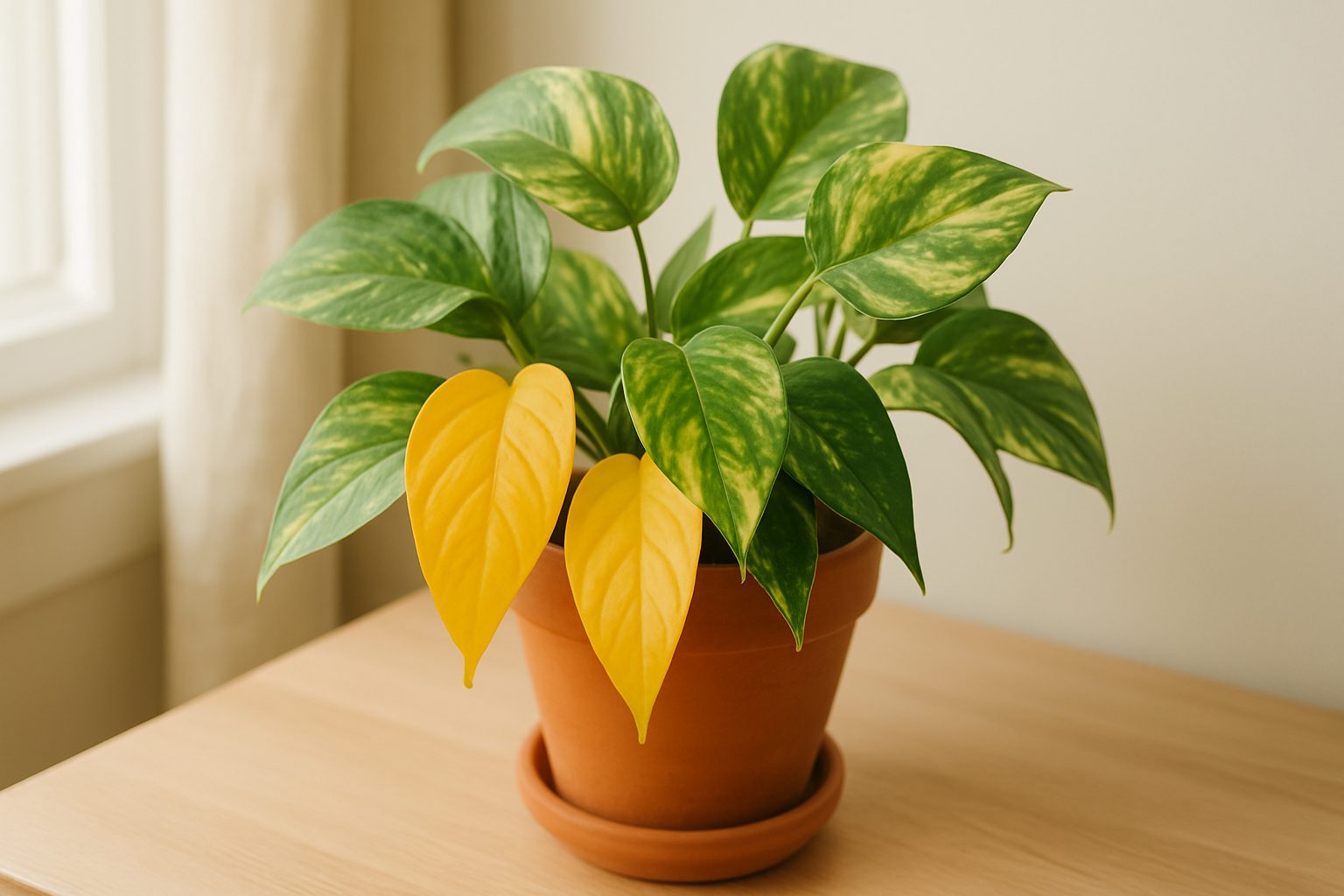 Troubleshooting
 Pothos Leaves Turning Yellow: Causes and Fixes
Pothos leaves turning yellow? Diagnose the cause fast with our symptom guide, then fix it. Plus: when a single yellow leaf means absolutely nothing.
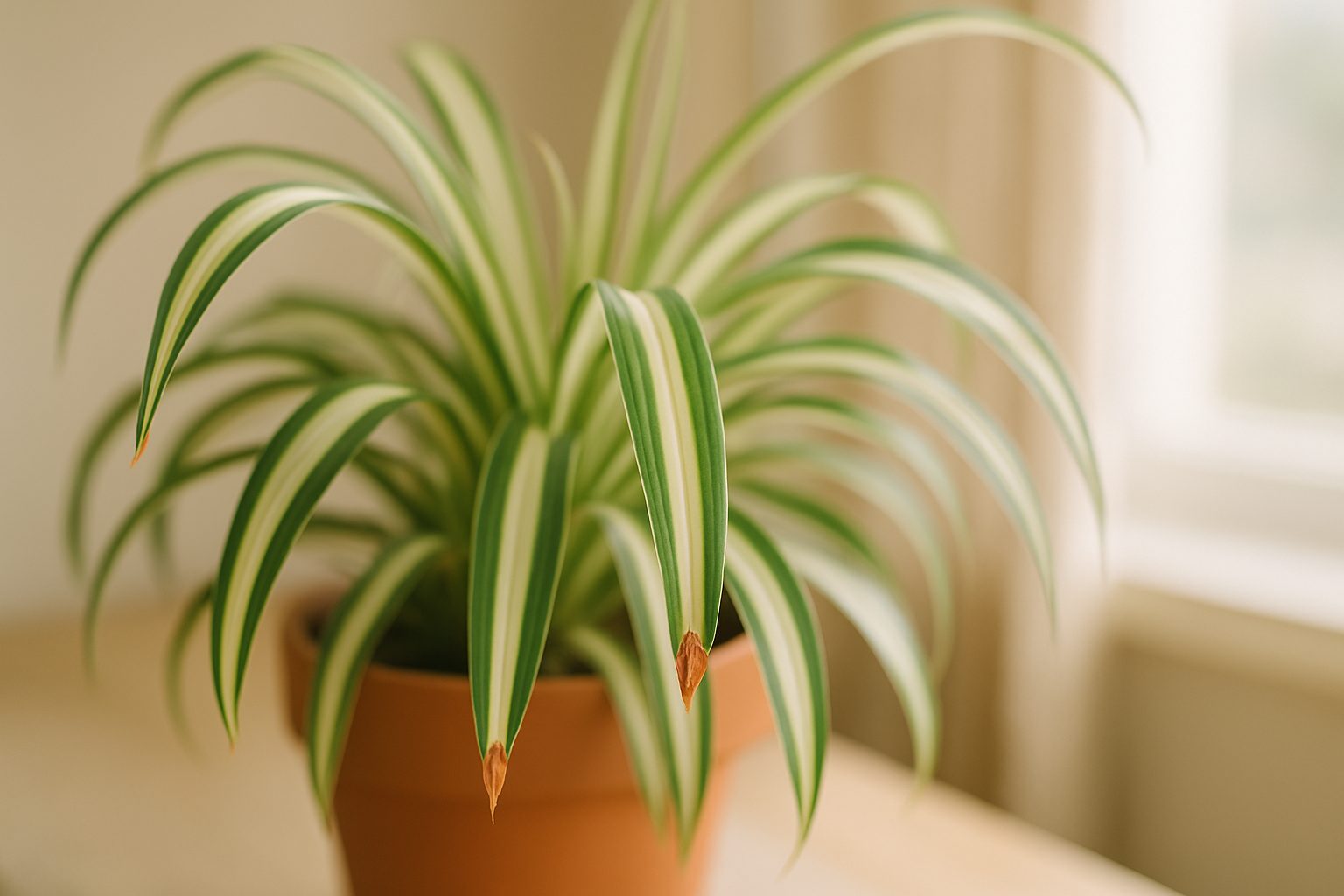 Troubleshooting
 Spider Plant Brown Tips: Why It Happens and How to Stop It
Spider plant brown tips are usually caused by fluoride in tap water, low humidity, or watering issues. Here's how to diagnose your cause and fix it.
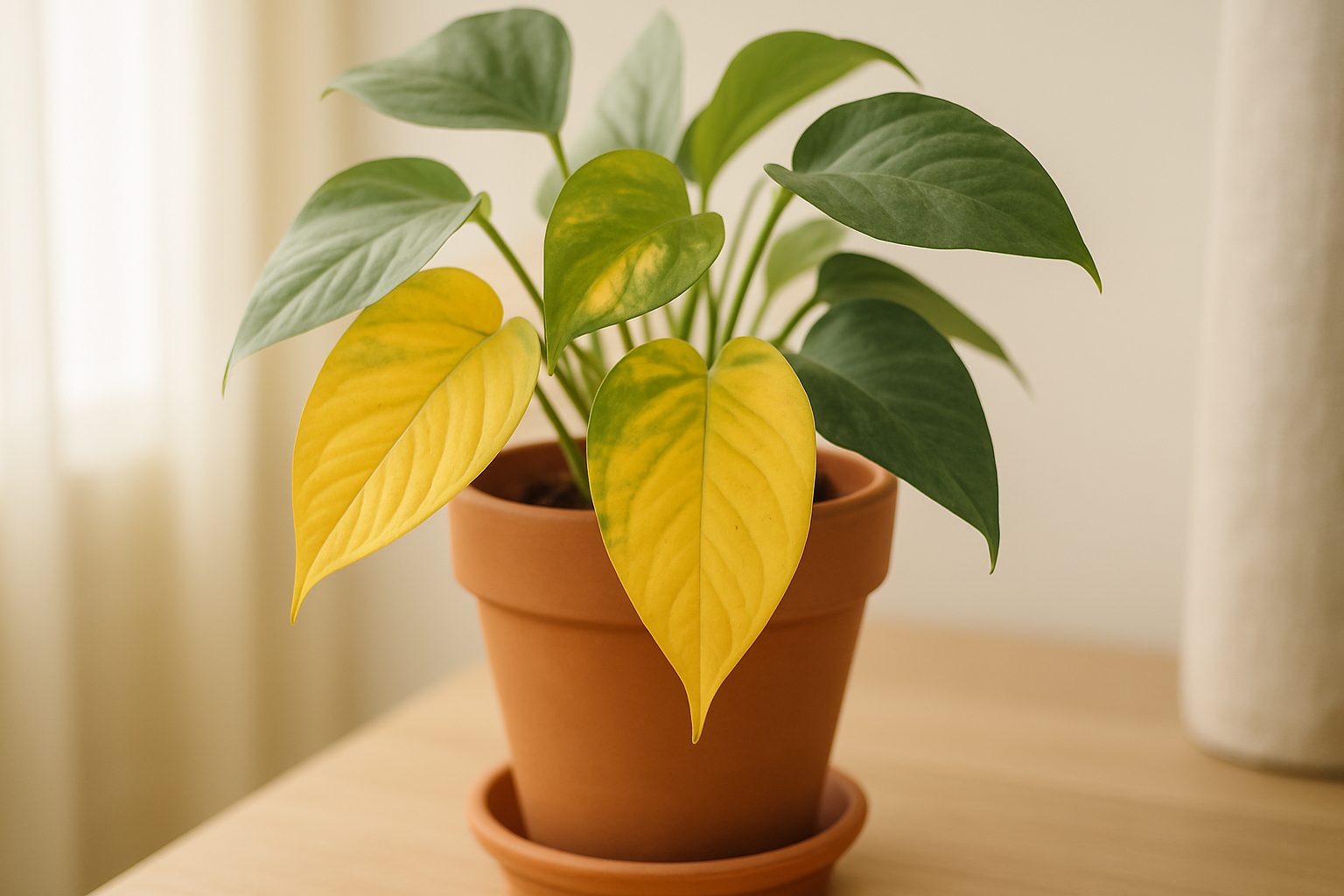 Troubleshooting
 Why Are My Plant Leaves Turning Yellow?
Plant leaves turning yellow? Find out which of the 10 common causes applies to your plant and get a clear fix for each one.