Why Is My Snake Plant Drooping? 6 Causes and the Fix for Each
Why is my snake plant drooping? Usually overwatering. Here are all 6 causes of a drooping snake plant and the exact fix for each.
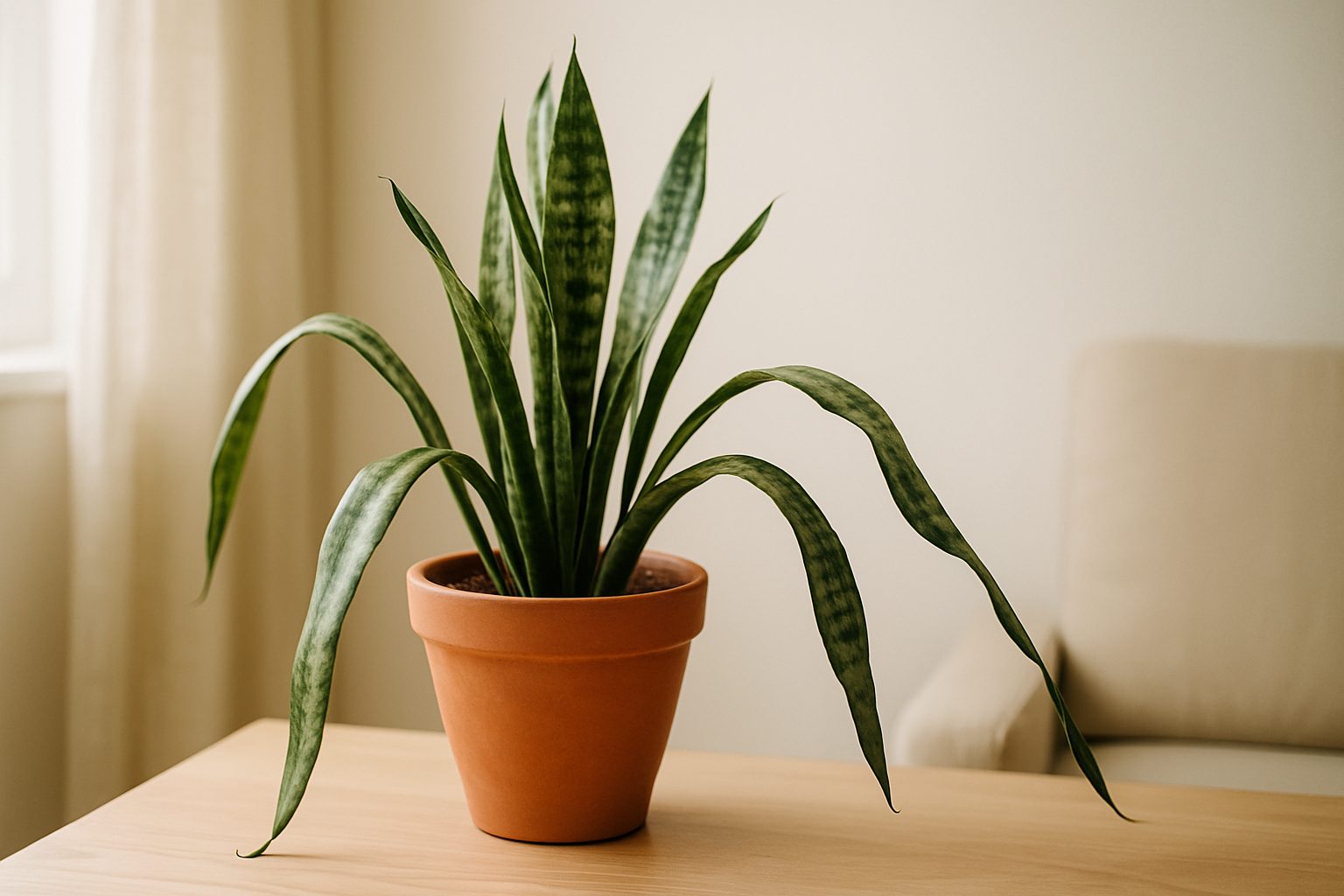
Wondering why your snake plant is drooping or leaning like it gave up? Good news: it’s almost always fixable, and the leaves usually firm back up once you fix the cause. The most likely culprit is overwatering, which rots the roots until the leaves can’t stay upright. Our complete snake plant care guide has the full routine. If you just want the fix, keep reading.
Quick answer: the 6 reasons a snake plant droops
A drooping snake plant is usually a water, light, or temperature problem. Run down this list, most likely first:
- Overwatering and root rot (by far the most common). Mushy base, soft leaves, a sour smell.
- Underwatering. Rare, but it happens. Wrinkled, curling leaves.
- Too little light. Weak, leggy leaves leaning toward the window.
- Cold damage or drafts. Soft, translucent patches after a chill.
- Root-bound or repotting stress. Top-heavy plant, roots circling the pot.
- Naturally tall, heavy leaves. Not a problem, just gravity.
If you only check one thing, check the soil. Nine times out of ten, a drooping snake plant has been watered too often.
1. Overwatering and root rot (the usual suspect)
How to tell
Snake plants store water in their thick leaves, so they need very little from you. When the soil stays wet, the roots suffocate and rot. Look for a base that feels soft to the touch, lower leaves that go yellow and floppy, and soil that smells sour. Wiggle a leaf. If it pulls out easily, the roots have failed.
The fix
Stop watering right away. If you caught it early, with the soil just soggy and the base still firm, letting it dry out completely may be all it needs, the usual cure for an overwatered plant. But if the base is mushy or smells rotten, you’ve got root rot, and drying won’t fix it. Unpot and trim (steps below).
2. Underwatering
How to tell
This one’s uncommon, since snake plants practically run on neglect. But after months with no water, the leaves lose their firmness: wrinkled, puckered, thinner than usual, sometimes curling or crisping at the tips. The soil will be bone dry, pulling from the pot.
The fix
Give it a proper drink. Water until it runs out the drainage holes, let it drain, then resume your normal schedule. Most leaves plump up within days. Any that stay limp are permanently damaged, but new growth comes in healthy.
3. Too little light
How to tell
Snake plants tolerate low light, but tolerating isn’t thriving. In a dim corner, new leaves come in thin, pale, and stretched, and the plant leans toward the window. Older leaves splay outward because it lacks the strength to stand them up.
The fix
Move it somewhere brighter. Bright, indirect light is ideal, and a few hours of gentle direct sun won’t hurt. Rotate the pot a quarter turn each week so it grows evenly. New leaves come in sturdier; the floppy old ones won’t fully straighten but will stop getting worse.
4. Cold damage or drafts
How to tell
Snake plants are tropical and hate the cold. Below about 50°F (10°C) the tissue suffers, and a real chill leaves soft, mushy, translucent patches, often near the tips. The usual culprits: a leaf against a freezing window, a spot by an exterior door, or an AC vent aimed straight at it.
The fix
Move it away from the cold now. Trim any badly mushed leaves at the base with clean scissors, since that tissue won’t recover. Keep it in a room between 60 and 85°F and it’ll settle. Cold damage looks scary but rarely kills a healthy snake plant.
5. Root-bound or repotting stress
How to tell
Two things. A plant left in the same pot for years can get so root-bound the roots circle it, push it upward, even crack the pot, which makes it lean. Or a freshly repotted plant may droop for a week or two from plain transplant shock, even if you did everything right.
The fix
If it’s root-bound, move it up one pot size (about two inches wider) with fresh, fast-draining mix. Snake plants like being snug, so don’t over-pot. If it’s repotting stress, do nothing: bright spot, no fertilizer, two weeks to recover.
6. Naturally tall, heavy leaves
How to tell
Sometimes nothing’s wrong. Tall varieties grow leaves two or three feet long, and the outer ones arch outward with age and weight. If the base is firm and the leaves look healthy, that gentle lean is just the plant being a plant.
The fix
Nothing medical. If the look bothers you, loosely tie the tallest leaves with a soft plant tie, or move the pot somewhere the arching reads as elegant. You can also divide an overgrown clump into two.
How to fix a snake plant with root rot
If the base is soft and the soil smells off, here’s the rescue:
- Unpot it. Slide the plant out and shake or rinse the soil off the roots so you can see them clearly.
- Inspect and trim. Healthy roots are firm and pale. With scissors wiped in rubbing alcohol, cut away every root that’s brown, black, mushy, or slimy, plus any leaves gone soft at the base.
- Let it dry. Leave the trimmed plant out of the soil for a few hours so the cuts can callus over.
- Repot in dry, fresh mix. Use fresh cactus or succulent mix (or potting soil loosened with a handful of perlite) in a clean pot with a drainage hole. Skip the old soggy soil.
- Hold off on water. Wait about a week before a first light watering, then only water once the soil is fully dry.
One honest note: if the whole base is soft and smelly, the rot has reached the crown and the plant usually can’t be saved. Salvage any still-firm leaves as cuttings and start fresh.
How to keep it from happening again
Almost every drooping snake plant traces back to too much water, so prevention is mostly about holding back:
- Water less than you think. Roughly every 2 to 3 weeks in summer, once a month in winter, and only when the top couple inches of soil are fully dry. Not sure how to judge that? Our guide on how often to water houseplants breaks it down.
- Use fast-draining soil. A cactus or succulent mix, or potting soil with a big handful of perlite, lets water run through instead of pooling around the roots.
- Always use a pot with a drainage hole. Love a decorative pot without one? Keep the plant in a plastic nursery pot inside it.
- Give it bright, indirect light. Better light means stronger, stiffer leaves.
- Keep it warm. Away from cold windows, drafts, and AC vents.
Do those five things and drooping mostly stops.
FAQ
Will drooping snake plant leaves stand back up?
It depends on the cause. Leaves that drooped from underwatering or a brief cold snap often firm back up within days once you fix it. Leaves that flopped from root rot or long-term low light usually won’t fully straighten, but that’s fine. New growth comes in strong and upright.
Should I cut off drooping leaves?
Only if they’re actually damaged. A leaf that’s mushy, badly yellowed, or soft at the base won’t recover, so cut it at the soil line with clean scissors. A leaf that’s just leaning but firm and green can stay; it isn’t hurting anything.
How do I know if my snake plant has root rot?
Press gently near the soil line and give it a sniff. If the base feels soft instead of firm and the soil smells sour or musty, that points to root rot. To confirm, slide the plant out: rotten roots are brown, black, mushy, or slimy, while healthy ones stay firm and pale.
Can too much sun cause drooping?
Not usually. But too much harsh, direct sun can scorch a snake plant, leaving pale or brown patches, which looks different from the soft droop of overwatering. If yours sits in blazing afternoon sun, pull it back a few feet so the light stays bright but indirect.
A drooping snake plant looks worse than it is. Check the soil first, fix the watering, and give it time. These plants are famously tough, and yours has a good chance of bouncing back. Once it’s back on its feet, our snake plant care guide will help you keep it that way.
Keep reading
Related guides
 Troubleshooting
 Pothos Leaves Turning Yellow: Causes and Fixes
Pothos leaves turning yellow? Diagnose the cause fast with our symptom guide, then fix it. Plus: when a single yellow leaf means absolutely nothing.
 Troubleshooting
 Spider Plant Brown Tips: Why It Happens and How to Stop It
Spider plant brown tips are usually caused by fluoride in tap water, low humidity, or watering issues. Here's how to diagnose your cause and fix it.
 Troubleshooting
 Why Are My Plant Leaves Turning Yellow?
Plant leaves turning yellow? Find out which of the 10 common causes applies to your plant and get a clear fix for each one.