Why Are My Plant Leaves Turning Yellow?
Plant leaves turning yellow? Find out which of the 10 common causes applies to your plant and get a clear fix for each one.
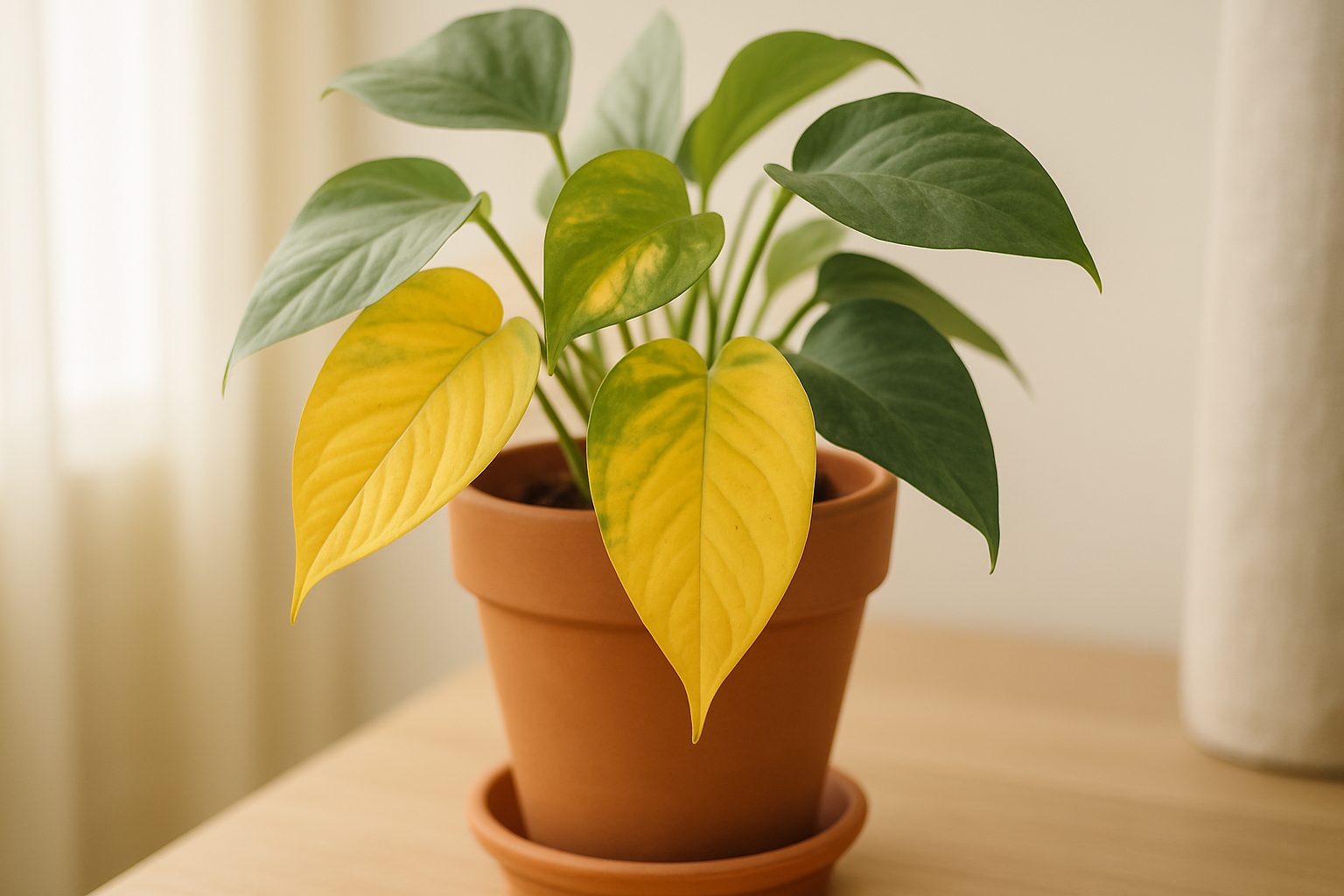
Yellow leaves on a houseplant usually mean something in the plant’s environment is off. In most cases, you can find the cause and fix it before the problem spreads.
This guide walks through the most common reasons plant leaves turn yellow, how to tell which one you’re dealing with, and exactly what to do about each.
Quick answer: Overwatering is the most common cause of yellow leaves on houseplants. But light, nutrient deficiency, pests, and normal aging all cause yellowing too. The pattern and location of yellow leaves on the plant is the fastest way to narrow it down.
Plant Leaves Turning Yellow: Start With Location
Before you guess at a cause, look at where the yellowing is happening. The pattern tells you a lot.
| Pattern | Most likely cause |
|---|---|
| Bottom (older) leaves only | Natural aging, overwatering, or nitrogen deficiency |
| New growth (top leaves) | Nutrient deficiency, underwatering, or too little light |
| Scattered all over | Pests, root rot, or severe overwatering |
| Tips and edges only | Underwatering, low humidity, or tap water sensitivity |
| Whole leaf, then whole plant | Overwatering, root rot, or temperature shock |
Use this as a starting point, then check the causes below.
1. Overwatering (the Most Common Cause)
Yellowing bottom leaves combined with wet or soggy soil almost always means overwatering. When roots sit in waterlogged soil, they cannot absorb oxygen. The plant slowly suffocates from the roots up.
How to tell: Soil stays wet for more than 7 to 10 days. The pot feels heavy. Lower leaves go yellow and may feel soft or mushy.
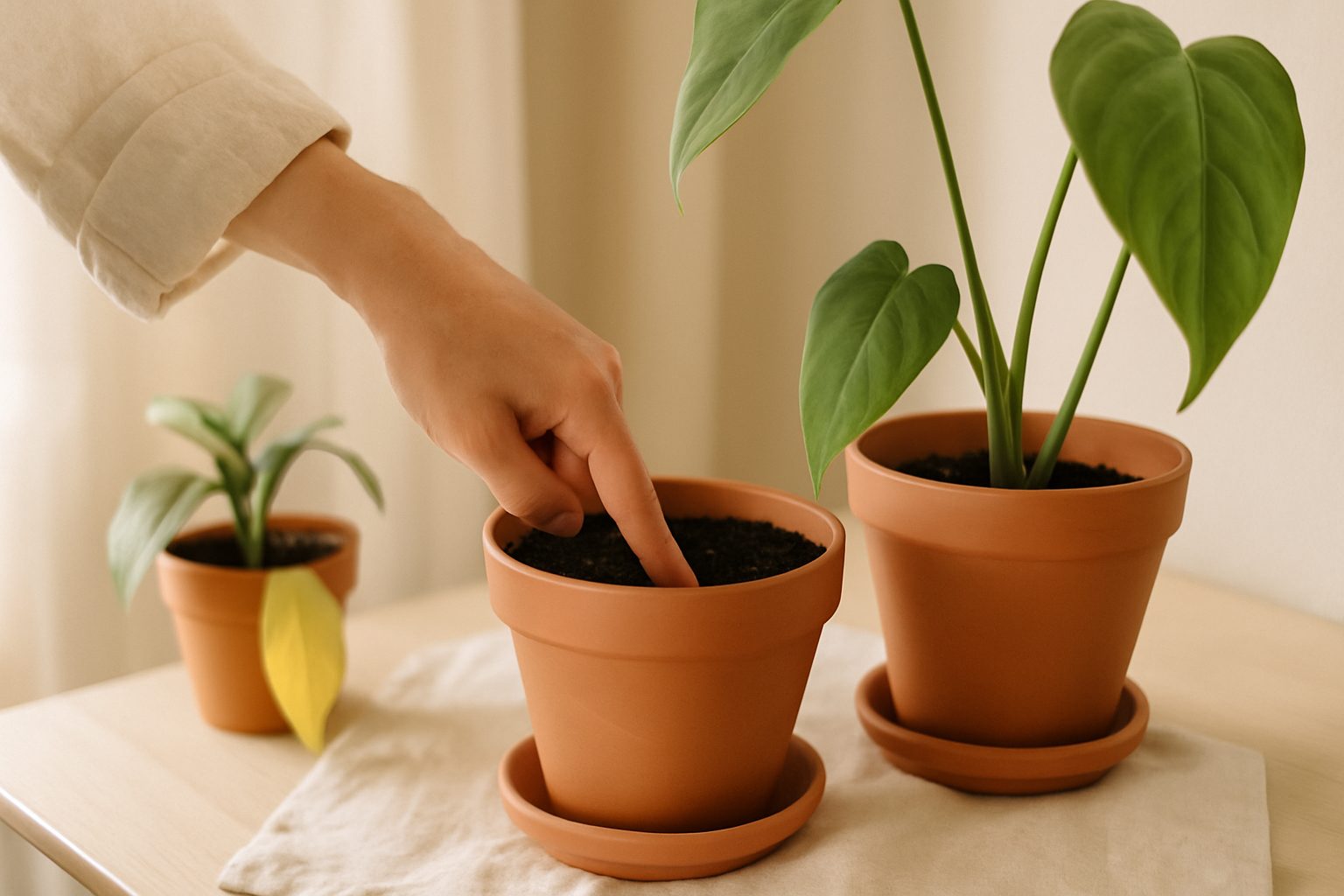
The fix: Let the soil dry out completely before watering again. Stick your finger 2 inches into the soil. If it is still damp, wait. Check that the pot has drainage holes.
If you suspect root rot (mushy black roots, a foul smell from the soil), see our full guide on treating root rot in houseplants. For ongoing watering guidance, how often to water houseplants covers most common species.
2. Underwatering
Underwatering yellowing tends to start at the tips and edges, not the whole leaf at once. The plant looks dry and slightly wilted before the leaves go yellow.
How to tell: Soil pulls away from the edges of the pot. Leaves feel papery. The pot feels unusually light.
The fix: Water thoroughly until it drains from the bottom, then let the soil dry to the correct level for your species. Avoid watering a little and often; it encourages shallow roots and unpredictable moisture.
3. Nutrient Deficiency
Plants need a range of nutrients to stay green. When they cannot access one, the leaves show it. The pattern of yellowing points to which nutrient is low.
- Nitrogen: Yellowing starts on the oldest (lower) leaves and moves up. The whole leaf turns pale yellow.
- Potassium: Yellow edges and tips, green center. Starts on older leaves.
- Magnesium: Yellowing between the veins while the veins themselves stay green. Starts on older leaves.
- Iron: The same interveinal yellowing, but starting on the newest growth (top leaves).
A balanced liquid fertilizer every 4 to 6 weeks during spring and summer covers most deficiencies. One catch: if soil pH is locking nutrients out, fertilizing alone will not help. The plant cannot absorb nutrients from soil that is too acidic or too alkaline, even when the nutrients are physically present in the mix.
4. Too Much or Too Little Light
Both extremes cause yellowing, but they look different.
- Too little light: Slow, pale yellowing across the whole plant. New leaves grow small and pale. Growth slows to almost nothing.
- Too much direct sun: Yellow or bleached-out patches, often where the sun hits the leaf directly. Crispy edges.
Move your plant gradually if it needs a new spot. A sudden shift from low to bright light causes leaf burn, so spread the move over 2 to 3 weeks.
5. Natural Aging
Plants shed their oldest leaves as they grow. Typically the bottom-most leaves, one or two at a time, go yellow and drop. The rest of the plant looks healthy.
If you see one yellow leaf on the lowest part of the plant and everything else looks good, there is a decent chance nothing is wrong. It is the plant cycling out old growth, the same way a tree drops its oldest leaves.
6. Temperature and Humidity Stress
Cold drafts, heating vents, and air conditioning all stress houseplants. So does dry winter air.
Most tropical houseplants want 50 to 60% relative humidity. Indoor heating in winter can drop that below 30%. When it does, leaves yellow and develop crispy edges, especially on calatheas, peace lilies, and ferns.
Move plants away from vents and cold windows. A small humidifier nearby makes the most difference. A pebble tray filled with water under the pot helps too, as does grouping several plants together.
Seasonal yellowing in fall and winter is also normal for some plants slowing down for dormancy. If a few bottom leaves drop as the days shorten and the rest of the plant looks fine, this is likely the reason.
7. Pests
Spider mites, mealybugs, and fungus gnats can all cause yellowing. Check for visible signs: tiny webbing (spider mites), white fluff in soil or at leaf joints (mealybugs), or small flies around the soil (fungus gnats).
Isolate the plant immediately to stop any spread. Wipe leaves with neem oil or insecticidal soap. For heavier infestations, repeat treatment every 5 to 7 days for 3 to 4 weeks.
8. Fertilizer Burn
Too much fertilizer builds up salts in the soil, pulling water out of roots and causing yellowing that mimics drought stress.
How to tell: You have been fertilizing regularly. Leaves show yellow discoloration with crispy brown tips, and the issue appeared after feeding.
The fix: Flush the soil thoroughly with plain water to wash out the salt buildup. Skip fertilizing for at least 4 to 6 weeks, then resume at half the recommended dose.
9. Tap Water Sensitivity
Some tropical houseplants react badly to fluoride and chlorine in tap water. Spider plants, peace lilies, and dracaenas are the most common ones to show this.
How to tell: Yellow or pale leaf tips, sometimes with browning edges. Usually appears gradually over several months. The rest of the plant looks fine.
The fix: Let tap water sit overnight in an open container before using it (this off-gasses the chlorine). Switching to filtered or rainwater clears this up for most plants within a few months.
10. Root-Bound Plants
When a plant outgrows its pot, the roots circle tightly and eventually cannot absorb water and nutrients efficiently. The plant starts yellowing in a way that mimics nutrient deficiency or underwatering, but responds to neither more water nor more fertilizer.
How to tell: Roots are visibly growing out of the drainage holes, or circling the top of the soil. The plant dries out very quickly after watering.
The fix: Repot into a container one size up (roughly 2 inches wider). Use fresh potting mix. Expect a few yellow leaves from transplant stress in the first 2 to 3 weeks.
Will Yellow Leaves Turn Green Again?
No. Once a leaf loses its chlorophyll and turns yellow, it will not recover. The yellow leaf is done.
What matters is whether new growth comes in green and healthy after you fix the underlying problem. New green leaves are your signal that the plant has bounced back.
You can leave yellow leaves on the plant or cut them off cleanly with sterilized scissors. Either is fine. Yellow leaves will not turn green again regardless of whether you remove them or not.
How Long Does Recovery Take?
Expect 2 to 4 weeks before you see new healthy growth after fixing the cause. A plant recovering from overwatering needs time to rebuild root tissue before it can push out new leaves.
Do not keep adjusting things while you wait. Repeated changes (watering more, then less, moving the light, adding fertilizer) stress the plant further. Fix the one most likely cause and give it a month before reassessing.
FAQ
Why are my plant’s lower leaves turning yellow?
Lower, older leaves yellowing while the rest of the plant looks healthy is usually natural aging. If the soil is wet, overwatering is the likely cause. Check moisture first. If the soil is dry and you are only seeing one or two bottom leaves go yellow, the plant is probably just shedding old growth.
Can yellow leaves be caused by overwatering and underwatering at the same time?
Yes. Compacted or poorly draining soil can be waterlogged at the bottom and dry on top. Roots in the wet section rot while roots near the surface stay too dry. The result looks confusing because neither watering more nor watering less seems to help. Repotting into fresh, well-draining soil usually solves it.
Why does my plant yellow right after repotting?
Transplant shock. Repotting disturbs the roots and the plant temporarily cannot absorb water and nutrients as efficiently. Keep it out of direct sun and ease up on watering for the first 2 to 3 weeks. A few yellow leaves is normal. As long as new growth comes in green, the plant is recovering fine.
Why is my snake plant getting yellow leaves?
Snake plants yellow most often from overwatering. They are drought-tolerant and need soil to dry out completely between waterings. See our full guide to snake plant yellow leaves for causes and fixes specific to this plant.
Can a root-bound plant cause yellow leaves?
Yes. When a plant is severely pot-bound, the roots cannot absorb water or nutrients efficiently even when both are present. Yellowing appears that does not respond to more watering or more fertilizer. If the roots are circling the drainage holes or coiling at the soil surface, repotting is the fix, not adjusting your watering routine.
Is one yellow leaf a sign of a problem?
Not always. One or two bottom leaves going yellow occasionally is normal growth cycling. It becomes a concern when multiple leaves yellow at once, yellowing spreads up the plant, or new growth also looks pale or stunted.
Sources and further reading
- University of Maryland Extension: Leaf Yellowing Problems in Flowers
- Pennsylvania State University Extension: plant nutrient deficiency guides
- Royal Horticultural Society: houseplant care library
Also on Just Add Leaf: what to do about an overwatered plant, how often to water houseplants, snake plant yellow leaves: causes and fixes
Keep reading
Related guides
 Troubleshooting
 Pothos Leaves Turning Yellow: Causes and Fixes
Pothos leaves turning yellow? Diagnose the cause fast with our symptom guide, then fix it. Plus: when a single yellow leaf means absolutely nothing.
 Troubleshooting
 Spider Plant Brown Tips: Why It Happens and How to Stop It
Spider plant brown tips are usually caused by fluoride in tap water, low humidity, or watering issues. Here's how to diagnose your cause and fix it.
 Troubleshooting
 Why Is My Snake Plant Drooping? 6 Causes and the Fix for Each
Why is my snake plant drooping? Usually overwatering. Here are all 6 causes of a drooping snake plant and the exact fix for each.