Spider Plant Brown Tips: Why It Happens and How to Stop It
Spider plant brown tips are usually caused by fluoride in tap water, low humidity, or watering issues. Here's how to diagnose your cause and fix it.
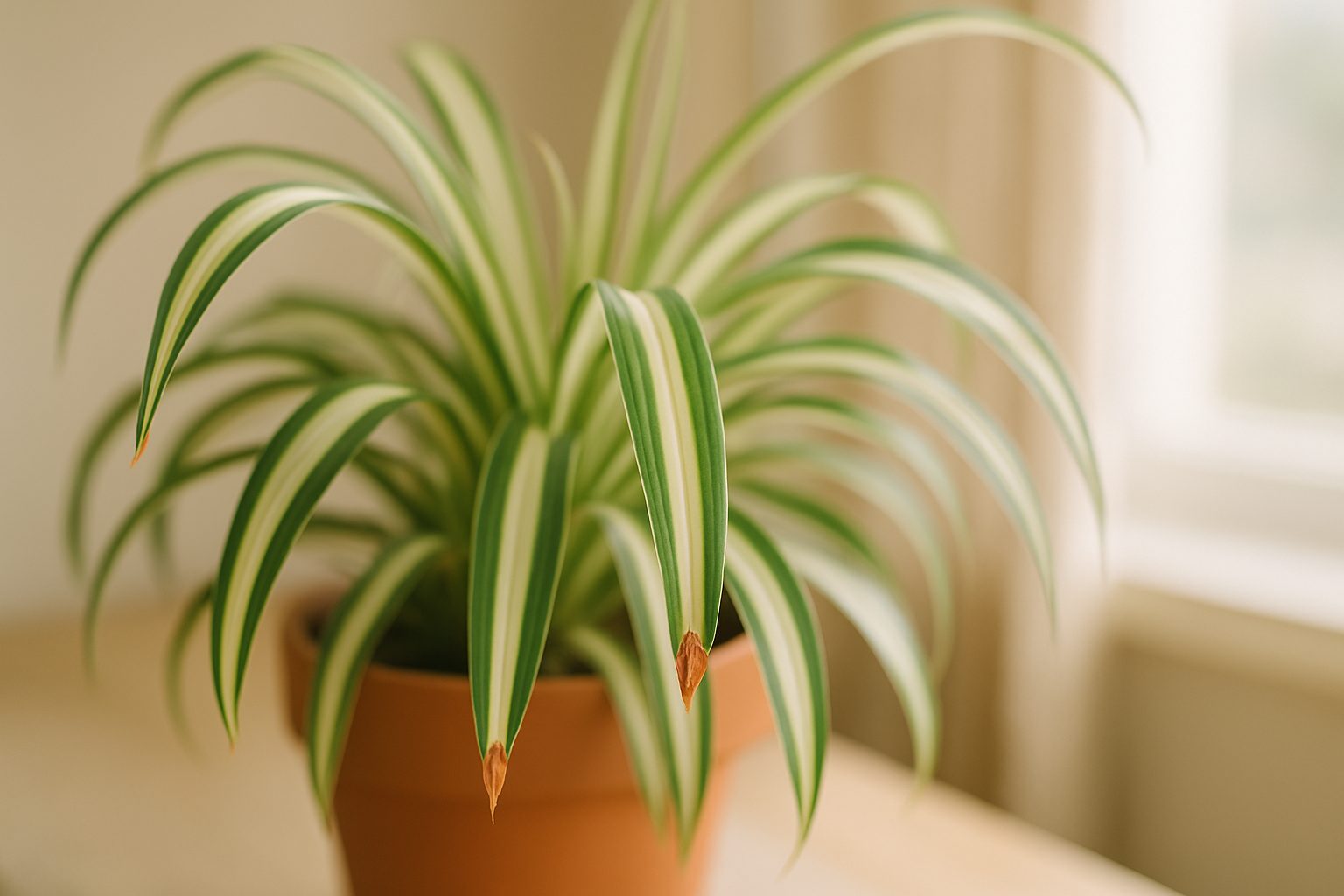
Spider plant brown tips are one of the most common plant problems, and they’re rarely a sign the plant is seriously struggling. Your plant is flagging something off in its environment, usually tap water quality, low humidity, or watering habits. This guide walks through every cause, how to tell which one is affecting your plant, and the fix for each.
Quick answer: Crispy, dry brown tips point to fluoride in tap water or low humidity. Soft, yellowy-brown tips suggest overwatering. Fix the underlying cause first, then trim the brown tips off at a slight angle. New growth will come in clean.
Why does my spider plant have brown tips?
There are six main causes. Most plants have one or two overlapping at the same time.
1. Fluoride and Chlorine in Tap Water
This is the most common cause, especially for plants that are otherwise healthy and growing well. Spider plants are sensitive to fluoride, which builds up in the leaf tips over time as water evaporates from the soil.
How to tell: Tips are dry, papery, and brown at the very ends. The rest of the leaf is green. It happens even when watering is consistent.
The fix: Switch to filtered, distilled, or collected rainwater. If that feels excessive, fill a watering can 24 to 48 hours before use and leave it uncovered. This off-gases most of the chlorine (though not fluoride, and not chloramine, which some municipal systems use instead of chlorine and requires filtering to remove). For plants with persistent browning, filtered water is the more reliable solution.
2. Low Humidity
Spider plants prefer humidity around 40 to 60 percent. Most heated or air-conditioned homes run lower than that, particularly in winter.
How to tell: Tips are dry and brittle. The problem is worse in winter when heating runs constantly, or if the plant sits near an air conditioning vent. The rest of the plant looks fine.
The fix: Move the plant away from heating vents and AC units. Place the pot on a tray of pebbles with a little water in the bottom (the water evaporates and raises humidity around the plant). Grouping several plants together has a similar effect.
3. Inconsistent Watering
Both overwatering and underwatering can cause brown tips, but they look different from each other.
How to tell: Dry, crispy tips paired with dry soil and slight wilting means the plant has been too dry. Soft, yellowy-brown tips (often spreading to the whole leaf) with damp or soggy soil points to overwatering. If overwatering has been ongoing, check the roots for rot. Our guide to root rot covers what to look for and how to treat it.
The fix: Water when the top 1 to 2 inches of soil feel dry. Spider plants prefer a consistent soak-and-dry pattern rather than small frequent top-ups. Our watering guide has a practical method that works for most houseplants. If you suspect chronic overwatering, the overwatered plant guide walks through recovery steps.
4. Over-Fertilizing and Salt Buildup
Fertilizer salts accumulate in the soil over time and burn the leaf tips. Over-fertilizing is easy to do, especially when tap water is already adding its own mineral load.
How to tell: Brown tips appeared or worsened after you started fertilizing. A white crust on the soil surface or around drainage holes is a strong indicator.
The fix: Flush the soil by running water slowly through the pot for two to three minutes until it drains clear from the bottom. This pushes accumulated salts out. After flushing, hold off on fertilizing for four to six weeks. During the growing season, once a month at half strength is enough. Stop altogether in fall and winter.
5. Too Much Direct Sunlight
How to tell: This looks different from water or humidity issues. You will see bleached patches, scorched spots, or faded streaks on the leaves, not just brown tips.
The fix: Move to bright indirect light. A spot a few feet back from a south or west window works well. Spider plants tolerate lower light but burn in direct afternoon sun.
6. Temperature Extremes and Cold Drafts
How to tell: Tips browned shortly after you moved the plant, or the plant sits near a drafty window, exterior door, or heating vent.
The fix: Keep spider plants above 50°F and away from cold drafts. In winter, check whether a nearby window is leaking cold air against the leaves.
How to tell which cause you have
Match your plant’s symptoms:
- Dry, crispy tips on an otherwise healthy and growing plant: start with tap water and humidity.
- Soft or yellowy-brown tips: look at your watering first.
- Tips worsened after fertilizing: salt buildup is the likely cause.
- Bleached patches and scorched spots (not just tips): too much direct sun.
- Browning started in winter or after moving the plant: a temperature or humidity shift.
Most brown-tip cases involve tap water plus low humidity at the same time. Fixing one usually reduces the problem significantly.
How to trim spider plant brown tips
Trim them off. It will not hurt the plant.
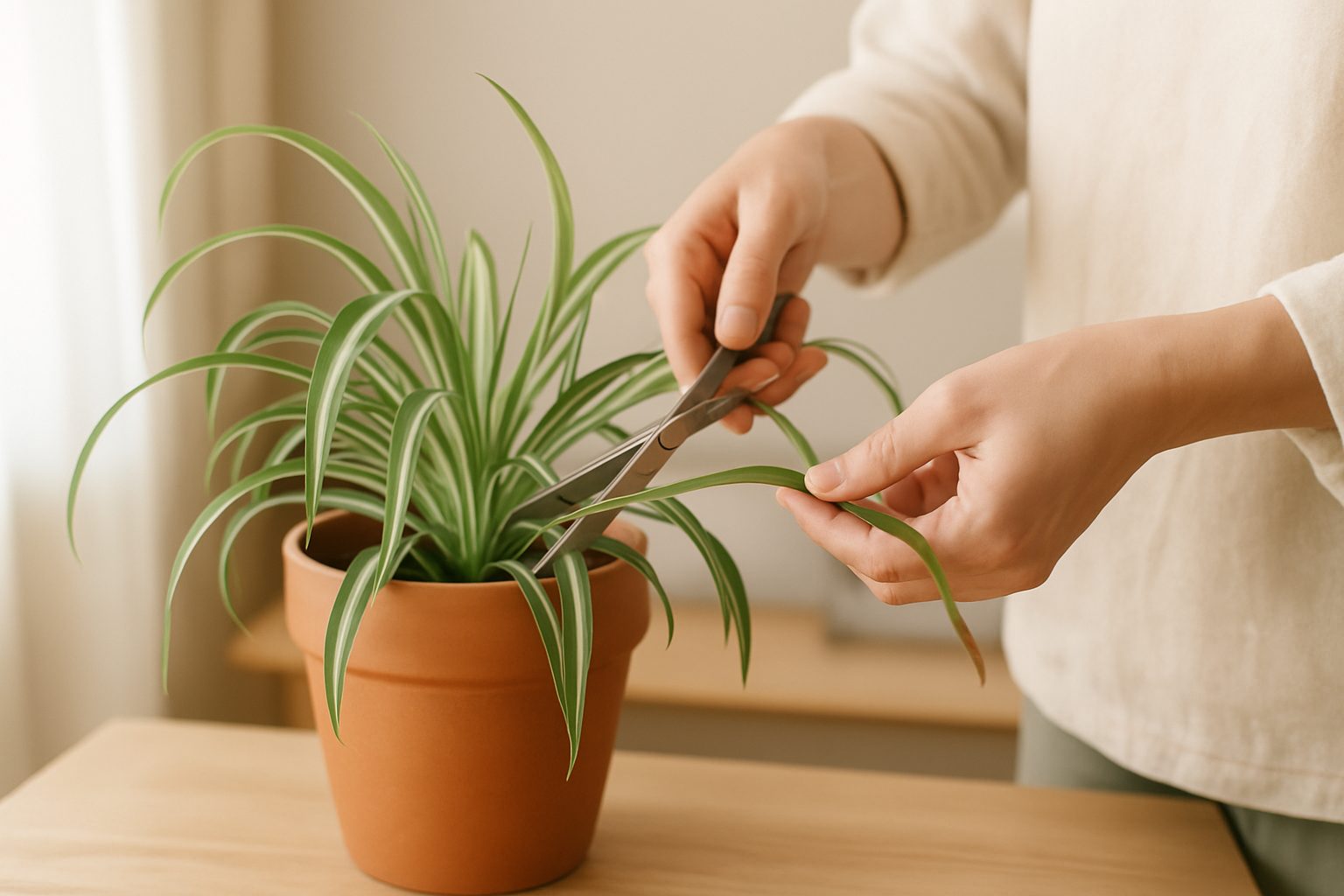
Use clean, sharp scissors. Cut at a slight angle that follows the natural taper of the leaf. If you want it to look more natural, leave a very thin sliver of brown at the tip rather than cutting straight into the green. Clean or wipe the scissors before moving to another plant.
The trimmed spots will not turn brown again right away. New growth on the plant will come in green once the cause is addressed.
Will the brown tips turn green again?
No. Once a leaf tip has died, that tissue will not recover. Trimming makes the plant look better and removes the dead material, but the discoloration on that leaf is permanent. New leaves and spiderettes (the baby offshoots) will come in clean and green once you have fixed the underlying issue.
FAQ
Why are the tips of my spider plant brown even though I water it regularly?
Consistent watering does not prevent fluoride buildup from tap water. The mineral accumulates over time regardless of how reliably you water. Switch to filtered or rainwater, or let tap water sit uncovered for 24 to 48 hours before use (this helps with chlorine but not fluoride).
Should I cut off all the brown tips?
Yes, it is safe. Trimming is cosmetic and does not affect the plant’s health. Use sharp scissors and cut at a slight angle following the leaf’s natural shape. Do it whenever the browning becomes noticeable.
My spider plant has brown tips but it is growing like crazy. Is something seriously wrong?
Probably not. Spider plants often grow vigorously even with mild fluoride sensitivity or low humidity. Brown tips are a sign the environment is not ideal, but they do not mean the plant is in decline. Fix the cause and the new growth will come in clean.
Are some spider plant varieties more prone to brown tips?
Yes. The variegated variety (green leaves with white or cream stripes) tends to be more sensitive to fluoride and will show brown tips faster than the curly Bonnie or solid-green varieties. If you have a variegated spider plant, filtered water is especially worth switching to.
I switched to filtered water but my spider plant still has brown tips. What should I check next?
Check humidity first. Most homes run below 40 percent humidity in winter, which is enough to cause tip burn on its own. Then look at your watering consistency and whether the plant is near any heating or cooling vents.
Can I fix brown tips without buying anything?
Yes. Let tap water sit uncovered for 24 to 48 hours before using it (reduces chlorine), group plants together to raise local humidity, flush the soil if you have been fertilizing, and trim existing brown tips. None of those cost anything.
Further reading
If your spider plant keeps showing issues after fixing the water and humidity, the complete spider plant care guide covers everything from light and soil to propagation and common pests.
Sources: Royal Horticultural Society growing guides (rhs.org.uk); university extension resources on fluoride sensitivity in Chlorophytum comosum.
Keep reading
Related guides
 Troubleshooting
 Pothos Leaves Turning Yellow: Causes and Fixes
Pothos leaves turning yellow? Diagnose the cause fast with our symptom guide, then fix it. Plus: when a single yellow leaf means absolutely nothing.
 Troubleshooting
 Why Are My Plant Leaves Turning Yellow?
Plant leaves turning yellow? Find out which of the 10 common causes applies to your plant and get a clear fix for each one.
 Troubleshooting
 Why Is My Snake Plant Drooping? 6 Causes and the Fix for Each
Why is my snake plant drooping? Usually overwatering. Here are all 6 causes of a drooping snake plant and the exact fix for each.