Pothos Leaves Turning Yellow: Causes and Fixes
Pothos leaves turning yellow? Diagnose the cause fast with our symptom guide, then fix it. Plus: when a single yellow leaf means absolutely nothing.
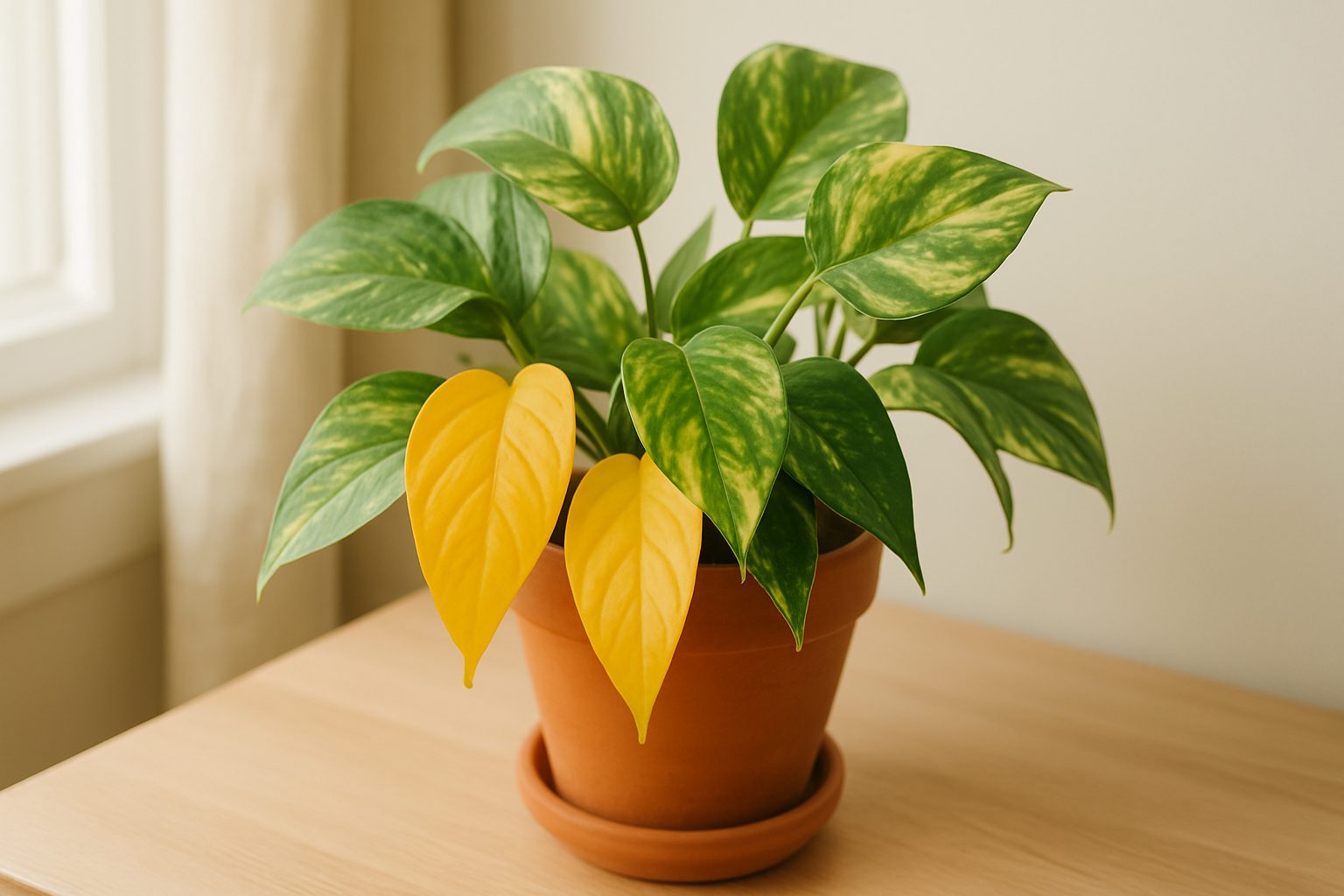
When pothos leaves turn yellow, the cause is almost always something you can fix. Overwatering is the most common culprit, but low light, natural aging, pot size, and transplant stress can all look the same at first glance. The key is figuring out which one you’re dealing with before you change anything.
Quick answer: If the soil is wet and multiple leaves are yellowing, ease off watering. If it’s one old leaf near the base of the plant and everything else looks fine, leave it alone. That’s just the plant shedding old growth.
Diagnose why your pothos leaves are turning yellow
Find your symptom in the table below, then skip to that section.
| What you see | Where | Most likely cause |
|---|---|---|
| Soft, mushy stems or yellow leaves while soil is wet | Anywhere | Overwatering or root rot |
| Yellow, papery leaves and bone-dry soil | Any | Underwatering |
| 1 or 2 yellow leaves on lower stems | Bottom of plant | Natural aging (usually fine) |
| Pale yellow all over, slow onset | New and old growth | Too little light |
| Yellow between veins, green veins stay green | Newer leaves | Nutrient deficiency |
| Yellowing started shortly after repotting | Anywhere | Transplant stress |
| Yellow spots or mottling with webbing or stickiness | Older leaves | Pests |
| Yellow leaf tips or edges, white crust on soil surface | Older leaves | Fluoride or mineral buildup from tap water |
Overwatering (the most common reason)
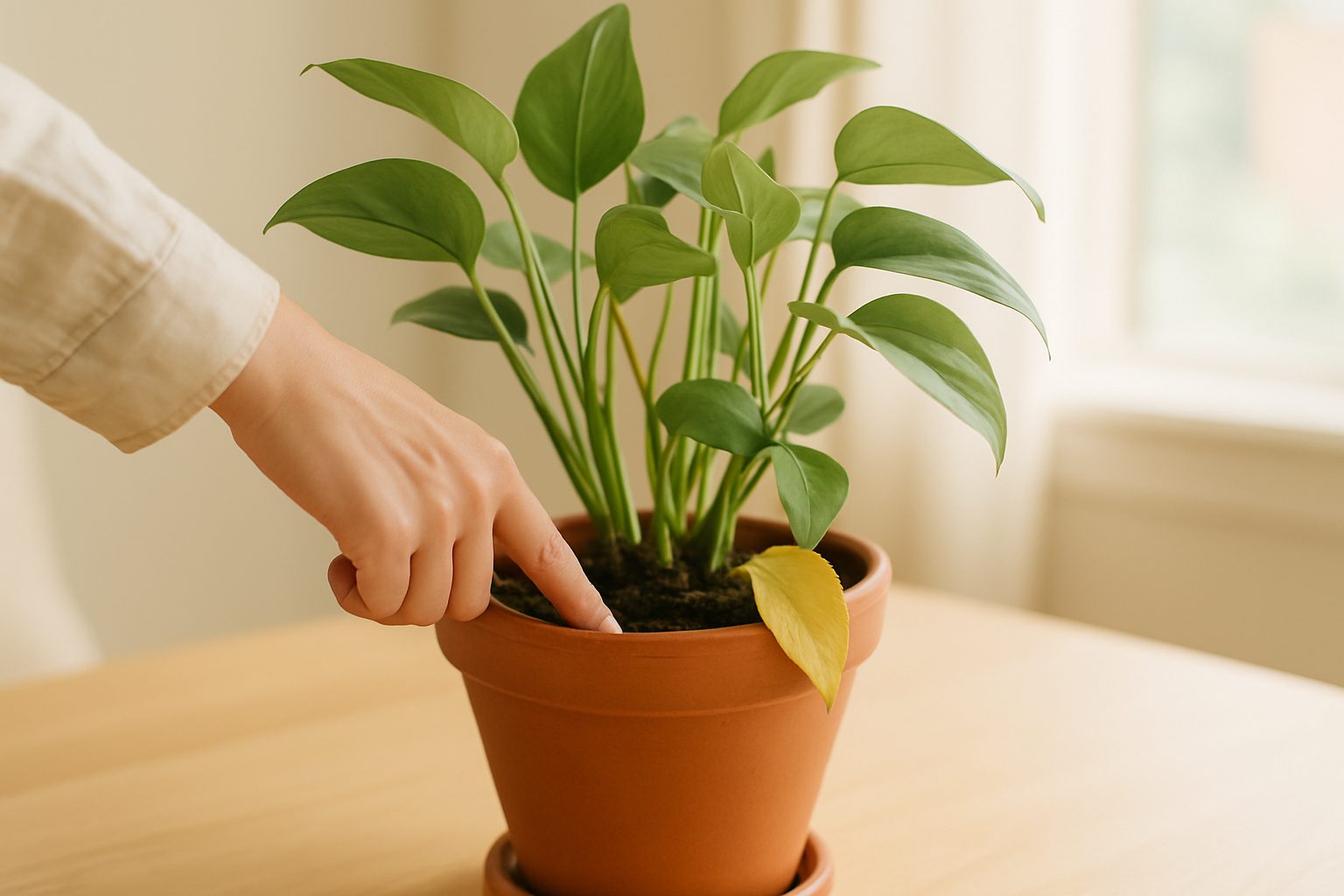
Pothos roots need air around them. When the soil stays wet for more than a week and a half, the roots start to suffocate, and the plant responds by dropping yellow leaves. The leaves often feel soft. Dig a finger 2 inches into the soil; if it’s still damp, you’ve been watering too often.
Stop watering and let the soil dry out completely before you water again. Make sure the pot has drainage holes, and empty the saucer after each watering so the plant isn’t sitting in water.
If the roots look brown and mushy when you check, that’s root rot at work, which needs a bit more intervention: trimming the damaged roots, repotting in fresh dry mix, and holding off on water for a week or two.
For a full rundown on what overwatered plants look like and how to pull them back, see our guide to overwatered houseplants.
Recovery time: 2 to 4 weeks after fixing your watering, assuming no root rot. New growth should come in healthy; the yellow leaves won’t recover and can be removed.
Pot size: the problem nobody mentions
If your pothos is in a pot that’s significantly larger than the root ball, you may be overwatering it without realizing it.
A too-big pot holds far more soil than the roots can drink from. That extra soil stays wet for weeks. The plant yellows for the same reasons as overwatering, even if your watering schedule is perfectly reasonable.
Pothos do best when they’re a little snug. When you repot, go up only one size (about 2 inches in diameter) at a time. If you recently moved your pothos into a much bigger container and it’s started yellowing since, that’s the likely cause. You may need to repot it back down or wait it out with very careful watering.
Underwatering
Less common with pothos, but it happens, especially in summer or in small pots that dry out fast.
The signs are different from overwatering: the leaves go pale or light yellow (not a bright canary yellow), they feel dry and a bit papery, and the soil is completely dry when you check. The plant may also look a little droopy.
Water thoroughly until it runs out the drainage holes, then let it drain fully. Pothos bounce back from underwatering quickly. You should see improvement within a day or two.
Low light (a slow burn)
This one is easy to miss because it develops over weeks or months.
Pothos survive in low light, but “low light” means bright enough to read a book comfortably. A dark corner with no natural light is too dim. A pothos too far from any window will slowly pale out. The leaves lose their depth of color, then start yellowing, and new growth slows down or stops.
The fix is to move the plant somewhere with brighter indirect light. A few feet from a window, out of direct sun, is ideal. Check our pothos care guide for the full light requirements and a quick guide to what counts as “indirect.”
Natural aging (when you should do absolutely nothing)
One or two yellow leaves near the base of the plant? That’s almost certainly just the plant shedding old growth.
Pothos regularly cycle out their oldest leaves, especially the ones low on the stem. If the yellowing is isolated to one or two lower leaves, the rest of the plant looks healthy, and new growth is coming in fine. There’s nothing wrong. Remove the yellow leaf at the stem and move on.
You don’t need to do anything differently. One yellow leaf on an otherwise happy pothos is not the beginning of a crisis.
Seasonal yellowing
If you’re reading this in autumn or winter, some yellowing is probably just seasonal.
In lower light and cooler temperatures, pothos slow down. They may shed a few older leaves, grow more slowly, and look a bit less lush than in summer. This is a normal response to shorter days and lower light. The plant is adjusting its workload, not dying.
What to do: reduce watering frequency (pothos need much less in winter), skip fertilizer until spring, and give the plant the best light spot you have. If it was healthy in summer and started losing a couple of leaves in November with no other changes, seasonal adjustment is the most likely explanation.
Transplant stress vs. overwatering
These two get confused constantly, and the mistake matters because the response is different.
If your pothos started yellowing within a few weeks of being repotted, it’s most likely transplant stress. The roots need time to settle into new soil and new surroundings. Mild yellowing during this window is expected and temporary. Wait 3 to 4 weeks before drawing any conclusions.
Transplant stress yellowing plateaus and stops. Overwatering yellowing gets worse over time. If it’s been a month since the repot and leaves keep dropping, check the soil and roots.
Nutrient deficiency and tap water
Look at the pattern of the yellowing. If the leaf is turning yellow between the veins while the veins themselves stay green, that’s interveinal chlorosis, a sign of a nutrient deficiency, usually magnesium or iron.
Pothos are light feeders and rarely go hungry in fresh potting mix. But in a pot that hasn’t been refreshed in 2 or more years, the mix gets depleted. Feed with a balanced or slightly nitrogen-heavy liquid fertilizer once a month during spring and summer (look for an NPK where the first number is equal to or higher than the other two).
Tap water in hard-water areas can cause gradual yellowing and leaf tip burn from fluoride and mineral buildup. If you’ve ruled out everything else and your water is heavily chlorinated or high in minerals, try switching to filtered or rainwater for a few months. Flushing the soil thoroughly by watering until water runs clear for a minute or two can help clear accumulated salts.
Pests
Check the undersides of any yellowing leaves before you assume it’s a care issue.
Look for:
- Fine webbing between leaves or along stems (spider mites)
- Small white cottony clusters (mealybugs)
- Tiny oval bumps on the stems (scale)
- Sticky residue on leaves or the surface below (aphids or scale)
If you find any, isolate the plant from your others immediately. Wipe down the leaves with neem oil solution or insecticidal soap, and repeat weekly for 3 to 4 weeks to break the life cycle. One treatment rarely clears a pest problem.
For a broader look at yellowing that might not be caused by care habits, see why plant leaves turn yellow.
Can yellow pothos leaves turn green again?
No. Once a leaf has yellowed, the chlorophyll is gone and it won’t recover.
That’s fine. Remove the yellow leaf cleanly at the stem (snip or pinch right at the base). The plant redirects energy to healthy growth instead of keeping a failing leaf on life support. Leaving yellow leaves on doesn’t harm the plant, but removing them keeps things tidy and gives you a clearer read on whether the problem is getting better or worse.
FAQ
Why are only the bottom leaves on my pothos turning yellow?
Lower leaves yellowing while new growth looks fine is usually natural aging. Pothos regularly drop their oldest leaves at the base. Remove them, double-check your watering schedule is working (soil dry before each watering), and don’t stress.
Why are my pothos leaves turning yellow after repotting?
Almost certainly transplant stress. The roots need 3 to 4 weeks to settle into new soil. Some leaf drop during this window is expected. Hold off on diagnosing overwatering or underwatering until a month has passed, unless the soil is consistently wet or bone dry.
Should I remove yellow leaves from my pothos?
Yes. Yellow leaves won’t recover, so removing them keeps the plant tidy and lets you track whether the problem is still active. Snip or pinch at the stem base.
How long does recovery take after fixing the problem?
It depends on the cause, but here’s a rough guide:
- Overwatering without root rot: 2 to 4 weeks
- Root rot (treated): 6 to 12 weeks, depending on how advanced the rot was
- Nutrient deficiency: 3 to 6 weeks
- Transplant stress: 3 to 4 weeks
Existing yellow leaves won’t green up, but new growth should come in healthy.
Does pot size cause yellowing?
Yes, and this one surprises a lot of people. A pot much larger than the root ball holds excess soil moisture the roots can’t reach, which leads to the same symptoms as overwatering. When repotting, go up only 2 inches in diameter at a time.
My pothos is growing new leaves but also dropping yellow ones. Is that a problem?
Usually not. If new growth is coming in green and healthy, the plant is fine. It’s simply cycling out older leaves. Keep your care routine consistent and let it do its thing.
Does it matter which variety of pothos I have?
Slightly. Golden pothos is the most tolerant and forgiving. Neon pothos shows yellowing faster because its naturally bright color makes subtle changes more visible. Marble queen grows more slowly and is more sensitive to overwatering than the others. If you have a marble queen that’s yellowing, check the roots first. The causes are the same across varieties, but the speed at which problems show up differs.
Sources and further reading
- University of Florida IFAS Extension: indoor tropical foliage plant care
- Royal Horticultural Society: Epipremnum aureum growing guide
- ASPCA Animal Poison Control: Epipremnum aureum is listed as toxic to cats and dogs; keep plants out of reach of pets
Keep reading
Related guides
 Troubleshooting
 Spider Plant Brown Tips: Why It Happens and How to Stop It
Spider plant brown tips are usually caused by fluoride in tap water, low humidity, or watering issues. Here's how to diagnose your cause and fix it.
 Troubleshooting
 Why Are My Plant Leaves Turning Yellow?
Plant leaves turning yellow? Find out which of the 10 common causes applies to your plant and get a clear fix for each one.
 Troubleshooting
 Why Is My Snake Plant Drooping? 6 Causes and the Fix for Each
Why is my snake plant drooping? Usually overwatering. Here are all 6 causes of a drooping snake plant and the exact fix for each.